

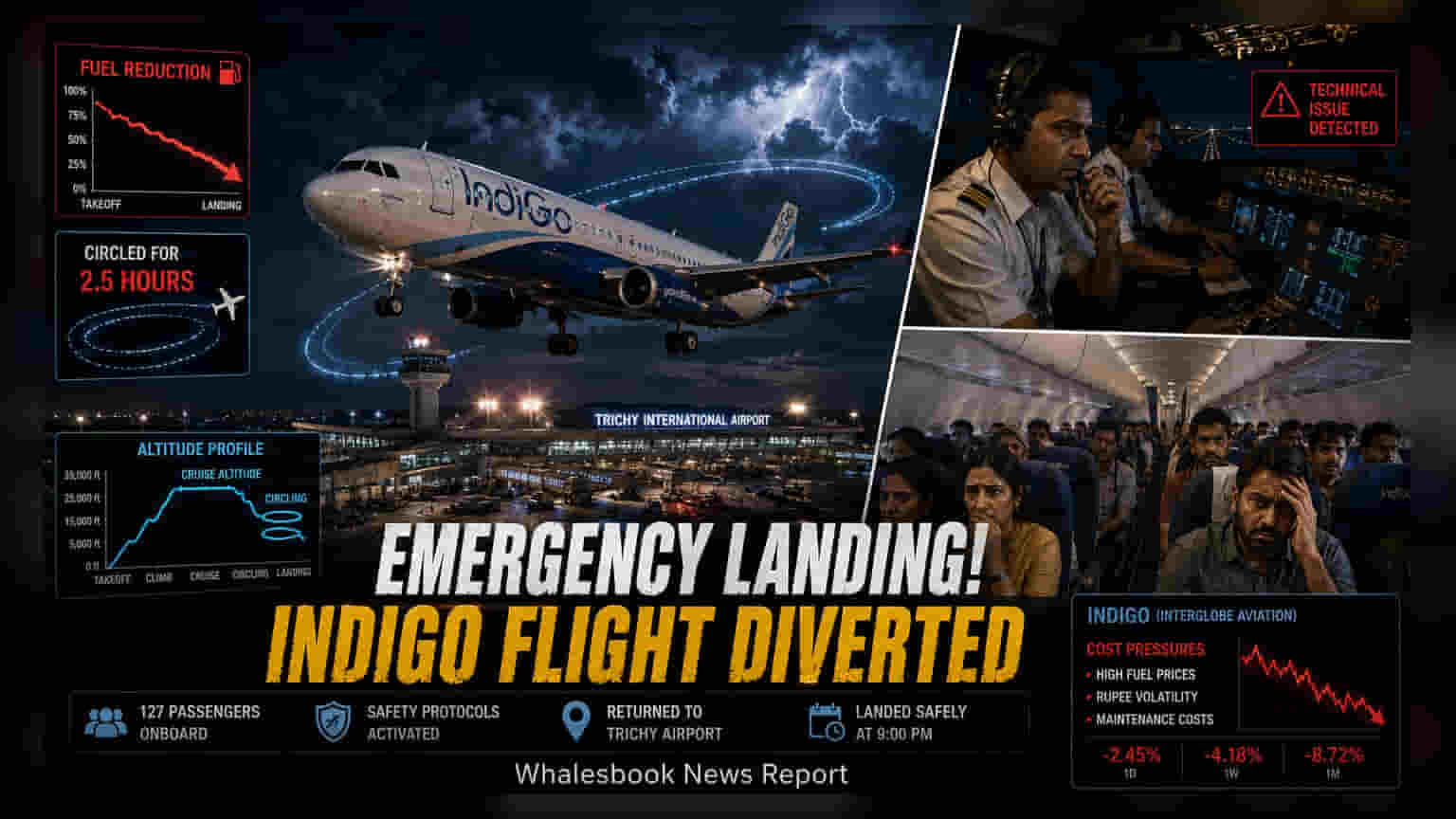
An IndiGo flight carrying 127 passengers to Singapore returned to Trichy International Airport on Friday due to a technical snag. The aircraft landed safely after circling for two and a half hours. For investors, this event highlights the airline’s operational challenges, while the company continues to navigate margin pressures from fluctuating fuel costs and currency depreciation in fiscal year 2026.
An IndiGo flight bound for Singapore, carrying 127 passengers, was forced to return to Trichy International Airport on Friday shortly after takeoff. The flight crew detected a technical issue and initiated safety protocols, which included circling the area for approximately two and a half hours to reduce the aircraft's fuel load for a safe landing. The aircraft eventually landed at the airport at 9 PM without incident. An alternative flight was arranged for the passengers to continue their journey.
This incident occurred on the same day the airline experienced a separate technical disruption affecting its reservation system. For investors, operational reliability is an important indicator of a service-oriented business, as repeated technical issues can lead to increased costs and potential reputational challenges.
Operational and Financial Context
IndiGo, operated by InterGlobe Aviation, currently operates in a competitive and sensitive aviation market. Beyond daily operational hurdles, the airline faces broader financial pressures as it navigates the 2026 fiscal year. The company is sensitive to external factors, particularly the volatility in global fuel prices and the fluctuations of the Indian Rupee against the dollar. These two variables often exert significant pressure on an airline's operating margins, as fuel is one of the largest expenses for any carrier.
Investors typically watch how management balances these rising operating costs with its expansion plans. While the airline continues to hold a significant market share in India, the combination of maintaining a large fleet and managing daily operational requirements means that even minor disruptions can draw scrutiny from the market.
Going forward, shareholders may track the company’s quarterly results for any updates on maintenance costs, fuel hedging strategies, and the overall impact of operating pressures on profitability. The ability to manage these logistical and financial factors, while maintaining high service standards, remains a key element of the company’s long-term performance.