 Whalesbook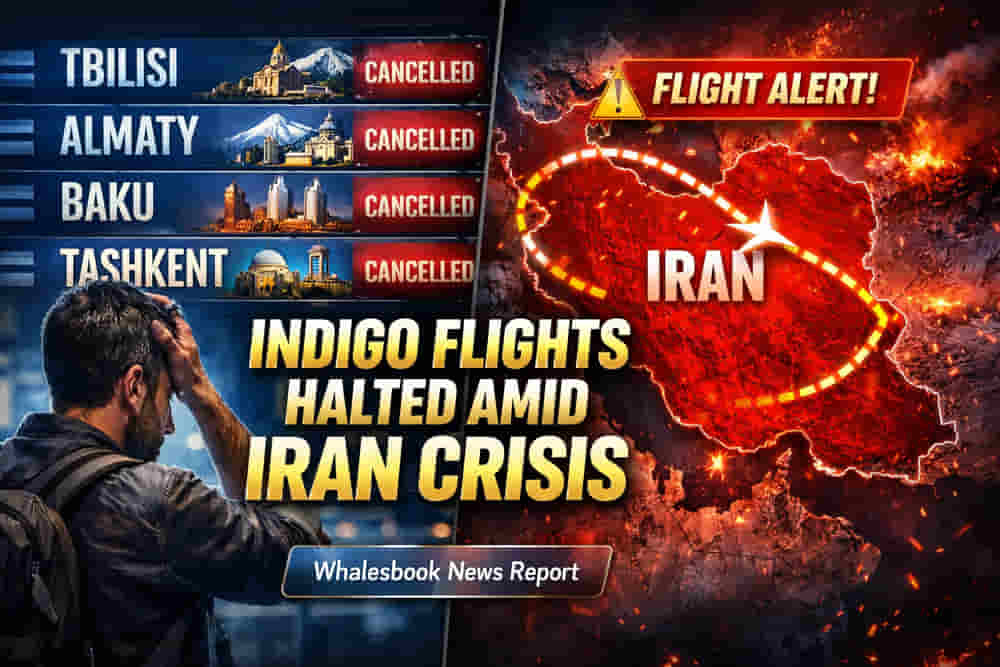
The Seamless Link
The extended cancellation of IndiGo flights to and from Tbilisi, Almaty, Baku, and Tashkent until March 28, 2026, directly reflects the escalating geopolitical situation around Iran. This prolonged disruption forces the airline and its passengers into alternative, less efficient operational configurations.
The Core Catalyst
IndiGo's decision to further extend flight cancellations on key Central Asian and Caucasus routes stems from the continued closure and uncertainty surrounding Iranian airspace due to regional tensions. Flights to these destinations, previously halted until February 28, will now remain suspended for an additional month. This necessitates rerouting long-haul operations, a measure also adopted by Air India, to avoid the volatile airspace. Such rerouting inherently increases flight times and fuel consumption, directly impacting operational costs and potentially straining the airline's already high-utilization model. While the airline asserts safety as the paramount concern and is reviewing schedules to minimize inconvenience, the financial implications of these extended detours and flight adjustments are significant. The stock, trading around ₹4,941, saw a modest uptick of 0.24% on February 16, 2026, but the ongoing operational headwinds present a clear challenge to its recent 3.9% monthly gains [17, 18].
Broader Operational Strain
These geopolitical-driven disruptions add another layer of complexity to IndiGo's operational environment. This comes after a tumultuous period in December 2025, where the airline faced mass cancellations due to non-compliance with Flight Duty Time Limitation (FTDL) regulations, leading to a significant drop in its domestic market share and a stock price decline of up to 17% [10, 14]. The current situation exacerbates the pressure on its fleet and schedule management, especially given its dominant market share of approximately 62% in the Indian aviation sector [17]. The company's market capitalization stands at a substantial ₹1.91 lakh crore, but its operational resilience is being tested by external factors beyond its immediate control [17].
Competitor Landscape and Historical Context
IndiGo is not alone in navigating these airspace challenges; Air India and SpiceJet are also implementing reroutes and cancellations [4, 5, 6]. However, IndiGo's extensive network and reliance on efficient routing make it particularly susceptible. Competitors like the Air India Group saw their market share increase to 29.6% in December 2025, benefiting from IndiGo's prior operational issues [10]. Historically, IndiGo has faced market reactions to operational setbacks, with earlier disruptions in 2019 and 2023 also causing swift stock declines [12]. While the company has a robust model, the recurring nature of these large-scale disruptions, whether internal or external, poses a significant risk to its reputation and operational consistency [11].
The Bear Case
The cumulative effect of geopolitical instability and prior operational missteps creates a potent bear case for IndiGo. Moody's has previously flagged its operational issues as credit-negative, citing "significant lapses in planning, oversight and resource management" [3, 9]. The current airspace closures add a new dimension of strategic risk, demanding costly rerouting and potentially impacting fleet efficiency. Furthermore, the Competition Commission of India (CCI) initiated a probe into IndiGo for alleged abuse of its dominant market position following the December 2025 cancellations, adding regulatory scrutiny to its operational challenges [10]. This regulatory pressure, combined with the potential for increased costs due to longer flight times and fuel burn, could erode margins. Concerns over leadership continuity also linger, with show-cause notices issued to the CEO and COO in late 2025 [3, 9]. The stock's P/E ratio of approximately 59, while not excessively high for a growth market, becomes a point of concern when coupled with these compounding operational and geopolitical risks [16].
The Future Outlook
Analysts remain divided, with price targets ranging widely from ₹4,050 to ₹7,025, reflecting uncertainty about the impact of these ongoing challenges [3]. While some brokerages like Jefferies and UBS maintain 'Buy' ratings, they acknowledge rising crew costs and potential delays in fleet expansion, such as the induction of A321XLR aircraft [3, 9]. The airline's ability to stabilize its operations and navigate both geopolitical headwinds and regulatory scrutiny will be critical in determining its performance trajectory into 2026.