 Whalesbook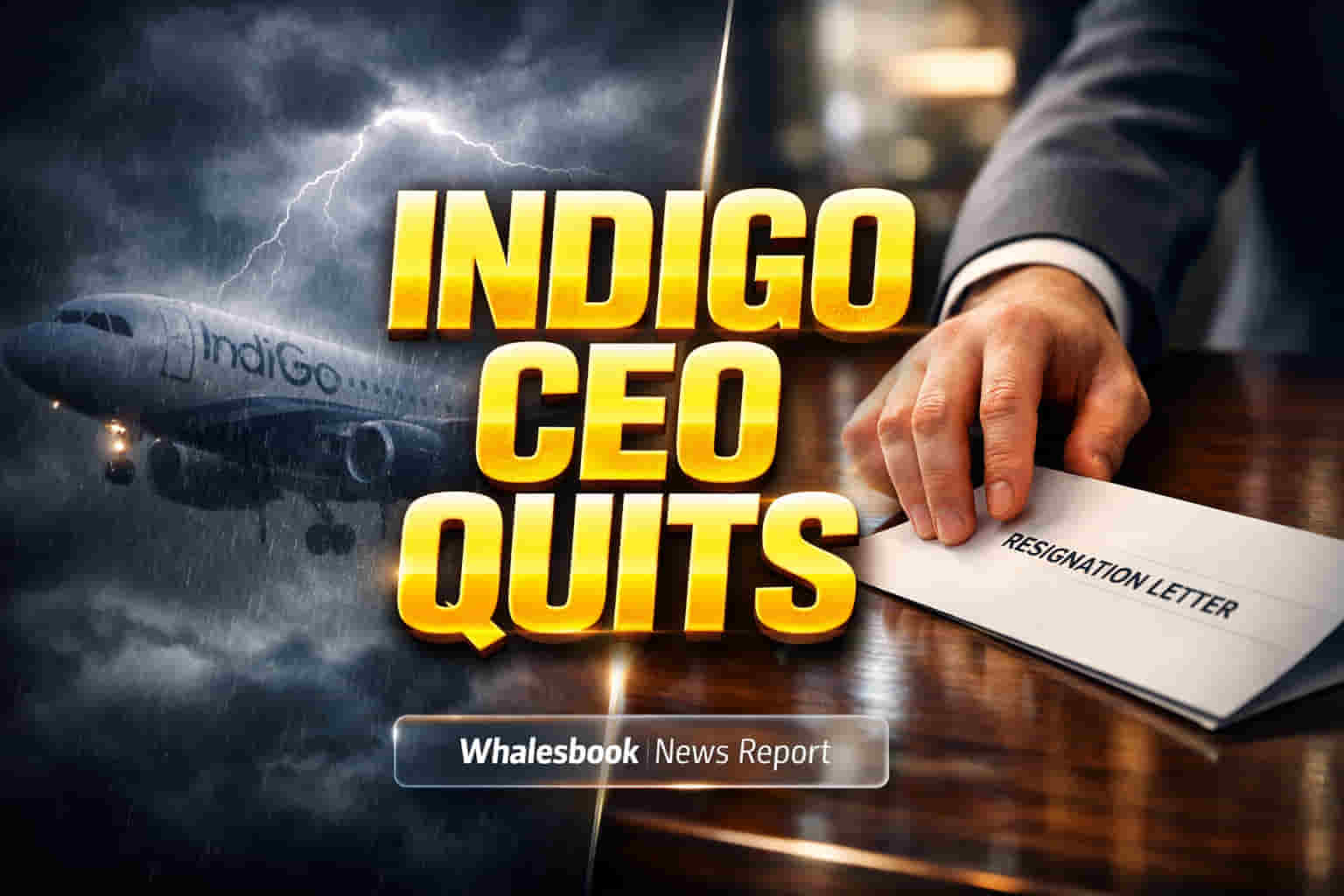


Facing a Tough Climb Amid Market Headwinds
InterGlobe Aviation, which runs India's biggest airline IndiGo, is facing a key leadership change. CEO Pieter Elbers will resign on March 10, 2026. Managing Director Rahul Bhatia will take over as interim chief to manage daily operations. This leadership shift comes as the airline deals with ongoing operational problems, increased global risks, and rising costs, especially from fluctuating fuel prices. The company's latest financial results show these difficulties: net profit fell sharply by 78% year-over-year to ₹550 crore in Q3 FY26, though revenue grew 6.15% to ₹23,472 crore.
The resignation of Pieter Elbers, who joined IndiGo in September 2022, means Rahul Bhatia, a company founder, will again serve as interim chief. This change follows a difficult period for the airline, including major flight disruptions in December that resulted in a ₹22.20 crore fine from the DGCA and left many passengers stranded. While Elbers noted issues during the disruption crisis, the airline's financial results are a major concern. The large gap between rising revenue and falling profit in Q3 FY26 points to severe margin squeezes, a key problem for the interim management.
IndiGo's operating costs are facing pressure from several sides. Aviation Turbine Fuel (ATF) prices have been highly unstable, partly due to Middle East tensions that sent crude oil over $80 a barrel. ATF makes up about 35-40% of an airline's operating costs, meaning IndiGo is very sensitive to these price jumps. Ongoing global conflicts have also caused airspace closures and longer flight paths, using more fuel and taking more time. Adding to these problems, a weaker Indian Rupee makes costs higher for expenses paid in foreign currency, like aircraft leases and pilot wages.
IndiGo, which holds a strong 57% share of the domestic market, faces tough competition. Its closest rival, SpiceJet, is in deep financial trouble, with a negative P/E ratio of -2.45 as of March 2026 and its stock down over 73% in the last year. Although IndiGo's P/E ratio is still positive, it's quite high, ranging from 36.7 to 58.00 recently. The overall outlook for the sector is grim; the Indian aviation industry is expected to lose ₹17,000 to ₹18,000 crore in FY2026. Analysts have cut their earnings per share (EPS) forecasts for IndiGo for FY26 and FY27 by 13% and 14% due to rising fuel costs.
Even with an analyst upgrade to 'Buy' from Kotak Institutional Equities (price target ₹5,500), IndiGo shares dropped 8% on March 9, 2026. This drop showed investor worries about rising costs. The market reaction contrasts with some analyst views, as price targets vary from ₹4,630 (JP Morgan, Neutral) to ₹6,600 (UBS, Buy).
IndiGo's strong market share and efficiency are facing challenges from outside forces. The company's Price-to-Earnings (P/E) ratio, around 53x in early March 2026, is seen as high. This could mean the stock is too expensive if fuel costs severely cut into profits. Unlike some rivals, IndiGo's stock has often dropped sharply when oil prices jump. The airline also relies heavily on international routes through the Middle East, making it vulnerable to ongoing geopolitical problems. Although Crisil has confirmed IndiGo's credit ratings, the airline's ability to recover operations is now up against major cost swings and a difficult operating climate, as shown by the December flight cancellations.
Analysts have mixed opinions on IndiGo's future. Many still rate the stock 'Buy', with average 12-month price targets suggesting potential gains. However, the path ahead is difficult. The interim management needs to manage rising fuel costs, possible currency issues, and the ongoing impact of operational problems. The aviation sector's expected losses for FY2026 add pressure, requiring IndiGo's leaders to focus on smart cost control and strong strategy to keep their market lead.