 Whalesbook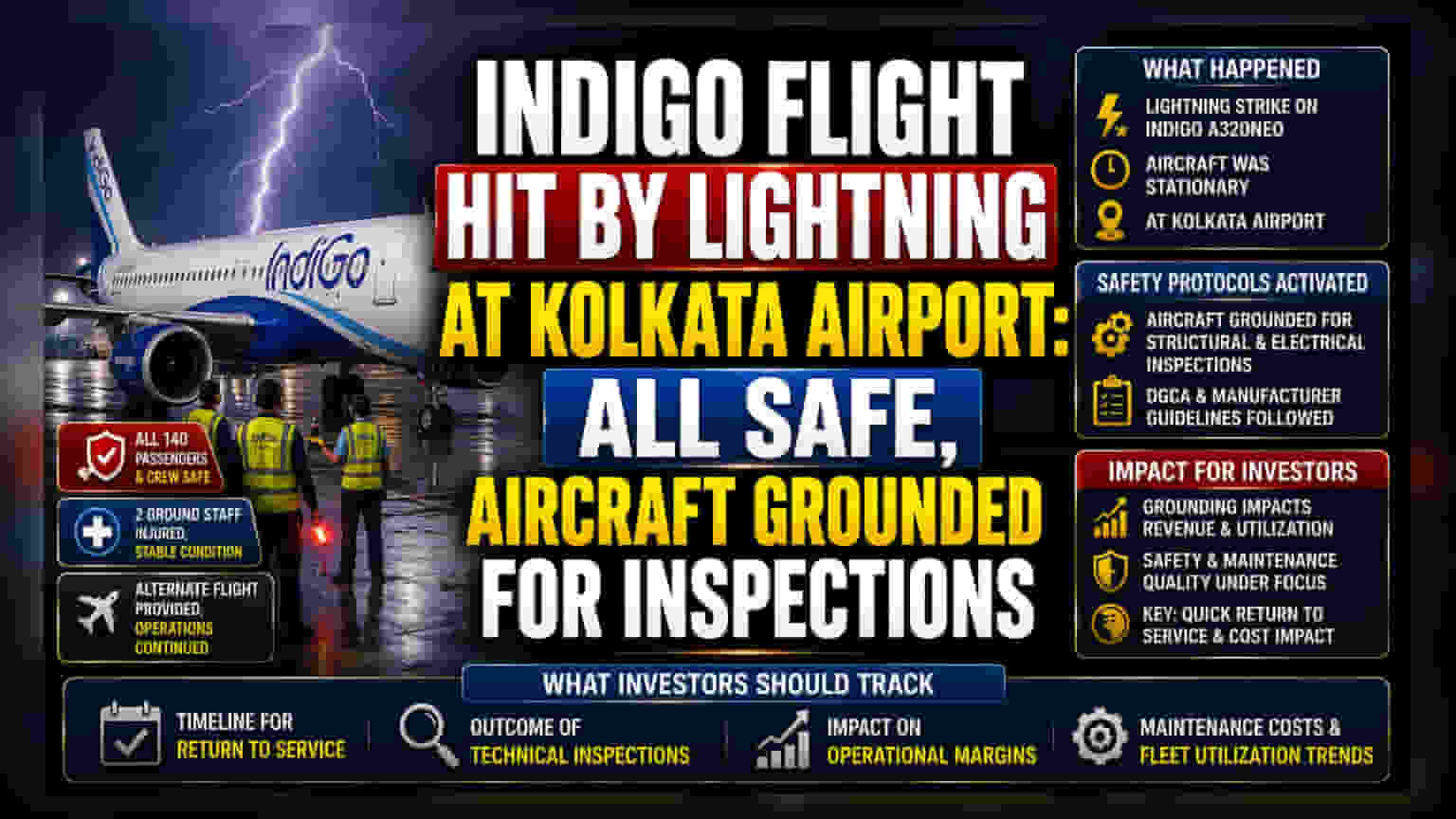
An IndiGo Airbus A320neo was grounded at Kolkata Airport on Friday following a lightning strike. All 140 passengers and crew members are safe, and the airline has rebooked passengers on another flight. While this is an operational incident involving safety protocols, investors typically monitor such events for potential impacts on short-term capacity, maintenance costs, and regulatory scrutiny by aviation authorities.
What Happened
An IndiGo Airbus A320neo aircraft was involved in a lightning strike at Kolkata Airport on Friday. The aircraft, which was scheduled to operate flight 6E 6068 to Agartala, was stationary at the time of the event. All 140 passengers and crew members on board were reported to be safe. Two ground staff members, who were working near the aircraft during the incident, required medical attention and are reported to be in stable condition.
Following the strike, the airline initiated standard safety protocols, which include grounding the aircraft for comprehensive structural and electrical inspections. Passengers were accommodated on an alternative flight to ensure they reached their destination with minimal disruption.
Operational and Safety Context
In the aviation sector, lightning strikes are treated as serious safety events. Commercial aircraft are designed to withstand such incidents, but mandatory inspections are required by the Directorate General of Civil Aviation (DGCA) and manufacturer guidelines before the plane can be cleared for flight again. For an airline, every hour an aircraft remains grounded for unscheduled maintenance results in a loss of potential revenue and incurs additional maintenance costs. While this is a single incident involving one aircraft in a large fleet, frequent technical groundings are often monitored by the market as they can impact fleet utilization efficiency.
How Investors May Read This
For shareholders and market participants, the primary concern in such incidents is usually the operational impact and regulatory compliance. IndiGo, as the largest airline in India, operates a high-frequency network where aircraft availability is critical to maintaining profit margins. While minor technical issues are common in airline operations, investors typically look for the frequency of such events and how quickly the airline can return the asset to service. Safety incidents often draw attention to the quality of maintenance and adherence to safety protocols, which are vital for maintaining investor trust and avoiding penalties or operational restrictions from aviation regulators.
What Investors Should Track
Investors may monitor official updates regarding the aircraft’s return to service. The key factor is the timeline for the technical inspection and the outcome of the post-incident assessment. Furthermore, market watchers often keep an eye on broader quarterly results to see if unexpected maintenance costs or asset grounding trends impact the airline's operational margins. While one-off incidents like this rarely change the long-term outlook of a major carrier, consistent operational reliability remains a fundamental metric for evaluating the company's efficiency.