 Whalesbook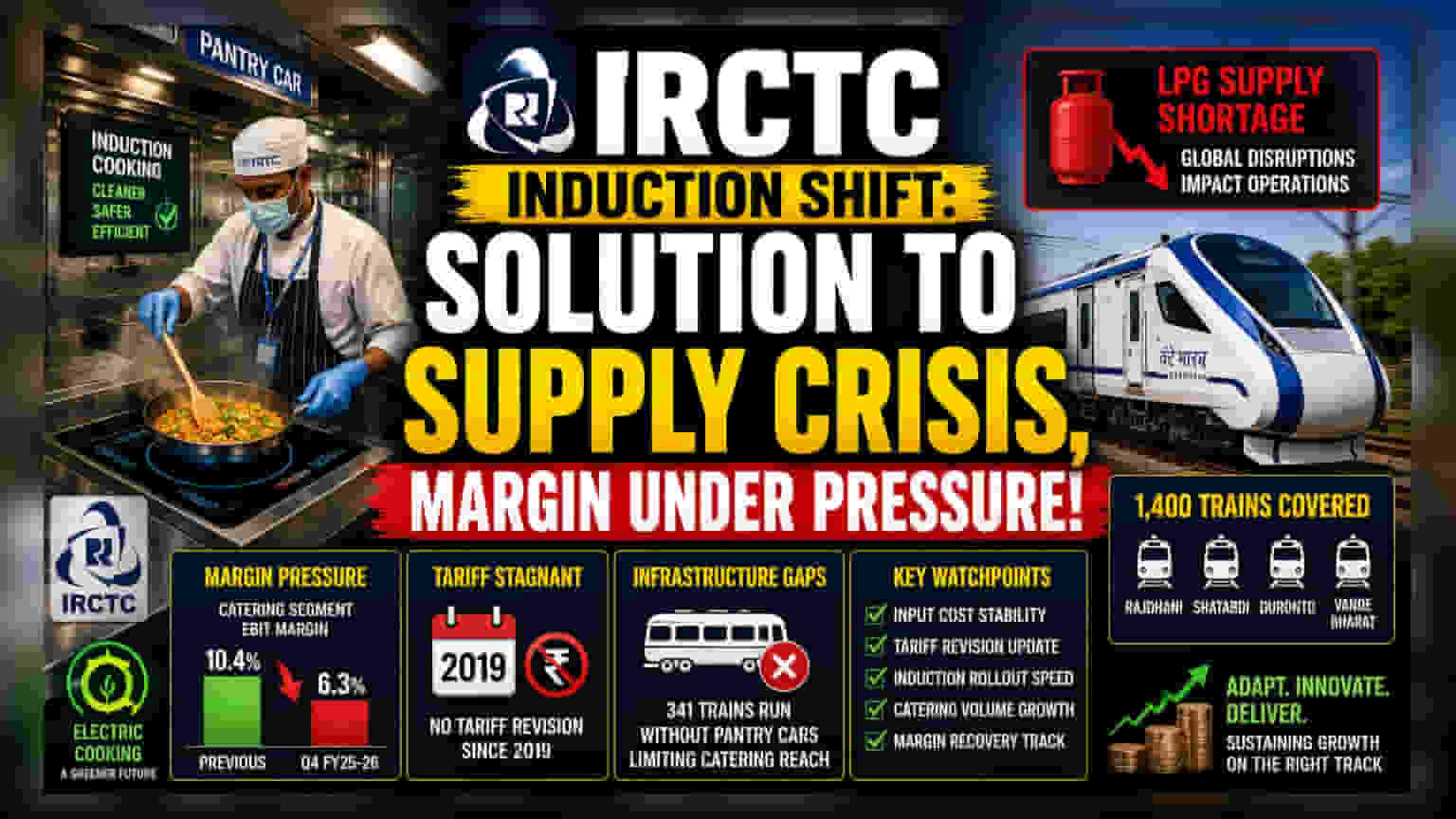


What Happened
The Indian Railway Catering and Tourism Corporation (IRCTC) has initiated a major operational shift by moving to electric induction stoves for meal preparation on moving trains. This move comes as a direct response to a significant shortage of commercial liquefied petroleum gas (LPG) cylinders, which are essential for the company's kitchen operations. By enabling electric cooking in pantry cars, particularly in LHB (Linke Hofmann Busch) coaches, the company intends to maintain food services across its network of 1,400 trains, including key services like Rajdhani, Shatabdi, Duronto, and Vande Bharat.
The Margin Test
For investors, the most critical aspect of this transition is its potential impact on profitability. IRCTC reported a noticeable drop in the catering segment's earnings margin in the fourth quarter of the 2025-26 fiscal year, falling to 6.3% from 10.4% in previous periods. This decline is largely attributed to higher input costs, which have been difficult to manage without periodic price revisions. Catering tariffs, which dictate what the company can charge for meals, have not seen a significant revision since 2019. Consequently, rising costs for fuel and raw materials directly squeeze the operating profit in this segment.
Infrastructure and Supply Risks
The shift to electric cooking also highlights the challenges within railway infrastructure. The current LPG supply squeeze is linked to disruptions in energy shipments through the Strait of Hormuz, a vital route for global oil and gas exports. This external pressure forces the company to adapt quickly. However, structural limitations remain. Official data indicates that many trains across the network still lack dedicated pantry facilities, with approximately 341 trains reported to operate without them. This limits the company's ability to provide full catering services across all routes, regardless of the cooking method used.
How Investors May Read This
The transition to induction cooking is a functional solution to a supply crisis, but it introduces its own set of operational requirements. Relying on electricity for cooking on a large scale requires consistent power availability and equipment maintenance on moving trains. Investors are likely to observe whether the company can successfully scale this model without facing technical delays or increased maintenance costs. Furthermore, since the company has not received a tariff hike in several years, the ability to improve margins through volume growth or cost-cutting measures becomes more important than ever.
What Investors Should Track
The key monitorables for shareholders include the company's ability to stabilize input costs despite the energy supply situation. Investors may look for updates on potential catering tariff revisions, as this would be the most effective way for the company to offset the rising expenses that are currently compressing margins. Additionally, tracking the speed at which the company brings more trains under the induction cooking model and monitoring overall catering volume growth will be essential to understanding whether the company can return to higher margin levels in future quarters.