

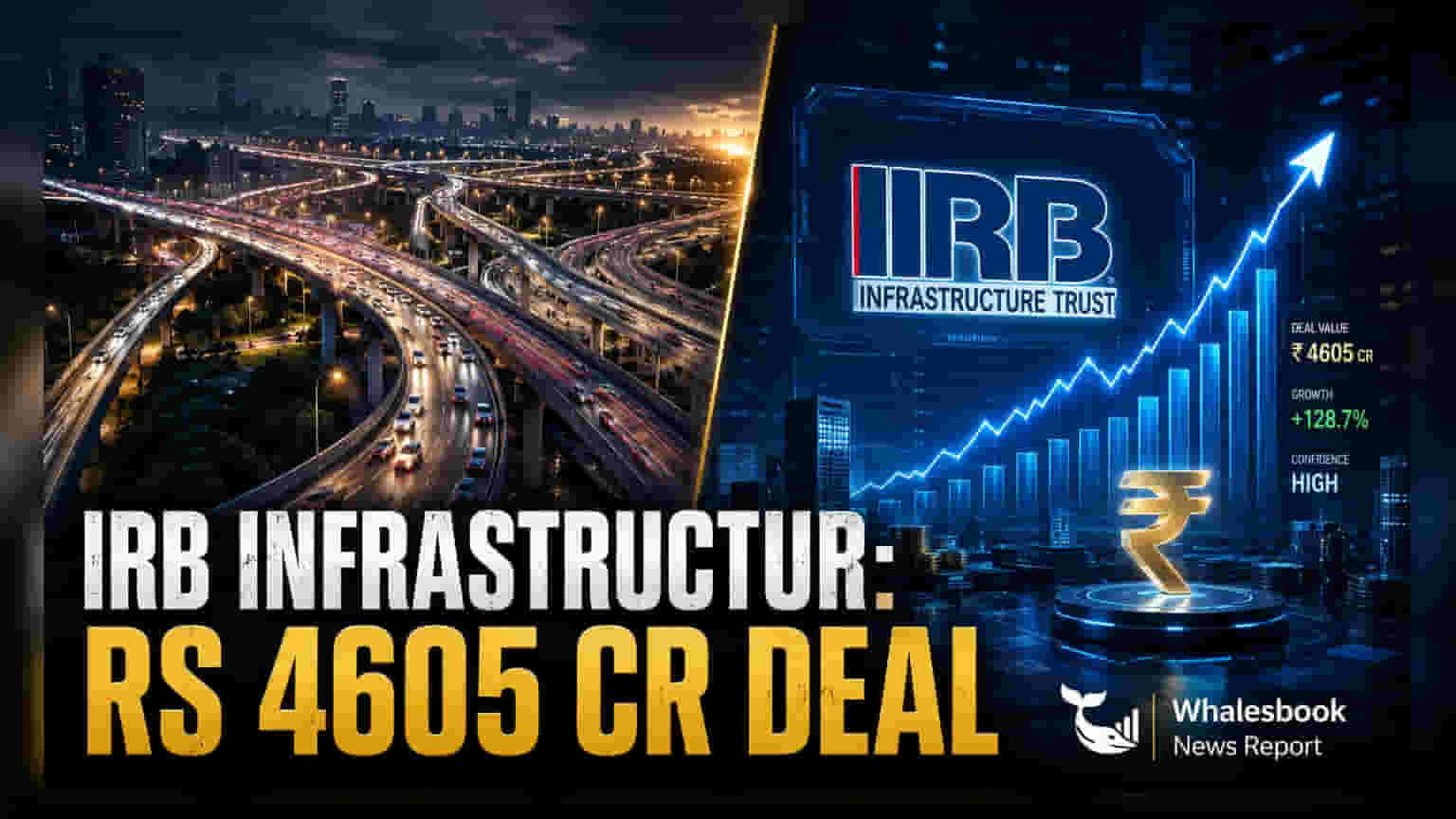
IRB Infrastructure Developers has signed a binding agreement to transfer two operational highway projects, Solapur-Yedeshi and Chittorgarh-Gulabpura, to the IRB InvIT Fund for an enterprise value of ₹4,605 crore. This move enables the company to recycle capital for new infrastructure bids and expands its fee-based project management income as part of its asset-light strategy.
What Happened
IRB Infrastructure Developers announced that its sponsored platforms—the private IRB Infrastructure Trust and the publicly listed IRB InvIT Fund—have signed a binding agreement to transfer two operational build-operate-transfer (BOT) highway projects. The deal, valued at an enterprise value of ₹4,605 crore, involves shifting 100% equity in the Solapur-Yedeshi Tollway and CG Tollway projects from the private trust to the public InvIT. The transaction is expected to be finalized by September 30, 2026, subject to regulatory and unitholder approvals.
Why This Matters for IRB
For IRB Infrastructure Developers, this transaction is a core part of its "B.E.S.T." strategy—an acronym for Bid, Execute, Stabilize, and Transfer. By transferring operational, revenue-generating assets to the public InvIT, the company effectively "recycles" its capital. This process unlocks equity value, which the company intends to redeploy into new, high-growth infrastructure projects. Instead of holding assets on its balance sheet for the long term, the company shifts focus toward an asset-light model where it acts as a project manager, earning stable, fee-based income from these highways over their remaining concession period.
Impact on the Business Model
Beyond just selling assets, the company is securing its role as the long-term Project Manager for these highways. This transition is significant because it shifts the company’s revenue profile. Rather than relying solely on construction revenue (EPC) or direct toll collection, the company now builds a recurring, long-term service income stream from project management and operations & maintenance (O&M) activities. This shift is designed to stabilize cash flows and reduce the need for constant, massive capital spending to maintain a growing asset base.
The InvIT Model and Risks
While this strategy helps with liquidity and balance sheet efficiency, investors should understand that it involves specific trade-offs. Infrastructure Investment Trusts (InvITs) like the IRB InvIT Fund rely on steady traffic volumes and toll collections to distribute cash to their unit holders. Any unexpected drop in traffic or change in regulatory policies regarding toll rates can impact the InvIT’s performance. Additionally, as the sponsor, IRB Infrastructure Developers remains linked to the success of these InvITs. If the assets do not perform as expected, it may affect the ability of the InvIT to acquire new assets from the sponsor in the future.
What Investors Should Track
Investors should monitor the actual completion of the deal by the target date of September 30, 2026, as any regulatory hurdles could delay the cash inflow. Beyond this transaction, the key monitorables are the company’s ability to successfully win new projects using the recycled capital, the growth of its O&M order book, and the overall traffic growth across its operational highway portfolio. Keeping an eye on management commentary regarding debt reduction, as funds from such deals are typically used to deleverage or fund new bids, will provide clarity on the company’s financial health.