 Whalesbook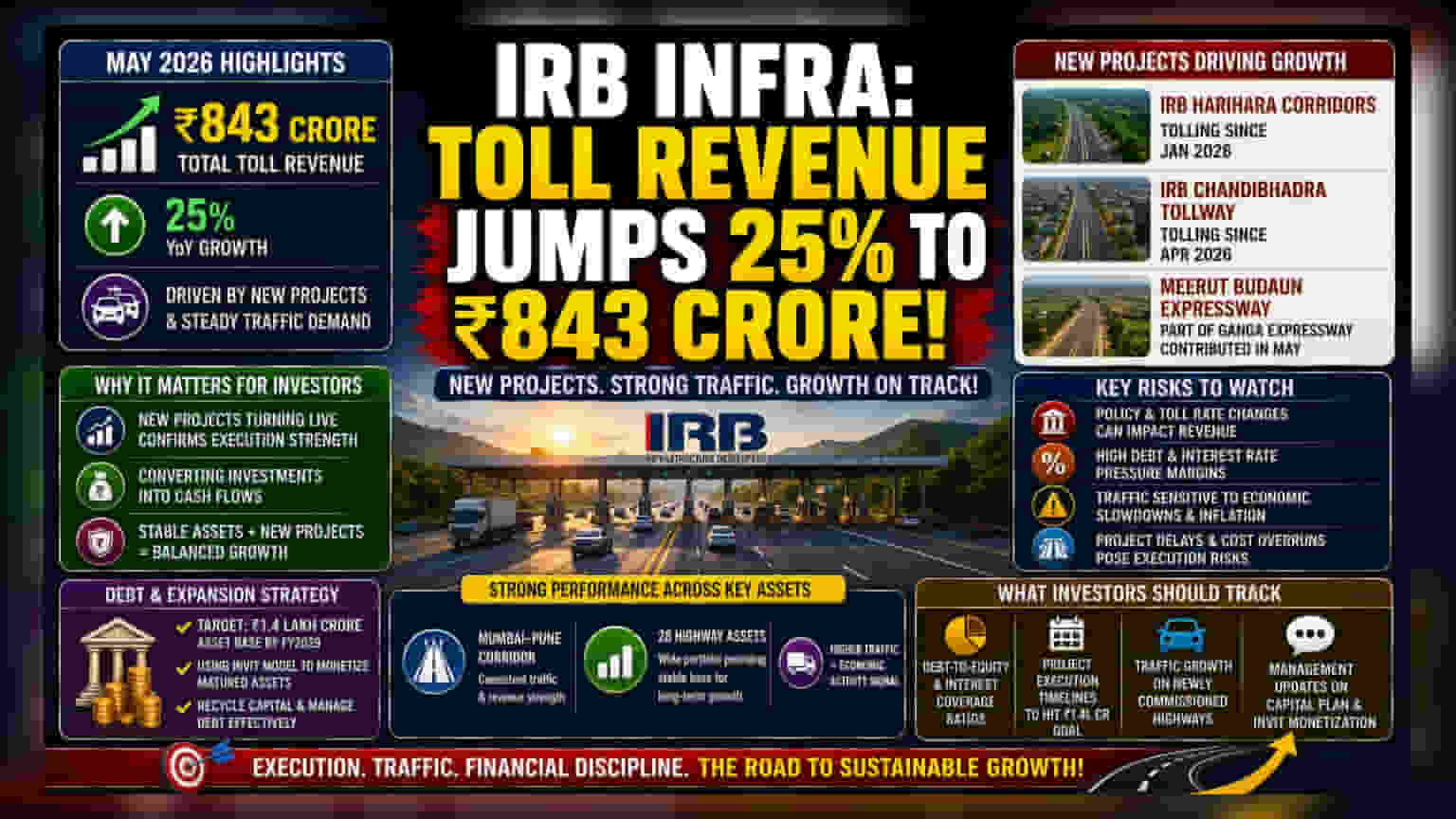


What Happened
IRB Infrastructure Developers announced that its total toll revenue for May 2026 reached Rs 843 crore, marking a 25% increase compared to May 2025. This rise in income was primarily driven by the commissioning of new highway projects that have recently begun toll collection, alongside consistent traffic demand across the company's existing network of 28 highway assets.
Key contributors to this performance included new projects like the IRB Harihara Corridors, which has been tolling since January 2026, and the IRB Chandibhadra Tollway, which started operations in April 2026. Additionally, the Meerut Budaun Expressway, a part of the Ganga Expressway project, contributed to the revenue despite being operational for only part of May.
Why This Matters For Investors
For an infrastructure company, the ability to turn a project from an under-construction site into a revenue-generating toll road is the most critical measure of success. The 25% revenue jump confirms that IRB is successfully completing and activating new highway assets. This is important because it shows the company is generating cash flow from its investments, rather than just accumulating debt. The consistent performance of long-standing assets, like the Mumbai-Pune corridor, provides a stable foundation, while the new projects offer the growth required to expand the business.
The Debt And Expansion Question
IRB Infrastructure has set an ambitious target to grow its asset base to Rs 1.4 lakh crore by FY2029. Large-scale expansion in the highway sector usually requires significant upfront money and heavy borrowing. Investors should note that the company often uses the Infrastructure Investment Trust (InvIT) model to transfer matured, revenue-generating assets out of its main balance sheet. This strategy helps the company manage its debt load while recycling capital to fund new projects. Tracking how the company balances its debt with this aggressive growth target will be essential for shareholders, as higher debt levels can lead to increased interest costs, which can squeeze profit margins if not managed carefully.
How Investors May Read This
Toll revenue is often seen as a real-time indicator of economic activity. When traffic increases, it suggests that the movement of goods and people is healthy. However, investors should also be aware that this revenue growth is sensitive to macroeconomic factors. For instance, high inflation or a slowdown in industrial activity can cause vehicle owners and logistics companies to travel less, directly hitting toll collections. Therefore, while a 25% jump is positive, the company’s ability to maintain this momentum depends heavily on India’s broader economic health and traffic patterns.
Risks And Concerns
Beyond just revenue numbers, there are several risks inherent in the toll road business. First, changes in government policy regarding toll collection methods or rates can directly impact revenue. Second, the sector is highly sensitive to interest rates; since these projects are debt-heavy, any sharp rise in interest costs can eat into profits. Third, while most of IRB’s portfolio is performing well, some projects may face demand challenges, as seen in the slight decline in collections for the Samakhiyali Tollway. Investors should be cautious of over-reliance on a few key assets and watch for potential cost overruns in upcoming large-scale projects.
What Investors Should Track
Going forward, the key things to watch are the debt-to-equity ratio and interest coverage metrics in the upcoming quarterly reports. Investors should also monitor management’s commentary on project execution timelines for the Rs 1.4 lakh crore asset goal. Additionally, keep an eye on traffic growth data for the newly commissioned highways, as their performance over the next few quarters will determine if they can effectively boost the company's long-term profitability.