

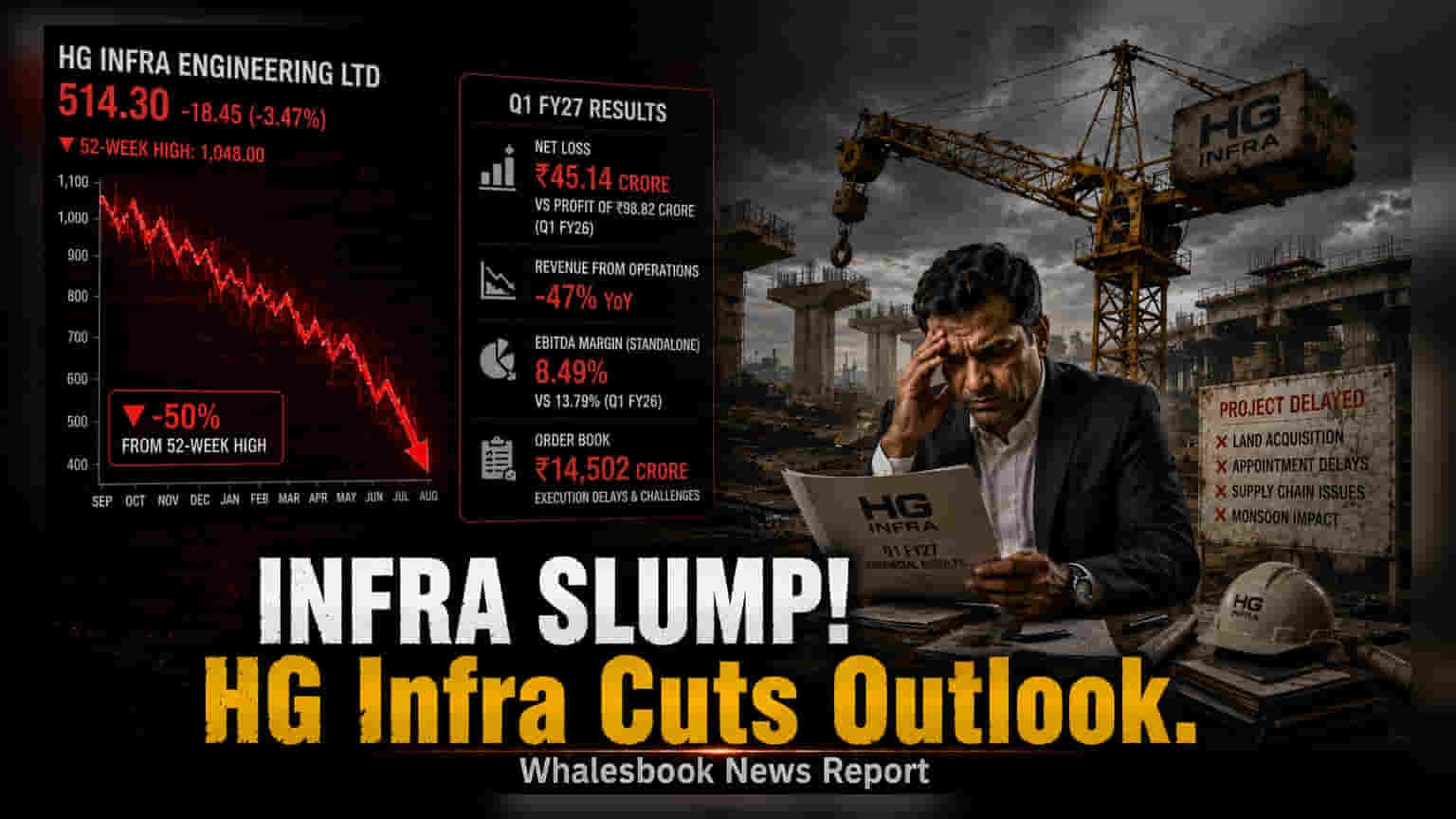
HG Infra Engineering reported a consolidated net loss of ₹45 crore for the June quarter as revenues dropped nearly 47% year-on-year. The company faced significant execution challenges, including land acquisition issues and supply chain constraints. Investors are now closely monitoring how these project delays impact the company’s ability to convert its robust order book into revenue.
HG Infra Engineering released its financial results for the first quarter of fiscal year 2027 (ended June 30, 2026), reflecting a challenging period for the infrastructure developer. The company reported a consolidated net loss of ₹45.14 crore, a sharp reversal from the profit of ₹98.82 crore recorded in the same quarter last year. Revenue from operations fell significantly by approximately 47% compared to the previous year, highlighting the difficulties the firm is facing in maintaining its growth pace.
The decline in financial performance is largely attributed to operational headwinds that have slowed down project progress. Management identified several key issues during the quarter, including delays in project appointments, ongoing land acquisition challenges, and supply chain constraints. Additionally, monsoon-related disruptions played a role in slowing down construction activity, which is a common seasonal challenge for many infrastructure players in India.
Profit margins have also come under pressure. Standalone EBITDA margins for the quarter compressed to 8.49%, down from 13.79% in the same quarter of the previous year. This contraction suggests that the company is dealing with higher costs or reduced efficiency as it attempts to manage project delays and navigate a difficult operating environment.
Despite the recent performance slump, the company retains a substantial order book of approximately ₹14,502 crore. While this figure provides some visibility for future work, the core concern for investors remains the gap between the total order book and the company's ability to execute these projects on time. The conversion of these orders into revenue is directly linked to the resolution of land and regulatory hurdles, which management is currently addressing.
From a market perspective, the share price has seen significant volatility, recently trading in the ₹514-516 range. This level is approximately 50% below the stock’s 52-week high, reflecting investor caution regarding the company’s short-term outlook and the ongoing execution risks in the infrastructure sector.
Moving forward, investors will be tracking the company's ability to improve execution speeds in the coming quarters. Key monitorables include any updates on land acquisition progress, improvements in quarterly margins, and the actual pace of project revenue recognition. The infrastructure sector is inherently cyclical, and the company’s performance will depend heavily on its success in overcoming these specific project-level obstacles to return to profitability.