 Whalesbook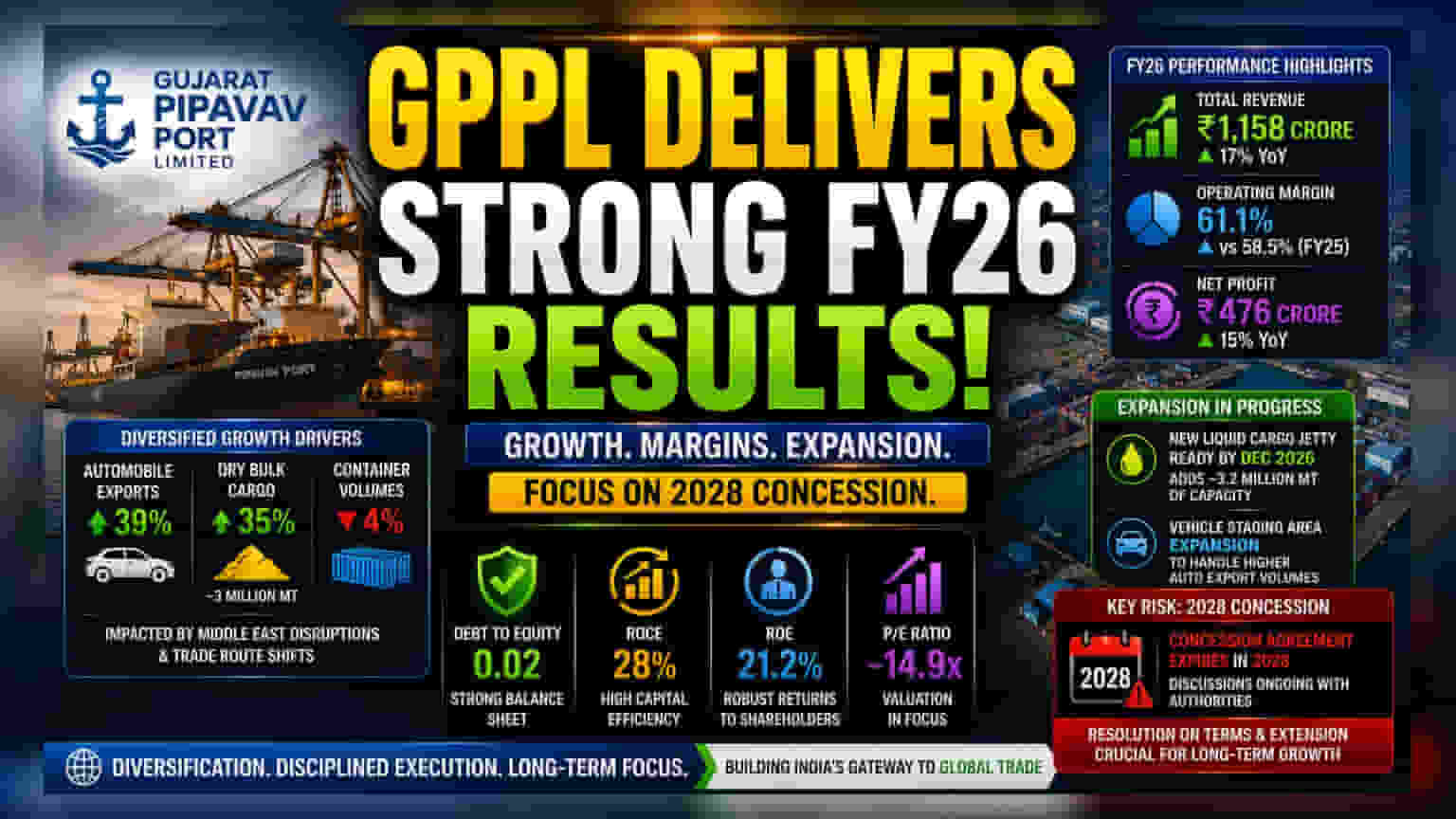


Gujarat Pipavav Port reported a 17% revenue increase to Rs 1,158 crore in FY26, driven by strong growth in vehicle and dry bulk cargo. While operating margins improved, container volumes slipped by 4% due to global shipping disruptions. Investors should note the company's strong balance sheet and high return ratios, balanced against the critical need for a resolution regarding its concession agreement, which expires in 2028.
What Happened
Gujarat Pipavav Port Limited (GPPL) reported a strong financial performance for the fiscal year 2026. The company achieved a 17% increase in total revenue, reaching Rs 1,158 crore. This growth was fueled by significant gains in non-container segments, specifically in vehicle exports and dry bulk cargo. Operating margins also improved, reaching 61.1% for the year, compared to 58.5% in the previous year. Despite the overall positive financial figures, the company saw a 4% decline in container volumes, which the company attributed to ongoing shipping disruptions in the Middle East and changes in global trade routes.
Why This Matters For Investors
For shareholders, the results highlight a tug-of-war between strong operational efficiency and external demand challenges. The company’s ability to rely on diverse revenue streams—like automobile exports and bulk cargo—has helped offset the drop in container traffic. Automobile exports surged by 39%, while dry bulk cargo volumes grew by 35% to nearly 3 million metric tonnes. This diversification is crucial because container shipping is often tied to global geopolitical events, which can be unpredictable. When one segment faces trouble, having other revenue drivers provides a cushion for profits.
Financial Health and Expansion
From a financial standpoint, GPPL remains in a strong position. With a debt-to-equity ratio of just 0.02, the company is effectively operating without significant debt pressure. This financial strength supports its high return ratios, with a Return on Capital Employed (ROCE) of 28% and a Return on Equity (ROE) of 21.2%. The company continues to invest in future growth as well. It is building a new liquid cargo jetty, expected to be operational by December 2026, which will add roughly 3.2 million metric tonnes of capacity. Additionally, it is expanding its vehicle staging area to handle higher volumes of automobile exports.
The Concession Agreement Risk
While the financials appear solid, the most significant long-term risk for investors is the expiration of the company's concession agreement with the Gujarat Maritime Board in 2028. This is a critical monitorable. The agreement defines the company's right to operate the port. Until there is a formal, long-term resolution or extension regarding this agreement, investors may remain cautious. While reports indicate that discussions with the authorities are ongoing, the uncertainty regarding the terms of a future agreement remains a primary point of focus for the market.
How Investors May Read This
Investors often look at ports through the lens of volume stability and regulatory certainty. The current 61.1% operating margin suggests strong efficiency and cost management. However, the market will likely continue to weigh this operational strength against the 2028 deadline. Compared to larger peers in the sector, such as Adani Ports, GPPL operates on a specific concession model that is highly dependent on state-level regulatory decisions. Consequently, positive updates on these discussions would be seen as a key trigger for the stock's valuation, which currently trades at approximately 14.9 times earnings.