

Gujarat has launched its Green Mobility Policy 2026, targeting 30% of new vehicle registrations to be green by 2031. While the policy promotes EVs, hydrogen, and ethanol, the state faces challenges in public transit infrastructure and charging networks that investors should monitor for long-term execution success.
On August 21, 2026, the Gujarat government officially launched the Green Mobility Policy 2026, a significant step toward decarbonizing the state's transport sector. The policy sets an ambitious goal for 30% of all new vehicle registrations in the state to be green vehicles—covering electric vehicles, hydrogen fuel, and ethanol—by 2031.
A key part of this strategy involves shifting new registrations for two-wheelers, passenger cars, and light goods vehicles toward green categories in priority sectors starting January 1, 2029. To support this, the government has announced various incentives, including up to 30% capital subsidies for building hydrogen refueling stations and scrappage incentives to help remove older, polluting vehicles from the roads.
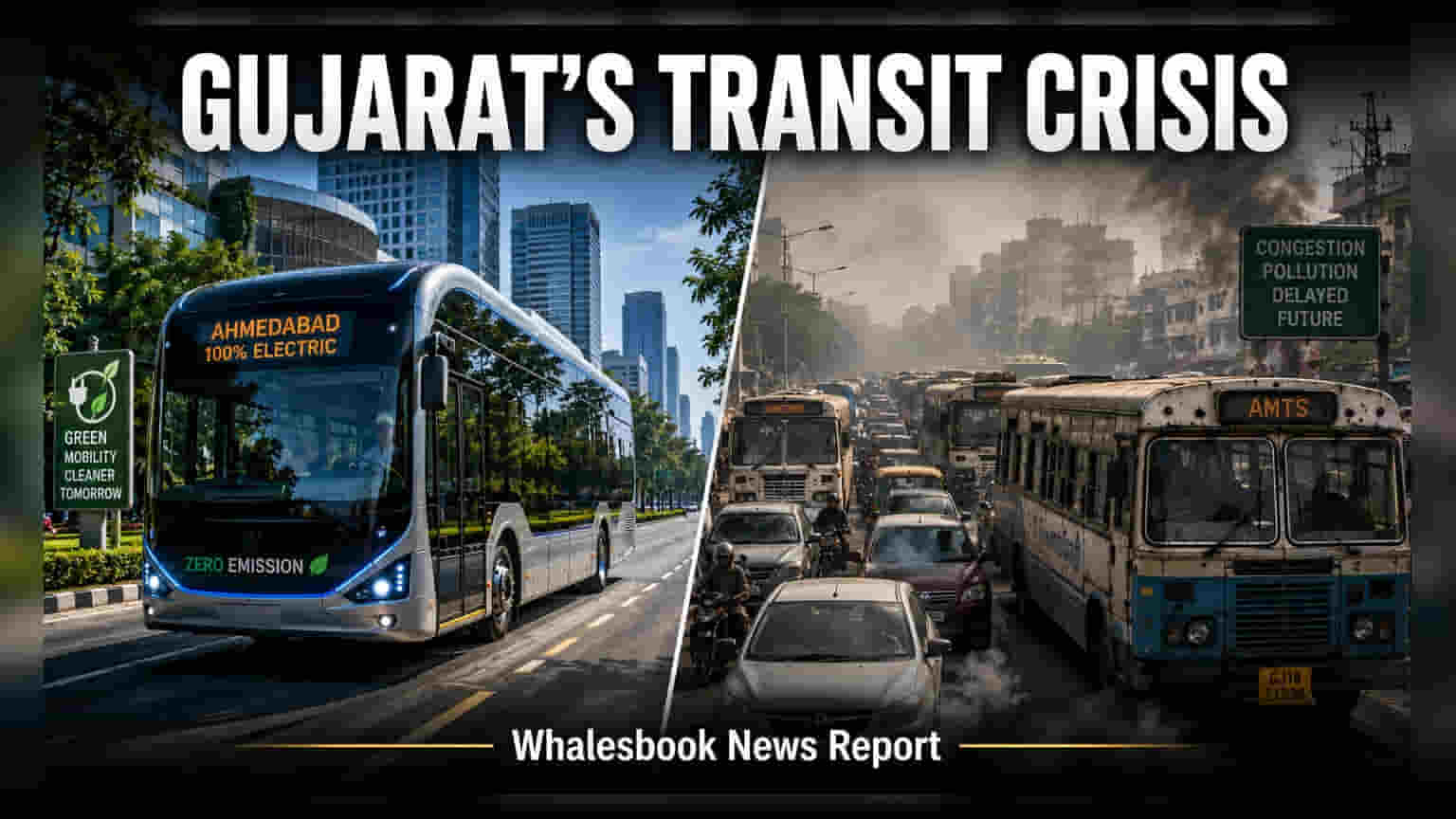
However, the transition faces practical hurdles beyond vehicle sales. Urban planners have pointed out that a major gap in the current transport strategy is the lack of robust public transit. In cities like Ahmedabad, the existing public bus fleet falls significantly short of national service benchmarks. Simply swapping private petrol cars for electric equivalents does not solve the underlying issue of road congestion. Experts argue that until the state integrates high-capacity public transit systems, the overall reduction in traffic and pollution may be slower than planned.
For investors, the policy creates a new landscape for companies involved in the EV supply chain, clean energy, and charging infrastructure. The government's focus on hydrogen and ethanol alongside EVs suggests a technology-agnostic approach, which may benefit manufacturers with diversified clean-energy portfolios. However, the business success of these companies will depend heavily on the state's ability to roll out charging networks and public transit expansion efficiently.
The risks for companies in this sector include potential execution delays and the ongoing need for imported battery materials. Furthermore, fluctuations in commodity costs, such as steel and rubber, continue to exert margin pressure on automotive manufacturers. Investors may track the actual deployment of charging infrastructure and the adoption rate of green buses in urban centers, as these factors will determine whether the policy can overcome the current infrastructure bottlenecks.