 Whalesbook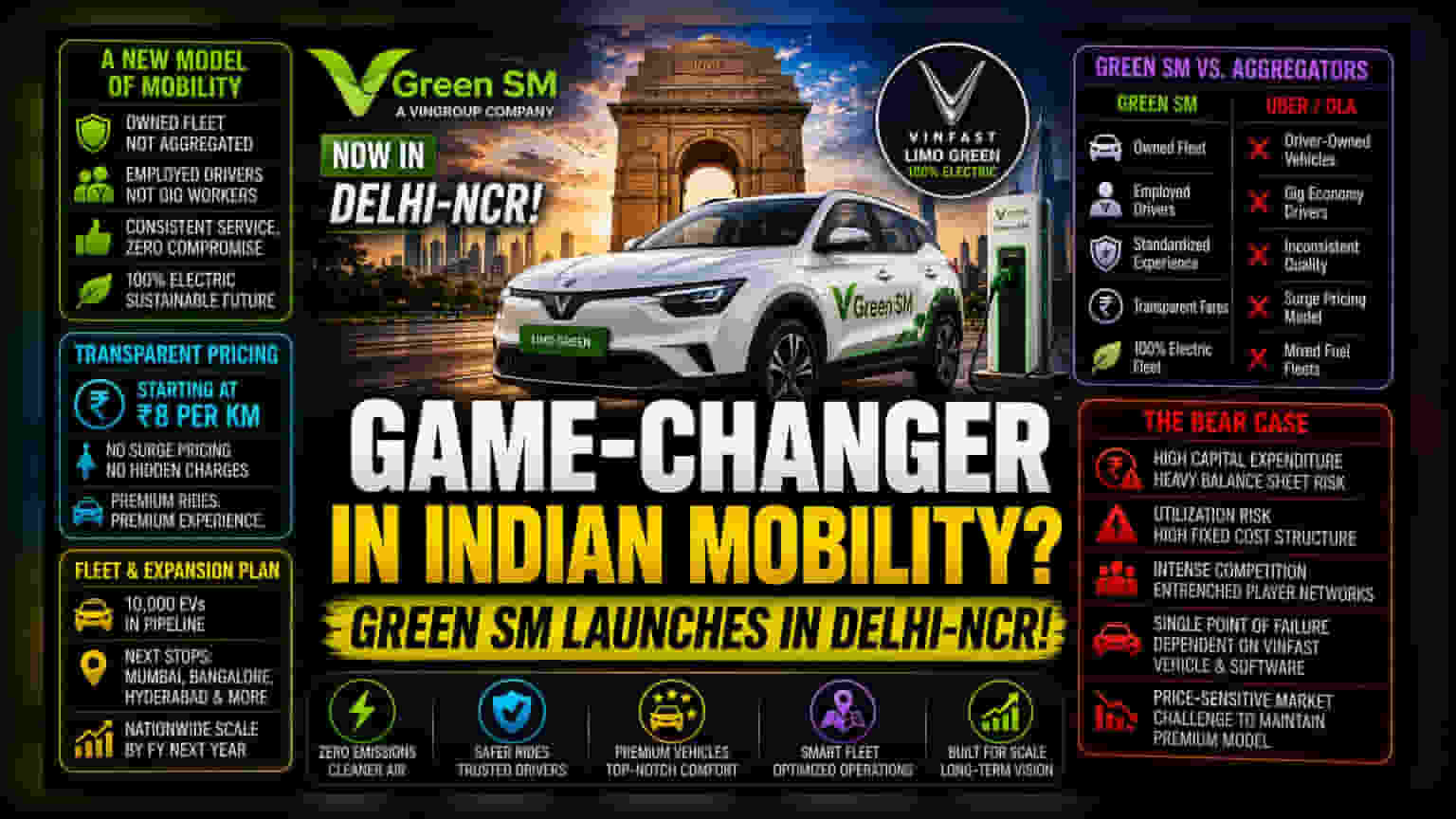


The Shift to Controlled Mobility
Green SM, the mobility arm of Vietnam’s Vingroup, has officially deployed its electric fleet in the Delhi-NCR market, marking a fundamental divergence from the dominant aggregator model in India. While giants such as Uber and Ola rely on gig-economy drivers who own or lease their vehicles, Green SM operates an asset-heavy structure. By owning the entire fleet of VinFast Limo Green SUVs and employing its drivers directly, the company seeks to standardize the passenger experience—a notorious pain point in the Indian ride-hailing sector where cancellations and inconsistent vehicle quality are endemic.
Operational Realities and Unit Economics
The viability of this model rests on the company’s ability to manage the substantial capital intensity inherent in its strategy. Unlike the asset-light aggregator approach, Green SM bears the full burden of vehicle procurement, maintenance, insurance, and charging infrastructure. This strategy mirrors the path taken by other green mobility entrants, such as BluSmart, which previously attempted to fill the quality gap in the Indian market before encountering significant corporate and operational headwinds. With VinFast providing the hardware, Green SM effectively acts as a rolling billboard, exposing thousands of daily commuters to the brand’s vehicle quality. However, the company must maintain high utilization rates to offset the fixed costs of its fleet, as traditional surge pricing—the primary tool used by competitors to balance supply and demand—is absent in its initial launch phase. Fares starting at approximately Rs 8 per kilometer present an aggressive entry point, though the long-term sustainability of such pricing remains subject to the company’s ability to optimize its charging and driver-deployment loops.
The Forensic Bear Case
The primary risks to the Green SM model are systemic and operational. First, the capital expenditure required to scale a fleet of 10,000 electric vehicles is monumental; any slowdown in utilization or failure to achieve operational efficiency will reflect immediately on the balance sheet. Furthermore, the company faces intense competition from established players who command vast, entrenched driver networks and significant data moats. While VinFast, the parent vehicle manufacturer, provides a vertical integration advantage, it also creates a single point of failure—any manufacturing or software issues with the VinFast Limo Green could result in widespread fleet downtime. Additionally, history has shown that the Indian ride-hailing market is notoriously price-sensitive, and a model predicated on premium service and fixed employee costs may struggle to compete if traditional aggregators successfully pivot their own fleets toward electrification.
Future Outlook
Green SM’s success in Delhi-NCR will likely serve as the litmus test for its broader Indian expansion. If the company can demonstrate sustained service reliability and unit-level profitability, it has stated intentions to scale into metropolitan centers including Mumbai, Bangalore, and Hyderabad by the following fiscal year. However, investors and industry observers are closely monitoring the firm’s ability to handle the logistics of rapid fleet scaling. With the Indian electric four-wheeler market experiencing rapid adoption—now reaching penetration levels of over 6%—the opportunity is significant, but the graveyard of mobility startups in this region is well-populated by companies that underestimated the complexity of managing a large-scale, owned fleet.