 Whalesbook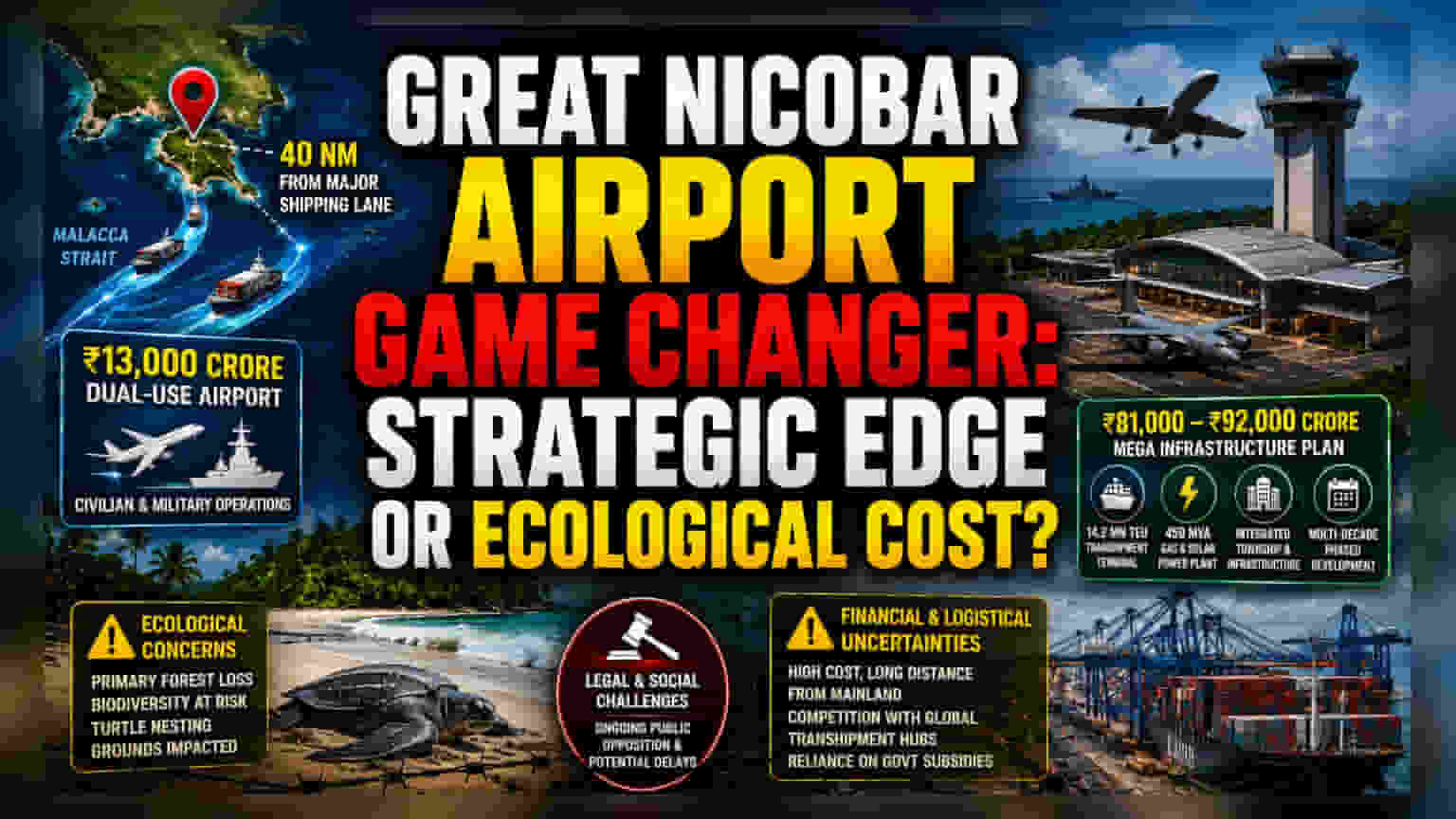


The Geopolitical Calculus
The approval of a Rs 13,000 crore dual-use airport on the Great Nicobar Islands represents more than a local infrastructure upgrade; it is the most significant tactical expansion of India’s maritime reach in decades. Situated just 40 nautical miles from the East-West shipping route—a corridor handling roughly half of global container traffic—the airfield is designed to function as a forward-operating base for the Indian Navy. By providing airside operations that accommodate both civilian air traffic and military surveillance, the facility is engineered to reduce military response times across the eastern Indian Ocean and establish a permanent, digitized ecosystem near the Malacca Strait.
Scaling the Infrastructure
This airport is a singular component of a far more expansive, multi-decade development plan currently estimated at Rs 81,000 crore to Rs 92,000 crore. The overarching scheme aims to transform the island into a logistics powerhouse, anchored by a 14.2 million TEU International Container Transhipment Terminal at Galathea Bay. Proponents argue this is essential to end India's reliance on foreign transshipment hubs like Singapore and Colombo, which currently siphon off significant maritime revenue. The integrated project scope, encompassing a 450 MVA gas and solar power plant and a township capable of supporting thousands, signals New Delhi’s intent to maintain a permanent, high-intensity presence in the region.
The Forensic Bear Case
While the strategic narrative is robust, the project remains a contentious target for ecological and financial critics. The transformation of 166.10 square kilometers—the majority being primary tropical forest and tribal land—has drawn intense opposition from environmental researchers and civil society groups. Skeptics point to the loss of biodiversity, including critical nesting grounds for leatherback sea turtles, as an irreversible cost of development.
From a financial and logistical perspective, seasoned analysts have questioned the long-term commercial utility of a mega-port located nearly 1,400 kilometers from the Indian mainland. There is valid skepticism regarding whether the transshipment terminal can compete with established, hyper-efficient global hubs without sustained, deep-pocketed government subsidies. Furthermore, past legal challenges have emphasized the fragility of the region; while the National Green Tribunal recently dismissed objections regarding environmental clearances, the project continues to operate under a cloud of social and legal scrutiny that could trigger future delays or cost overruns as the phased development proceeds toward its multi-decade target.