

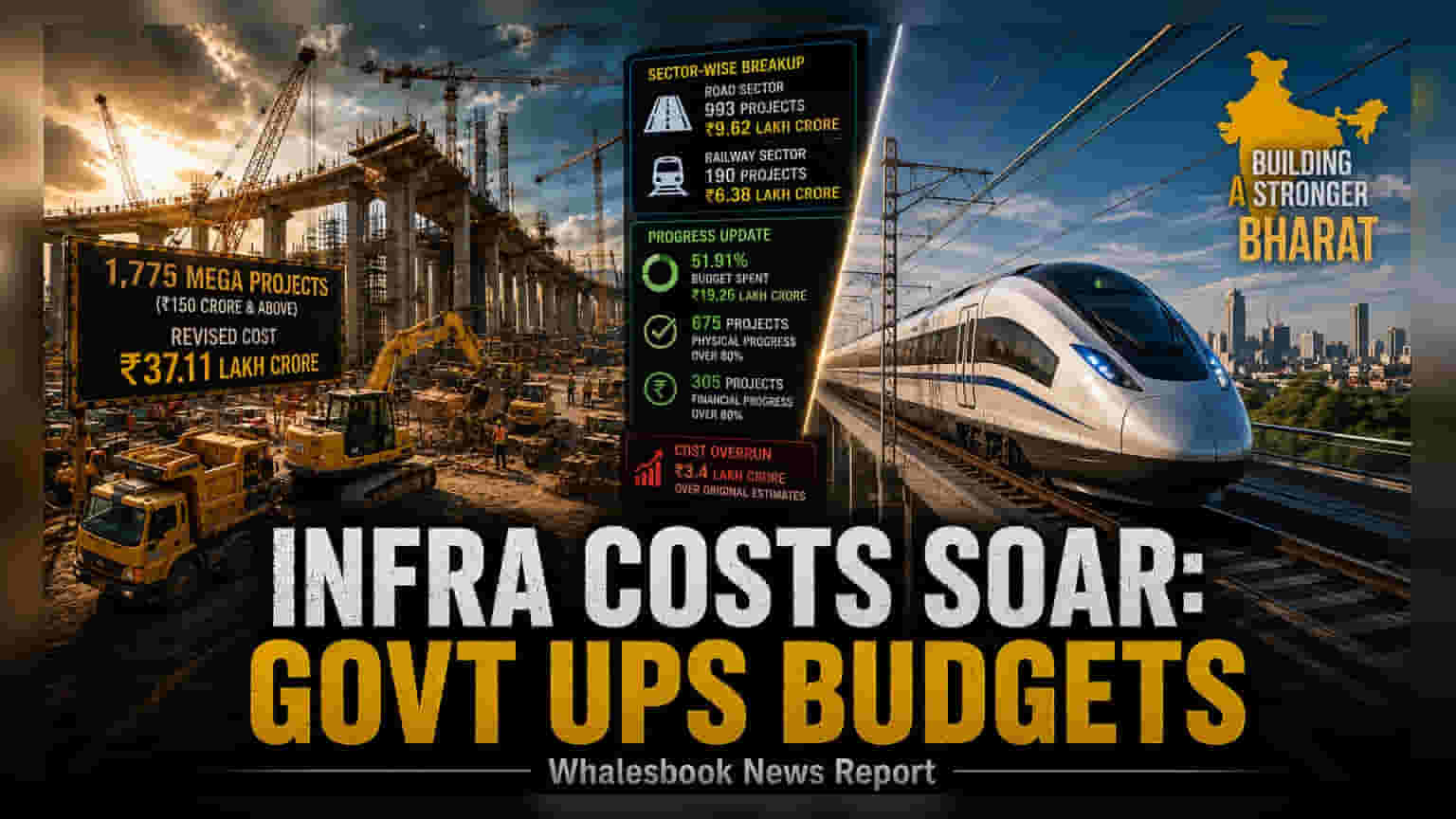
The central government has updated cost estimates for 1,775 major infrastructure projects, bringing the total revised cost to ₹37.11 lakh crore. While the data shows steady progress with over half the budget already spent, the figures reveal significant cost overruns that investors should note.
The central government has released an update on the status of 1,775 major infrastructure projects across the country, each valued at ₹150 crore or more. As of July 2026, the total cost for these projects has been revised to ₹37.11 lakh crore. This update provides a view into the ongoing push for connectivity, with the road and railway sectors leading the activity.
The road sector accounts for the largest share of this pipeline, with 993 projects now carrying a revised cost of ₹9.62 lakh crore. The railway sector follows, with 190 ongoing projects valued at a revised cost of ₹6.38 lakh crore. These updates reflect the changing economic realities and necessary adjustments for projects of this scale.
From an investor perspective, the data offers both growth signals and financial risks. On the positive side, significant headway has been made, with roughly 51.91% of the total revised budget already spent, amounting to ₹19.26 lakh crore. A large number of these initiatives are nearing completion, as 675 projects have crossed 80% in physical progress, and 305 have achieved similar levels of financial completion. For investors, this steady progress often suggests that construction companies involved in these projects are moving toward final billing, which can support revenue stability.
However, the revision also highlights a financial challenge. The data indicates a cumulative cost overrun of approximately ₹3.4 lakh crore compared to original estimates. While government-funded projects may have different payment terms, cost overruns in the broader construction sector can lead to margin pressure for private contractors, particularly if project contracts are fixed-price and do not fully account for inflation in raw materials like steel and cement.
Investors in infrastructure and construction firms should monitor how these companies manage their order books and control costs. The pace of execution is crucial, as projects still in the early stages remain vulnerable to delays from land acquisition issues or sudden price fluctuations in inputs. Moving forward, the most important updates to watch will be project commissioning timelines and management commentary on profit margins for large, long-term orders.