

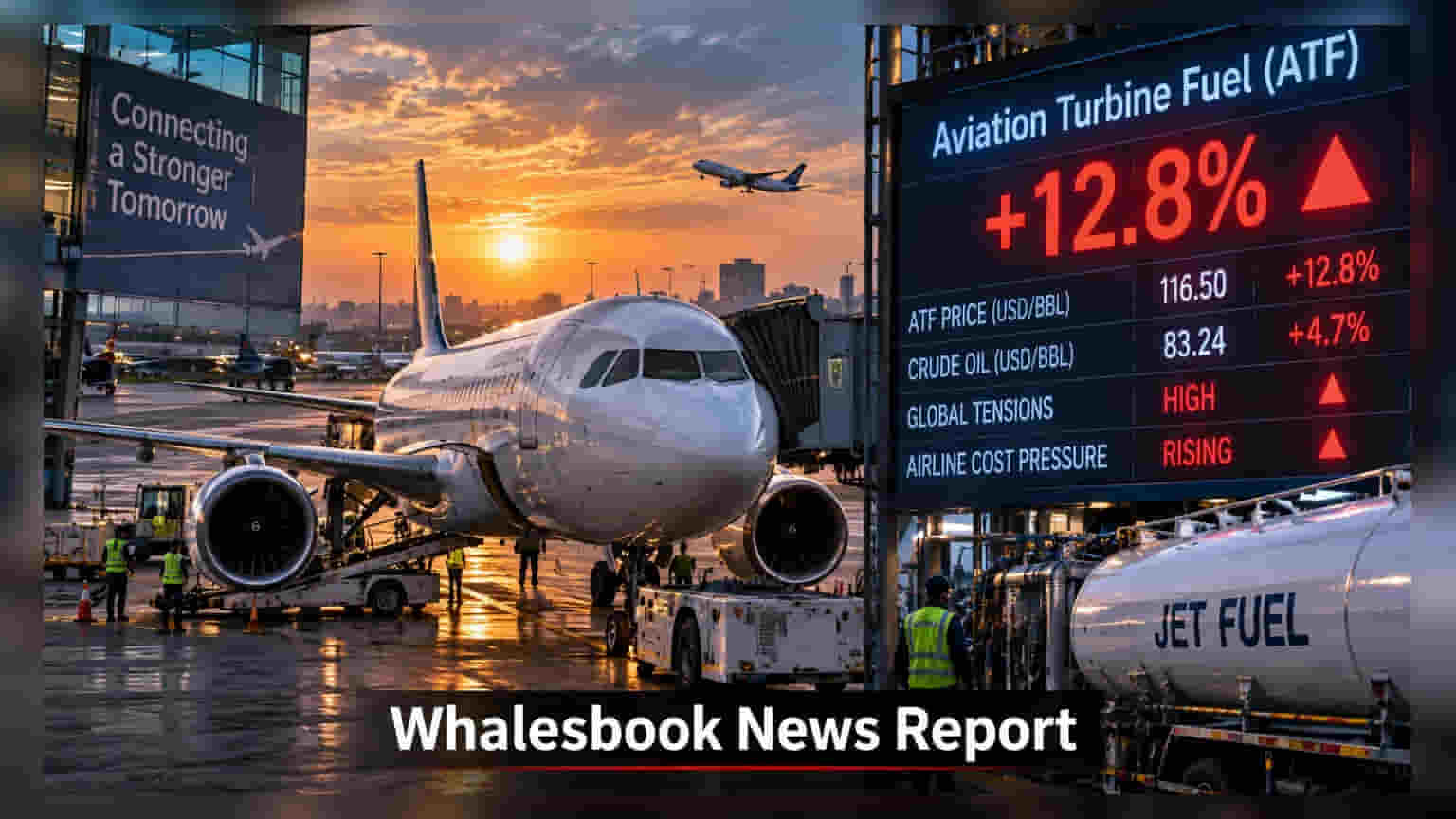
The Ministry of Civil Aviation will not impose fixed price limits for the upcoming festive season. Instead, the government is relying on dialogue to keep airfares reasonable. This avoids rigid regulation but keeps airlines under pressure to manage rising fuel costs—which now make up 43% of operating expenses—while trying to protect profit margins.
The Ministry of Civil Aviation has clarified that it will not impose mandatory caps on air ticket prices for the upcoming peak festive season. Instead of enforcing legal restrictions, the government is opting for a collaborative approach. Minister K Rammohan Naidu stated that officials are in continuous dialogue with airlines to ensure ticket pricing remains reasonable for passengers.
This decision is significant for investors because it maintains a free-market environment for the airline sector. However, it also highlights the delicate balance airlines must maintain. Aviation Turbine Fuel (ATF) prices, which are influenced by global geopolitical tensions in West Asia, currently account for nearly 43% of total operating expenses for Indian carriers. This creates a difficult scenario where airlines must absorb these volatile costs without passing them on to passengers in a way that triggers regulatory pushback.
For investors, the key risk is margin compression. While there are no official price caps, the government's expectation of "reasonable pricing" acts as a soft ceiling on ticket rates. If fuel costs remain high, airlines face a challenge: they must either sacrifice profit margins to keep fares low or risk government intervention if prices surge too high during the high-demand festive rush. Market participants will be watching upcoming quarterly results to see how effectively airlines can manage these yield pressures.
Beyond pricing, the government continues to prioritize the Regional Connectivity Scheme, known as Udaan. The ministry is working to bolster operations at secondary airports to reduce congestion at major metro hubs. While this strategy is aimed at long-term volume growth, it requires sustained capital spending and infrastructure support. The success of this move depends on the sector's ability to maintain a balance between infrastructure expansion and operational efficiency.
Looking ahead, investors should monitor two main factors. First is the passenger traffic data during the festive season, which will determine if airlines can achieve healthy revenue growth. Second is the volatility in global oil prices, which remains the single biggest risk to the sector's profitability. Any sharp rise in ATF costs, combined with limited pricing power, could pose a risk to the operating margins of carriers such as InterGlobe Aviation and other domestic airlines.