

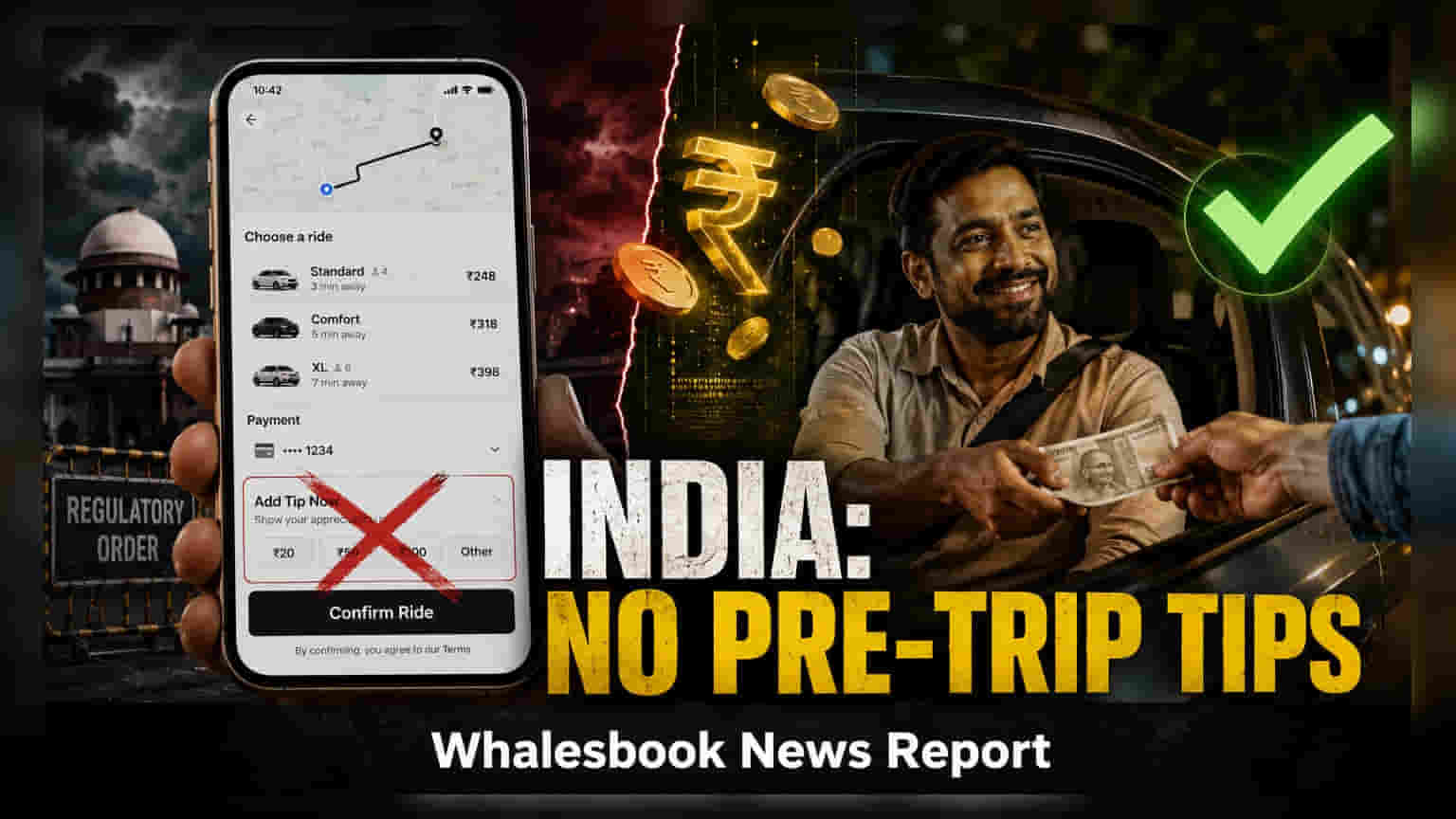
The Ministry of Road Transport and Highways has ordered all ride-hailing apps to remove pre-trip tipping prompts immediately. This directive aims to curb misleading practices where users were encouraged to tip for faster ride confirmation. Aggregators must now ensure tipping is strictly voluntary and only available after the trip ends, with no deductions from the tip amount.
The Ministry of Road Transport and Highways has issued a formal directive to all ride-hailing aggregators in India, ordering the immediate removal of all tipping prompts that appear before a trip begins. This regulatory move is designed to enforce strict compliance with the Motor Vehicle Aggregator Guidelines, 2025, specifically targeting user interface features that the government deems misleading.
For many years, users of various ride-hailing platforms have encountered prompts asking them to "add a tip" or "choose an add-on" while requesting a ride. These prompts often appeared with messages suggesting that increasing the fare or offering a tip could lead to quicker ride acceptance by drivers. The government has now officially banned these practices, stating that they manipulate consumer behavior and create a false impression that a tip is necessary to secure a vehicle.
Under Clause 14.15 of the Motor Vehicle Aggregator Guidelines, 2025, tipping is now officially defined as a purely voluntary action. Platforms are required to move all tipping functionality to the post-ride phase, meaning users can only offer a tip after the journey has been completed. Furthermore, the guidelines mandate that the entire tip amount must be credited to the driver’s account without any deductions. This ensures that aggregators cannot charge a commission or take any percentage from the tips provided by passengers.
For major industry players like Ola, Uber, and Rapido, this directive necessitates immediate changes to their mobile application interfaces. While these companies often adjust their algorithms to balance supply and demand during peak hours, this new rule removes the ability to use pre-trip tipping as a nudge mechanism. Developing software and interface updates to comply with these guidelines involves operational adjustments, and companies will need to ensure that their systems fully align with the Consumer Protection Act, 2019.
Moving forward, the primary monitorable for the sector will be how quickly these platforms modify their apps and how this change impacts ride-matching efficiency. In the past, tipping was often used by passengers in busy areas to encourage drivers to accept trips when demand outpaced supply. Whether the removal of these prompts leads to a shift in driver acceptance rates or necessitates alternative incentive structures will be important to track as the industry adapts to these regulatory changes. Authorities have signaled that continued non-compliance could lead to further enforcement actions.