

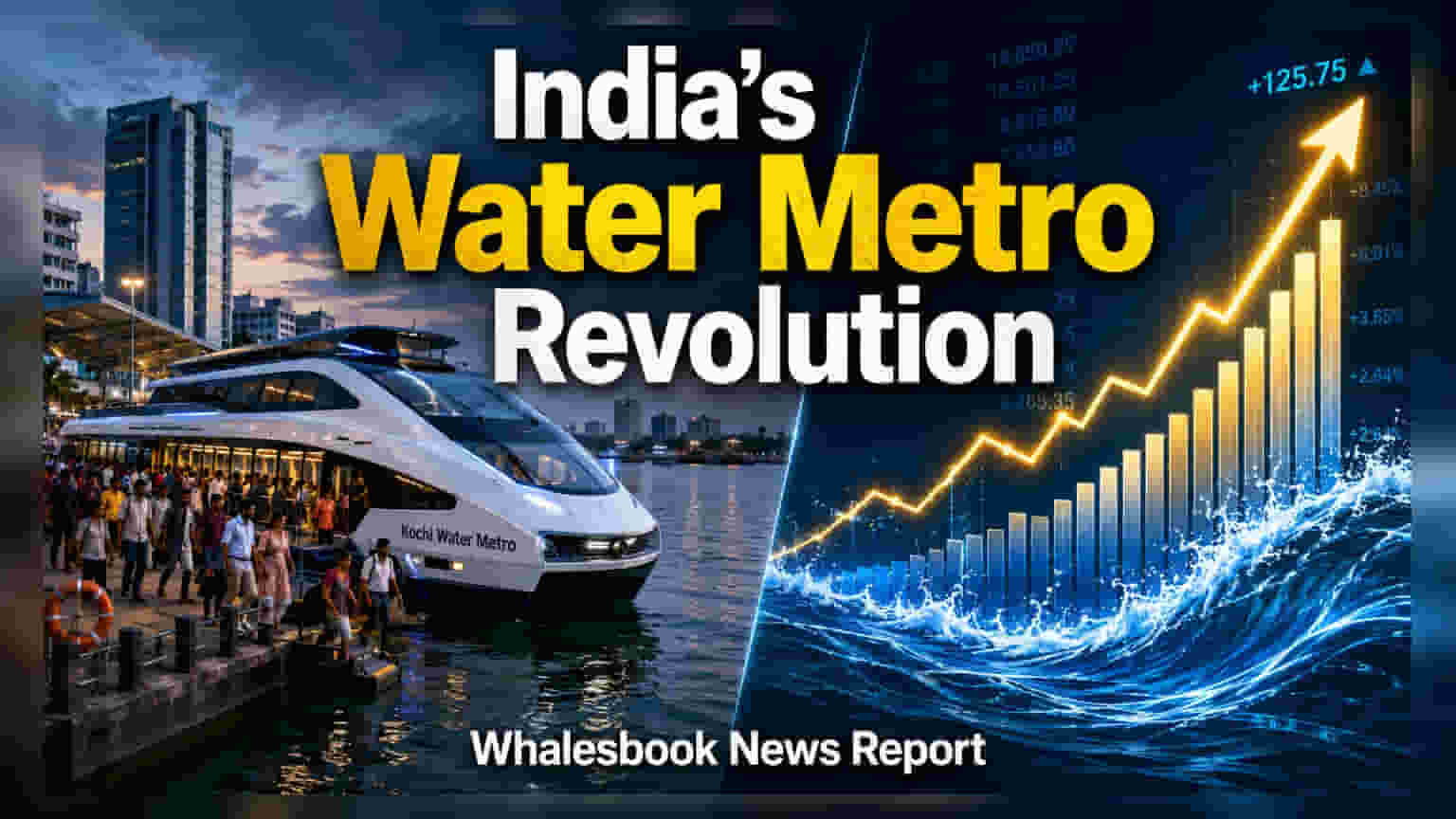
India is drafting national guidelines to replicate the Kochi Water Metro model in nearly 50 cities. The initiative aims to reduce urban congestion using electric vessels, with the Ministry of Ports, Shipping and Waterways leading the policy framework. Investors should track future manufacturing opportunities for domestic shipyards as demand for specialized electric boats increases.
The Union government is moving toward a national rollout of water metro systems, aiming to adapt the successful model seen in Kochi for urban areas across India. By utilizing electric and hybrid-electric vessels, the government hopes to create a cleaner, more efficient transport alternative to help clear up traffic congestion in major cities. This initiative is being spearheaded by the Ministry of Ports, Shipping and Waterways, which is currently drafting the National Water Metro Guidelines, 2026.
To ensure this network functions effectively, officials are pushing for a standardized legal framework. Loknath Behera, Managing Director of Kochi Metro Rail Ltd (KMRL), has highlighted that a dedicated Water Metro Act—modeled after the existing Metro Rail Act—is essential. This would provide the necessary consistency in safety, technical standards, and operational guidelines across different states. The upcoming 2026 guidelines are expected to cover critical areas such as emission standards, financing structures, and environmental protections.
Expansion is already moving beyond the planning stage. Feasibility studies have been completed for 18 locations nationwide, with detailed project reports currently being prepared for cities like Mumbai and Goa. States including Gujarat, Odisha, and Karnataka have also expressed interest in similar infrastructure development. While four hybrid-electric vessels are already in use in cities like Varanasi, Ayodhya, Patna, and Kolkata, the long-term goal is to integrate these systems into a broader urban transport strategy by 2047.
For investors and the broader industry, a significant challenge remains in domestic manufacturing capacity. Currently, the supply of specialized electric passenger boats is limited, with Cochin Shipyard Ltd being one of the few prominent players capable of meeting these technical requirements. The government expects that by standardizing the demand for these vessels, it will encourage more shipyards to invest in dedicated production lines.
Success for these projects will likely depend on more than just building boats. As seen in the Kochi model, the integration of digital ticketing and seamless connectivity with other forms of public transport is critical to attracting ridership. Moving forward, the most important updates to monitor will include the finalization of the National Water Metro Guidelines, the scale of government tender announcements for new vessels, and how effectively private and public shipyards can ramp up production to meet this potential nationwide demand.