

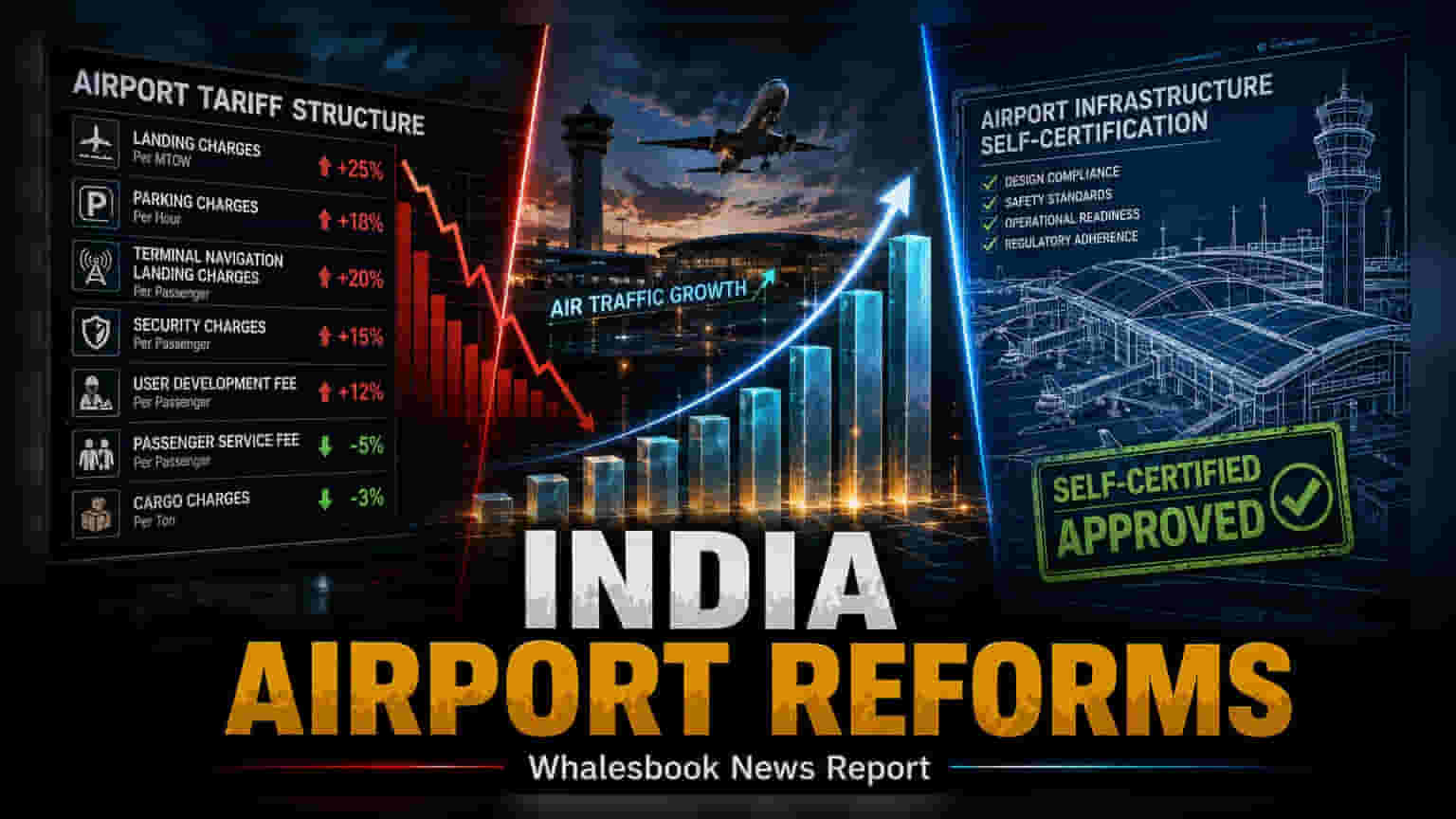
A government committee has recommended replacing the complex airport tariff system with a streamlined three-category framework. This proposal seeks to give airport operators more flexibility in pricing while reducing bureaucratic delays for infrastructure approvals and ground-handling services.
A high-level government panel has proposed a major shift in how Indian airports manage their fees and operational approvals. Currently, airport charges are often broken down into many individual items, making the process complex for both operators and airlines. The committee, led by NITI Aayog member Rajiv Gauba, has recommended a move toward a three-category system to consolidate these charges. This change is designed to give airport operators greater freedom to set competitive prices, such as offering volume discounts or route-specific incentives, which could help attract more airline traffic.
Impact on Airport Operators and Efficiency
The move toward a simpler tariff structure is inspired by international benchmarks like the revenue-cap models seen at airports in Heathrow and Dublin. By consolidating landing, parking, user development fees, and other charges, airports may gain the agility needed to respond to changing market demand. For listed airport operators and infrastructure companies, this flexibility could lead to better revenue management and improved utilization of airport capacity.
Beyond pricing, the panel has suggested reducing the administrative burden on airport operators. A key proposal involves moving to a self-certification process for changes to commercial floor plans within terminals. Currently, operators must seek approvals from the Bureau of Civil Aviation Security for any new retail outlet, restaurant, or lounge. If implemented, self-certification would allow these commercial spaces to become operational faster, potentially supporting non-aeronautical revenue growth.
Operational Reforms for Airlines
The report also touches on wider aviation reforms to improve overall efficiency. It suggests allowing airlines with their own ground-handling capabilities to offer these services to other carriers, provided there is already competition at the airport. This measure aims to lower operating costs by increasing competition among service providers. Additionally, the panel recommended extending the validity of Foreign Aircrew Temporary Authorisation (FATA) to two years and introducing an automated system for height-related construction clearances near airports.
These changes are part of a broader government effort to lower the cost of doing business in the aviation sector. While the proposal aims to streamline operations, investors should watch for how these changes are eventually codified into law and how they impact the revenue-sharing models between airport operators and the government. The speed of implementation and the specific rules governing the new tariff categories will be the next important updates to monitor.