

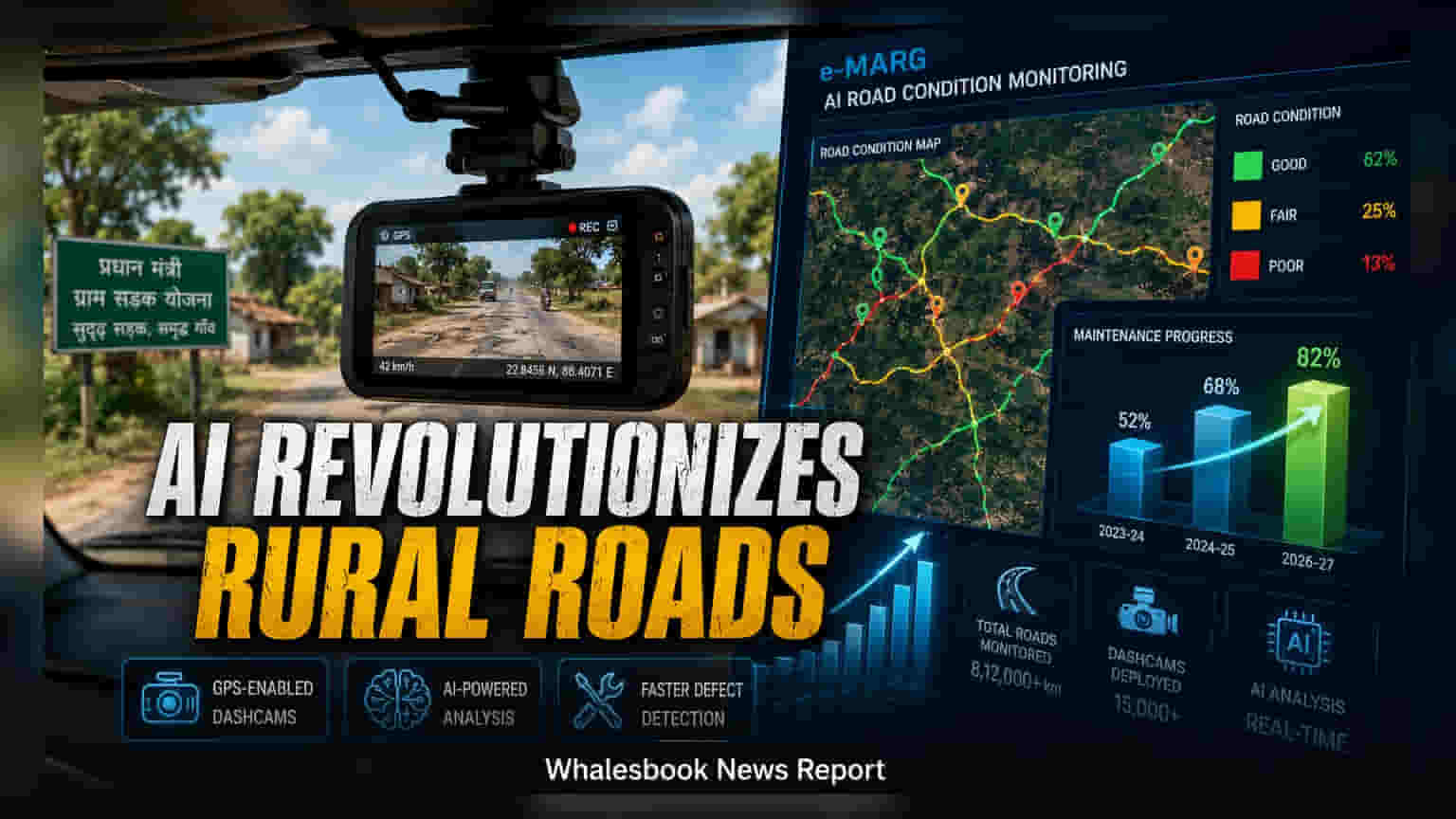
The Ministry of Rural Development is integrating AI into the e-MARG system to monitor rural road quality via GPS-enabled dashcams. With a budget of ₹18,907 crore allocated for FY 2026-27 under the Pradhan Mantri Gram Sadak Yojana (PMGSY), this policy shift focuses on maintenance over new construction. This initiative creates new opportunities for technology and infrastructure companies involved in automated surveillance and asset management.
The Indian government has announced a strategic shift in how it manages rural infrastructure, integrating artificial intelligence into the e-MARG system. This move is designed to oversee the maintenance of roads built under the Pradhan Mantri Gram Sadak Yojana (PMGSY). Rather than relying on traditional manual inspections and static photographs, the new mechanism will use GPS-enabled dashcams to capture video footage. An AI-based system will then analyze this footage to classify road conditions as good, fair, or poor.
This initiative marks a significant change in asset management strategy. With over 800,000 kilometers of rural roads already constructed, the government is prioritizing the long-term sustainability and lifespan of existing assets over the construction of new ones. This shift is supported by a financial allocation of ₹18,907 crore for the 2026-27 fiscal year, reflecting the government's commitment to improving the quality of rural connectivity.
For investors, this development highlights a growing trend of technology integration in government-led infrastructure projects. Companies in the infrastructure, surveillance, and software development sectors may find new business avenues as the government seeks to modernize its maintenance oversight. By automating defect recognition, the government aims to reduce the time taken to identify and repair road damage, which could lead to more efficient use of the allocated funds.
Initially, the AI-driven assessment will run alongside human inspections to ensure accuracy and build trust in the new reporting method. This hybrid approach is intended to mitigate the risks associated with transitioning to automated systems, such as potential data gaps or technical inaccuracies during the rollout phase. The success of this initiative will likely depend on the seamless integration of surveillance technology with the existing engineering framework used by local authorities.
The long-term impact of this policy could be substantial for the rural economy. Improved road conditions are expected to enhance market access for agricultural products and facilitate better reach for essential services like education and healthcare. Additionally, the move toward automated maintenance is expected to create demand for local enterprise and employment, as the focus shifts to sustained, technology-backed upkeep.
Investors tracking the infrastructure sector should monitor the next stages of this implementation, specifically regarding how maintenance contracts are structured and whether the technology standards set by this program become a requirement for future government projects. As the government scales this monitoring across the country, tracking the performance of companies that provide the necessary AI, software, and surveillance hardware will be important to understand the broader implications for the infrastructure sector.