

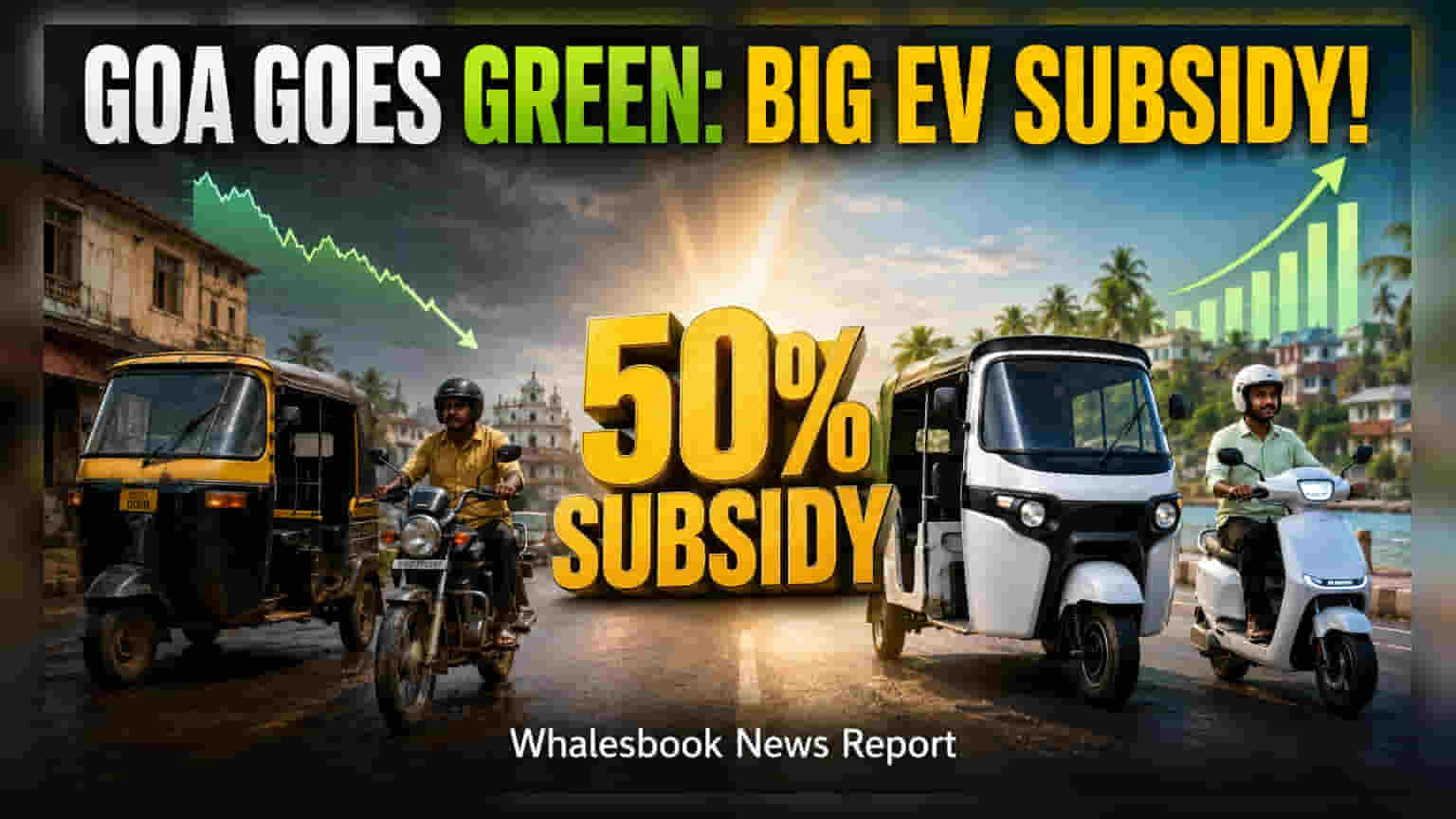
The Goa government will provide up to 50% subsidies on electric vehicles for licensed bike taxi and autorickshaw operators to promote clean mobility. This initiative, paired with plans for 70 new charging stations, aims to reduce state emissions. Investors may track how these incentives influence adoption rates among transport operators and the demand for electric two-wheelers and three-wheelers in the region.
The government of Goa has unveiled a significant subsidy program aimed at accelerating the adoption of electric vehicles in the state's public transport sector. Chief Minister Pramod Sawant announced that licensed motorcycle pilots and autorickshaw drivers will be eligible for financial assistance covering up to 50% of the cost of an electric vehicle. This policy is intended to lower the initial barrier to entry for operators looking to transition from traditional fuel-based vehicles to electric alternatives.
Supporting Infrastructure and Fleet Upgrades
Beyond direct vehicle subsidies, the state is taking steps to address concerns regarding charging availability. Under the central government's PM E-Drive Scheme, Goa plans to install 70 new electric vehicle charging stations across the state. Adequate charging infrastructure is a critical factor for the commercial viability of electric vehicles, as it directly impacts the daily operating range and downtime for transport operators. Additionally, the state-run Kadamba Transport Corporation is undertaking a fleet modernization effort by retrofitting diesel buses that are approximately 10 years old with compressed natural gas engines. This move reflects a dual strategy of promoting electric power for smaller transport and utilizing alternative fuels for heavier public transit.
Energy Strategy and Industrial Integration
The broader clean energy roadmap for the state includes a focus on industrial adoption of renewable energy. The Department of New and Renewable Energy has been directed to finalize policies that encourage businesses to shift toward cleaner energy sources. This includes the integration of battery energy storage systems and solar power, alongside a structured plan to phase out the use of diesel generator sets in industrial establishments. For investors, the success of these initiatives will depend on the speed of implementation, the actual uptake of the subsidy by transport operators, and how these changes influence the competitive landscape for electric vehicle manufacturers and charging infrastructure providers in the region. The state government's ability to maintain these incentives and manage the transition timeline will be the primary monitorable for future impact on the local transport and energy sector.