

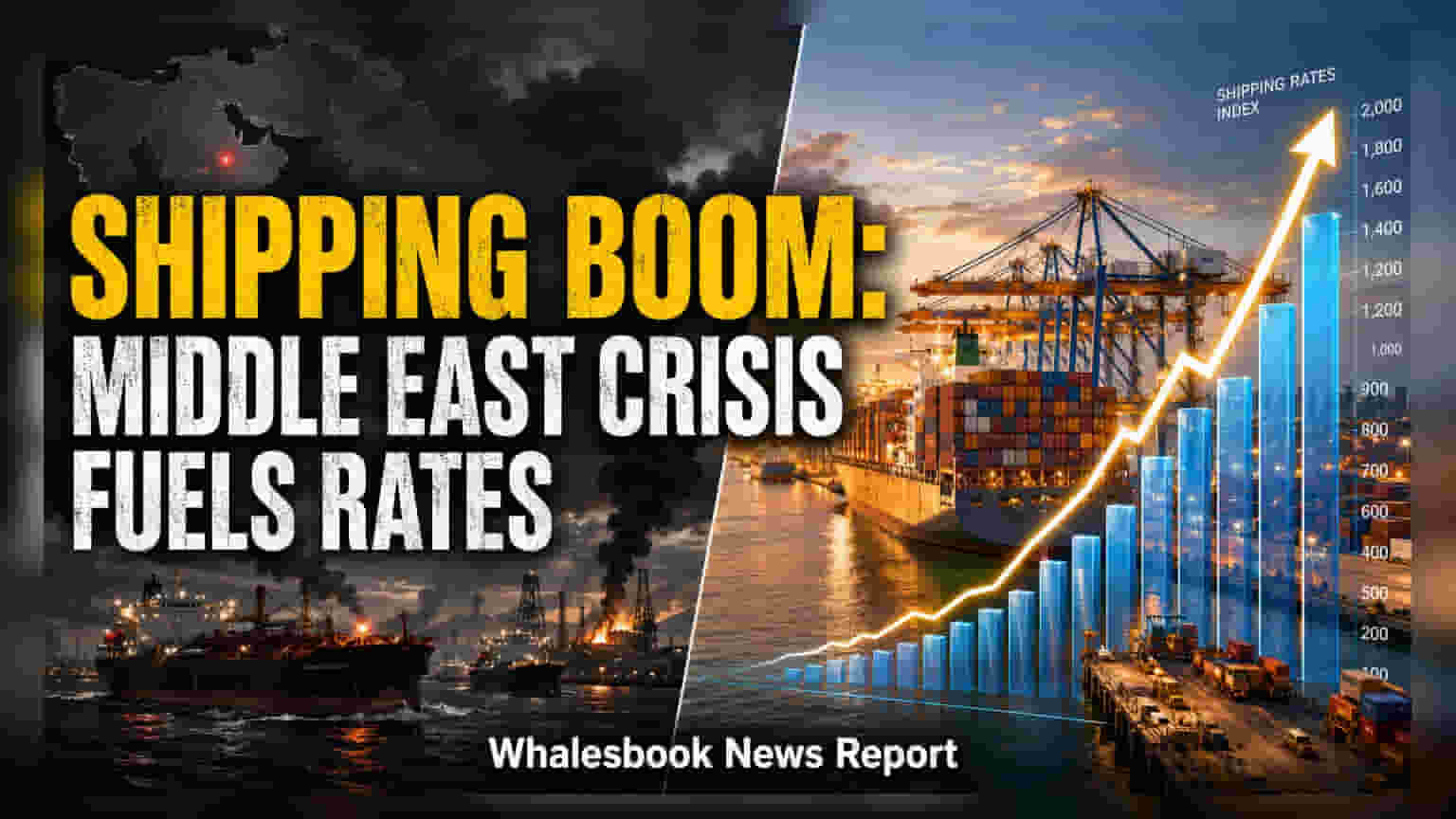
Global shipping rates for crude oil and dry bulk have surged, with VLCC spot rates jumping 226% year-on-year to $137,000 per day in the June 2026 quarter. This spike, driven by Middle East geopolitical risks, is significantly impacting the earnings potential of Indian shipping companies. Investors should note that while profits are rising, shipping remains a highly cyclical industry sensitive to global trade patterns.
The global shipping industry is currently experiencing a period of intense rate volatility as Middle East geopolitical tensions disrupt standard trade routes. This environment has pushed freight rates for Very Large Crude Carriers (VLCC) to an average of $137,000 per day during the June 2026 quarter, a dramatic rise from the $42,065 per day seen during the same period last year. Similar upward pressure is visible in the Suezmax segment, where rates have climbed over 200%.
Factors Driving Up Freight Costs
Beyond the geopolitical situation, capacity constraints are playing a major role in these higher rates. Approximately 20% of the global VLCC fleet is now over 20 years old, effectively removing a portion of supply from the market as these older vessels face tighter international regulations and restrictions. Additionally, shipping companies are navigating increased operational costs, specifically higher insurance premiums and security measures required to protect crews and vessels operating in or near conflict zones.
Impact on Dry Bulk Shipping
The surge is not limited to oil tankers. The dry bulk sector, which transports raw materials and goods, has also seen significant activity. The Baltic Dry Index, a key benchmark for shipping costs of dry goods, averaged 2,751 in the June 2026 quarter, marking an 87% increase compared to the previous year. This growth is linked to sustained demand from major manufacturing hubs in India, China, and other parts of East Asia, primarily driven by international retailers stocking up for the upcoming holiday season.
Financial Position of Indian Shipping Firms
Indian shipping companies are currently benefiting from this environment, though their performance remains closely tied to these volatile global rates. Great Eastern Shipping recently reported a net profit of Rs 1,044.1 crore for the March 2026 quarter, reflecting a strong year-on-year performance. The company maintains a fleet capacity of approximately 3.19 million deadweight tonnes. Meanwhile, the Shipping Corporation of India manages a larger fleet of 58 vessels with a total capacity of 5.26 million deadweight tonnes.
From a valuation perspective, Great Eastern Shipping is trading at a price-to-earnings (P/E) ratio of 8.2 times with a price-to-book (PB) ratio of 1.2. The Shipping Corporation of India currently trades at a P/E of 9.8 times and a PB ratio of 1.5. While these valuations may look modest, the shipping sector is notoriously cyclical, meaning that earnings can drop quickly if geopolitical tensions cool or if global trade demand slows down unexpectedly. Investors tracking these stocks should focus on future fleet expansion plans, the company's ability to renew aging vessels, and ongoing updates regarding global insurance costs, as these factors will dictate long-term profit margins.