

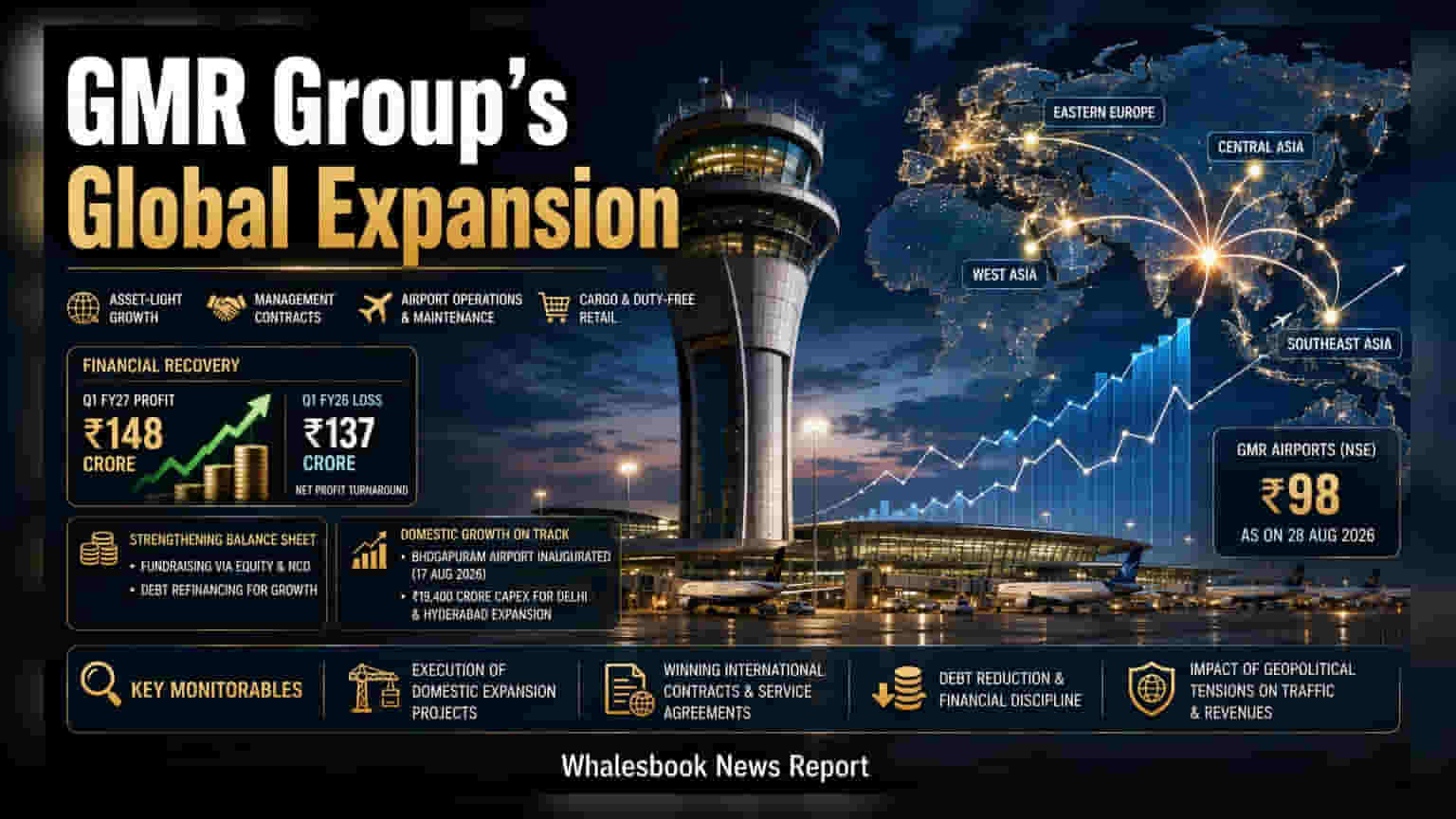
GMR Group has unveiled plans to target airport concessions in West Asia, Central Asia, and Eastern Europe using an asset-light model. This follows a strong first quarter for fiscal year 2027, where the company reported a net profit of ₹148 crore. Investors are now monitoring how the group balances this international push with its ongoing ₹19,400 crore domestic infrastructure expansion.
GMR Group is looking to expand its international footprint by targeting airport concessions and service contracts across West Asia, Central Asia, Eastern Europe, and Southeast Asia. Chairman G M Rao confirmed this strategic shift, which focuses on an asset-light business model. Under this approach, the company aims to secure management contracts for airport operations and maintenance, as well as cargo and duty-free retail, rather than solely focusing on owning and building massive assets from the ground up. This strategy is designed to help the group expand into new markets while managing financial risk.
The global expansion plan comes on the heels of a financial recovery. In the first quarter of fiscal year 2027, GMR Airports reported a consolidated net profit of ₹148 crore, a notable shift from the net loss of ₹137 crore recorded in the same quarter the previous year. The company has taken active steps to strengthen its balance sheet, including board-approved plans to raise funds through equity and non-convertible bonds. These measures are intended to refinance debt and support the company's long-term growth objectives.
While the company looks outward, it remains deeply committed to domestic growth. The group recently celebrated the inauguration of the Bhogapuram airport in Andhra Pradesh on August 17, 2026. Furthermore, GMR is currently in the middle of a massive ₹19,400 crore capital expenditure program to upgrade and expand facilities at its major hubs in Delhi and Hyderabad. These domestic projects are significant, and the company’s ability to execute them on time will be a key factor for its long-term financial health.
Investors should be aware of the specific challenges facing the company. While the strategy to focus on operations and maintenance is meant to limit risk, the aviation sector is still sensitive to global events. Geopolitical volatility, particularly in regions like West Asia where the company is looking for opportunities, can disrupt air traffic and impact revenue. Additionally, the company is managing a high debt profile, which requires careful financial discipline and consistent success in refinancing. GMR also faces ongoing competitive pressure in the domestic market, particularly from other large infrastructure players.
As of August 28, 2026, shares of GMR Airports Infrastructure Ltd are trading near the ₹98 level. Moving forward, the key items for investors to track will include the company's progress on its domestic expansion deadlines, the actual acquisition of new international contracts, and the effectiveness of its debt reduction strategy. Management commentary regarding the impact of regional geopolitical tensions on future traffic growth will also be important to watch.