

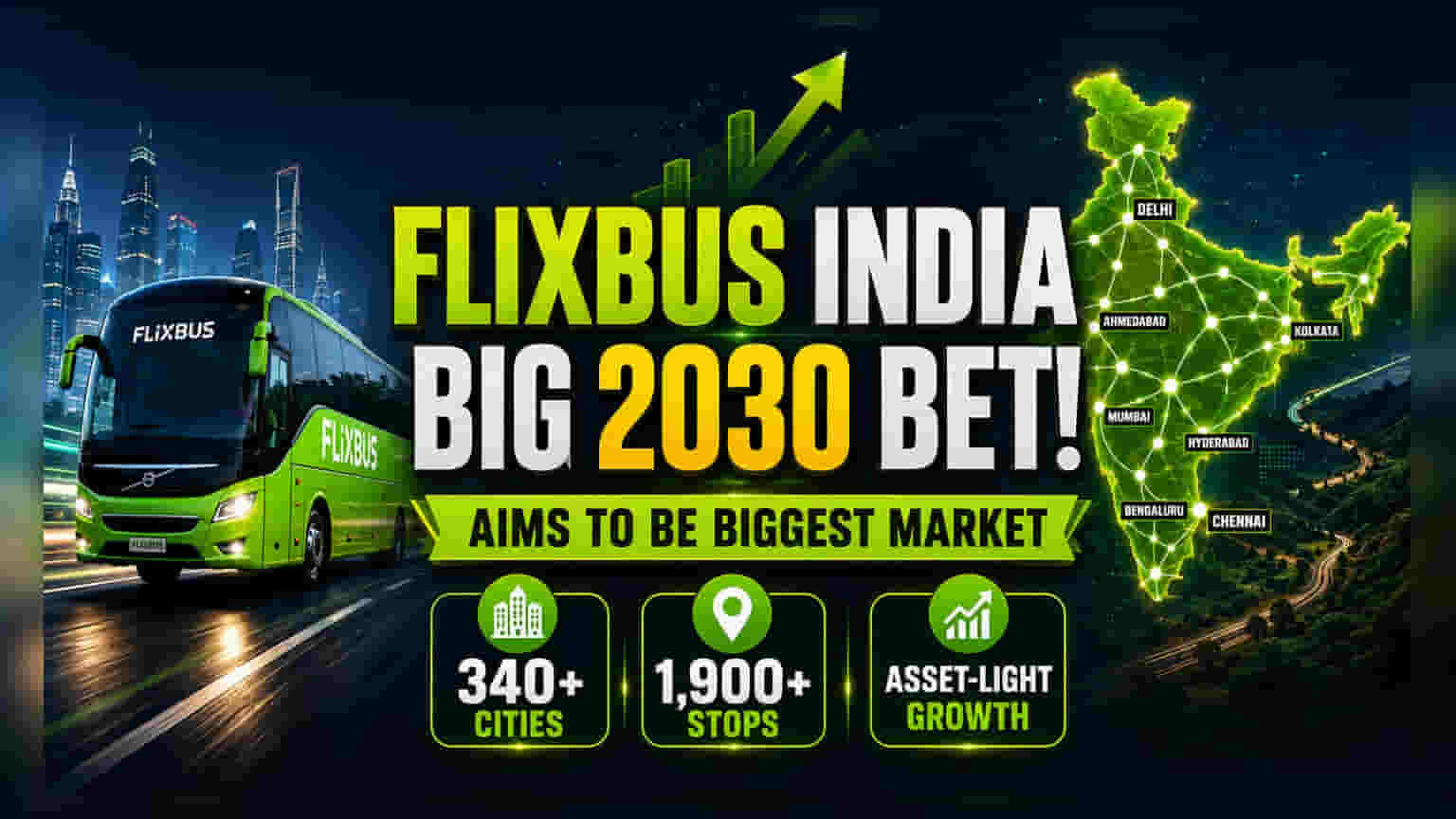
German mobility firm FlixBus plans to make India its top global market by 2030, deploying an aggressive asset-light model to connect over 340 cities. The company is betting on tech-led, organized intercity bus travel to disrupt a highly fragmented local market. This expansion signals increased competition and a potential shift in service standards for the Indian transport sector.
What Happened
German mobility provider FlixBus has announced an aggressive growth strategy for India, aiming to establish the country as its largest global market by passenger volume by 2030. Since its entry in February 2024, the company has connected over 340 cities through a network of more than 1,900 stops. The firm is currently collaborating with over 60 local fleet operators. This push is part of a broader global strategy that generated €2 billion in revenue in 2025 across its worldwide operations.
The Asset-Light Model
FlixBus is utilizing an asset-light business model in India. Instead of owning and maintaining a fleet of buses, the company focuses on technology, ticketing, network planning, branding, and customer experience. The local fleet operators provide the buses, drivers, and daily maintenance. For the business, this reduces the need for heavy capital spending on vehicles, allowing for faster scaling. However, for investors and the industry, this model relies heavily on the quality and reliability of these third-party partners to maintain brand standards.
Challenges in the Indian Transport Market
The Indian intercity bus market is massive but largely unorganized. Most of the market is serviced by small, independent operators or state-run transport corporations, leading to inconsistent pricing, service quality, and digital adoption. FlixBus is attempting to bridge this gap by introducing features common in international markets, such as standardized pre-trip mobile communication, gender-specific seating, and improved boarding infrastructure. The company’s success will depend on its ability to standardize these services across a diverse network of local operators.
Competitive and Sector Pressures
While FlixBus is a private entity, its aggressive entry highlights the potential for modernization in Indian intercity travel. This sector faces several challenges, including fluctuating fuel costs, road infrastructure limitations, and intense competition from state road transport corporations (SRTCs) and existing travel-tech platforms. As large, tech-focused players increase their market share, unorganized operators may face pressure to upgrade their technology and service levels to remain competitive. This could lead to a general rise in service standards across the industry, but it also increases the risk of margin pressure for smaller players who cannot afford to invest in digital transformation.
What To Watch Next
Investors in the transport and logistics ecosystem should monitor how the market reacts to this increased competition. Key areas to track include whether the company successfully scales its network in states like Maharashtra, Karnataka, and Kerala as planned, and whether it can maintain service consistency across its partner network. Additionally, the industry will watch if this tech-led model encourages other domestic players to accelerate their own digitalization and infrastructure spending to protect their market share.