

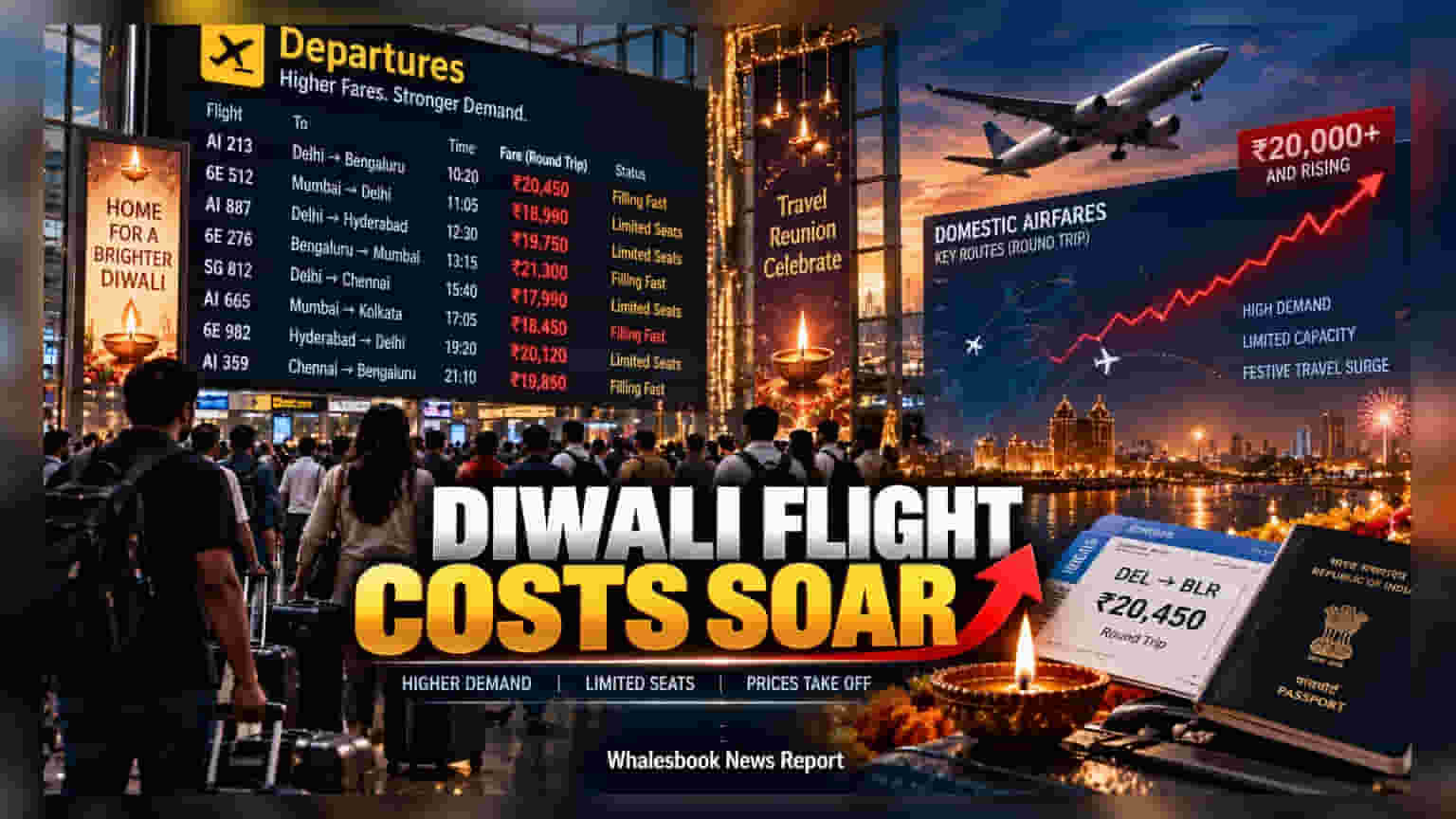
Round-trip airfares between metros like Delhi and Bengaluru have crossed Rs 20,000 ahead of the festive season. While strong demand and high pricing power support airline revenues, the sector continues to battle rising operational costs, including dollar-denominated lease payments and fuel prices. Investors are monitoring how carriers balance these high ticket prices with capacity constraints and potential regulatory scrutiny.
Domestic air travel demand has surged ahead of the upcoming festive season, with round-trip tickets on busy routes like Delhi-Bengaluru now exceeding Rs 20,000. This pricing trend highlights the current state of the Indian aviation sector, where strong travel demand is meeting constrained flight capacity, giving airlines significant pricing power during peak periods.
Pricing Power and Demand Resilience
The current increase in fares suggests that travelers remain willing to pay a premium for air connectivity during key holiday windows like Dussehra and Diwali. Airline operators have been able to pass on costs to consumers because demand has largely remained inelastic, meaning passengers are continuing to book despite the higher costs. This strength in demand has allowed airlines to maintain high load factors, or percentage of seats filled, which is a critical metric for profitability. However, the ability to sustain these price levels depends on whether travelers continue to view flying as a necessity or shift to other modes of transport if costs rise further.
Why Operational Costs Remain High
While high ticket prices can boost revenue, airlines face substantial operational pressure. A significant portion of an airline's daily running costs, such as aircraft lease payments and maintenance, is paid in U.S. dollars. Any volatility in the currency exchange rate, where the Rupee weakens against the Dollar, directly increases these expenses. Additionally, Aviation Turbine Fuel (ATF) prices continue to be a primary cost driver. While airlines use dynamic pricing to recover some of these costs, the margin for error is thin. Another constraint is the supply chain issue that has grounded a portion of the fleet globally, limiting the number of flights airlines can add to meet this rising demand.
Market Dynamics and Investor Monitorables
The Indian aviation market is currently dominated by a few large players, a structure that naturally impacts competition and pricing. With fewer major airlines, the competitive pressure to slash prices to gain market share has decreased compared to historical periods of aggressive discounting.
Investors typically look at three main areas when assessing this trend. First, the impact of high fuel costs and currency fluctuation on profit margins. Second, the ability of airlines to bring grounded aircraft back into service, which would increase capacity and could moderate ticket prices. Third, the potential for regulatory intervention. Historically, when airfares rise sharply, there is often public and government pressure on airlines to ensure fair pricing. While no such action is currently in place, any move toward fare caps or increased regulatory oversight is a risk factor for the sector. Looking ahead, quarterly results will reveal whether this surge in festive pricing translates into significantly improved bottom-line performance or if it is offset by rising operational and leasing costs.