

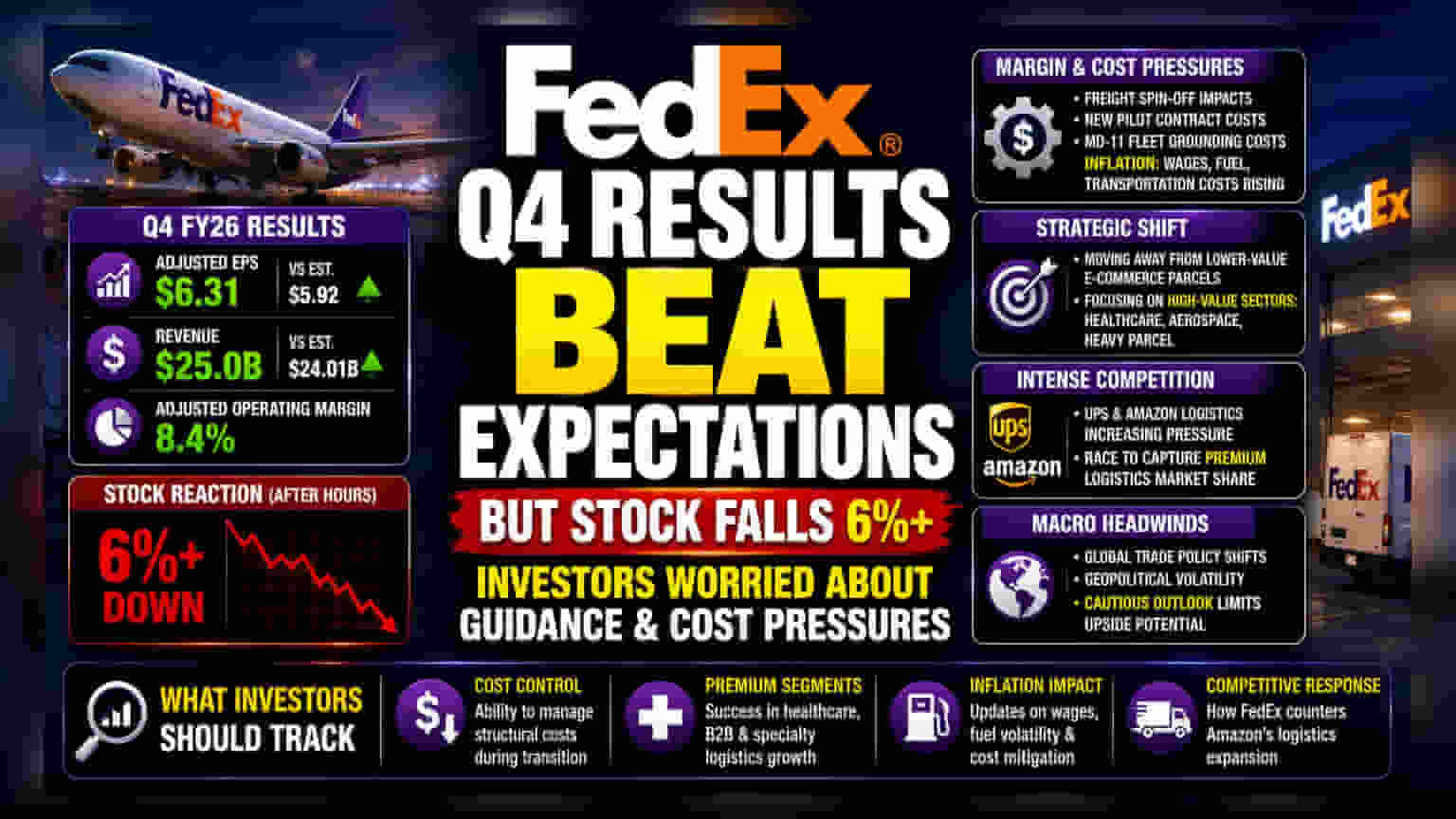
FedEx reported fiscal fourth-quarter adjusted earnings of $6.31 per share, beating analyst estimates. Despite the strong revenue and profit figures, shares fell more than 6% in after-hours trading as investors focused on rising operational costs and a cautious outlook for the year ahead.
What Happened
FedEx Corporation released its fiscal fourth-quarter results on June 23, 2026, showing a strong performance that topped Wall Street expectations. The company reported adjusted earnings of $6.31 per share, which was higher than the estimated $5.92. Revenue for the quarter reached $25 billion, also surpassing the anticipated $24.01 billion. However, despite these positive numbers, the company's stock fell by more than 6% in after-hours trading, reflecting investor anxiety regarding the company's future guidance and ongoing operational challenges.
The Margin And Cost Picture
While the company posted strong quarterly results, its profit margins faced pressure. The adjusted operating margin for the quarter was reported at 8.4%. The company highlighted several cost-related hurdles, including the financial impacts of separating its freight business, a new pilot contract, and the costs associated with the grounding of its MD-11 cargo aircraft fleet. Management estimated that these operational changes and inflationary pressures—such as rising wages and transportation costs—would add significant expenses to the coming year. These rising costs, rather than the quarterly profit beat, appeared to dominate investor sentiment.
Strategic Shifts And Competition
FedEx is attempting to defend its profitability by shifting its focus away from lower-value e-commerce parcel shipping, an area where competition is becoming increasingly intense. The company is pivoting toward high-value, specialized sectors such as healthcare, aerospace, and heavy parcel logistics. This strategy is partly a response to the growing competitive landscape. Industry peers like UPS and the logistics operations of major technology companies, specifically Amazon’s expanding supply chain services, are exerting significant pressure on traditional carriers. Analysts and investors are closely watching whether FedEx can successfully carve out a niche in these higher-margin segments before competitive pricing pressures erode its market share further.
The Broader Economic Context
FedEx is often viewed as a bellwether for the global economy because its package volume trends provide an early signal of trade and consumer activity. The company acknowledged that shifting global trade policies and geopolitical volatility are acting as persistent headwinds. These macro factors, combined with internal restructuring efforts, create a complex environment for the company. The company’s guidance for the upcoming year was described by market participants as cautious, which has left little room for upward revisions in the short term, further contributing to the stock's negative reaction.
What Investors Should Track
Going forward, the key monitorables for investors include the company's ability to control its structural costs during this transition year and its success in securing market share in the premium business-to-business and healthcare segments. Investors may also watch for further updates on how the company plans to mitigate the impact of rising wages and fuel volatility, as well as how it responds to the aggressive expansion of third-party logistics offerings from competitors like Amazon.