

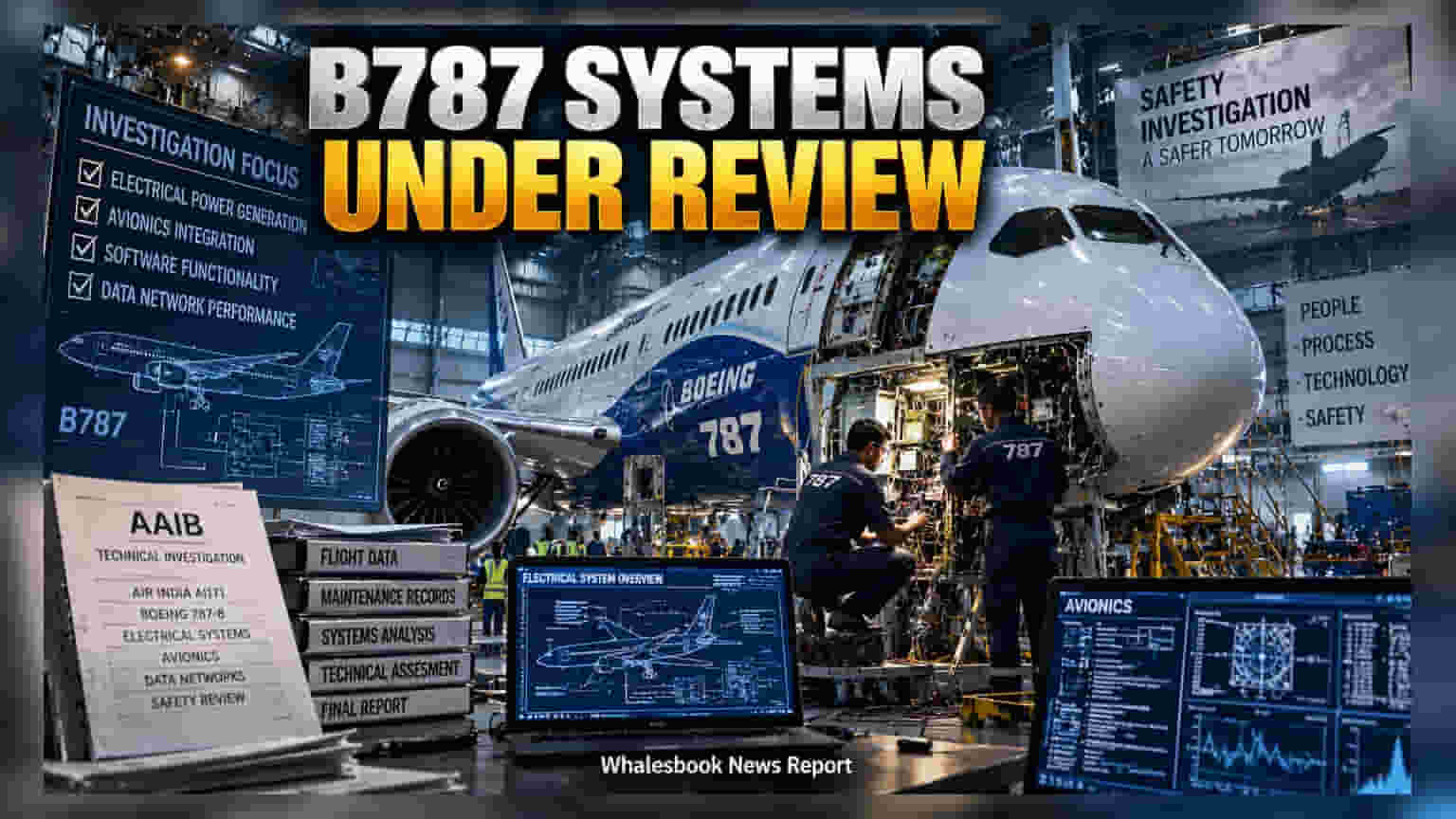
The Federation of Indian Pilots has requested the AAIB to expand its investigation into the June 2025 Air India flight AI171 crash. The pilots' body is urging a deep technical review of the Boeing 787's electrical and avionics systems. The fatal accident, which resulted in 260 casualties, remains under active investigation, with the final report pending further technical analysis and international consultations.
The Federation of Indian Pilots (FIP) has formally requested that the Aircraft Accident Investigation Bureau (AAIB) broaden its technical assessment of the Boeing 787 aircraft involved in the June 2025 Air India flight AI171 accident. In a communication dated September 18, the pilots' association emphasised the need for a comprehensive examination of the aircraft's electrical and electronically controlled systems as part of the ongoing inquiry.
The pilots' body has specifically called for a detailed review of the aircraft's electrical power generation, avionics integration, software functionality, and data network performance. The FIP stated that the complex electrical architecture of the Boeing 787 requires a thorough investigation to ensure all contributing factors are considered. This request also included a recommendation for the AAIB to review technical material provided by the Foundation of Aviation Safety.
The tragic event involved an Air India Boeing 787-8, registered as VT-ANB, which crashed shortly after take-off in June 2025. The accident resulted in 241 fatalities on board and 19 casualties on the ground, with only one survivor. Records indicate that the aircraft was powered by General Electric engines and had completed over 41,800 flight hours prior to the incident.
From a regulatory and technical perspective, aviation accident investigations are rigorous processes involving multiple stakeholders, including international aviation bodies and engine manufacturers. The AAIB has confirmed that significant work has been conducted, covering technical, operational, organisational, and human factors. While the investigation remains active, no official findings or conclusions regarding the specific cause of the crash have been released to the public.
The Boeing 787, known for its extensive use of composite materials and advanced electrical systems, has previously been subject to industry-wide discussions regarding the maintenance and reliability of its power systems. For stakeholders and the aviation sector, the key monitorable remains the eventual release of the AAIB's final report. This document is expected to provide definitive clarity on whether systemic issues played a role in the accident or if other factors were responsible. Investors and industry observers will be tracking the findings for any potential implications regarding aircraft maintenance standards, safety protocols, and future regulatory mandates for the aviation industry in India.