

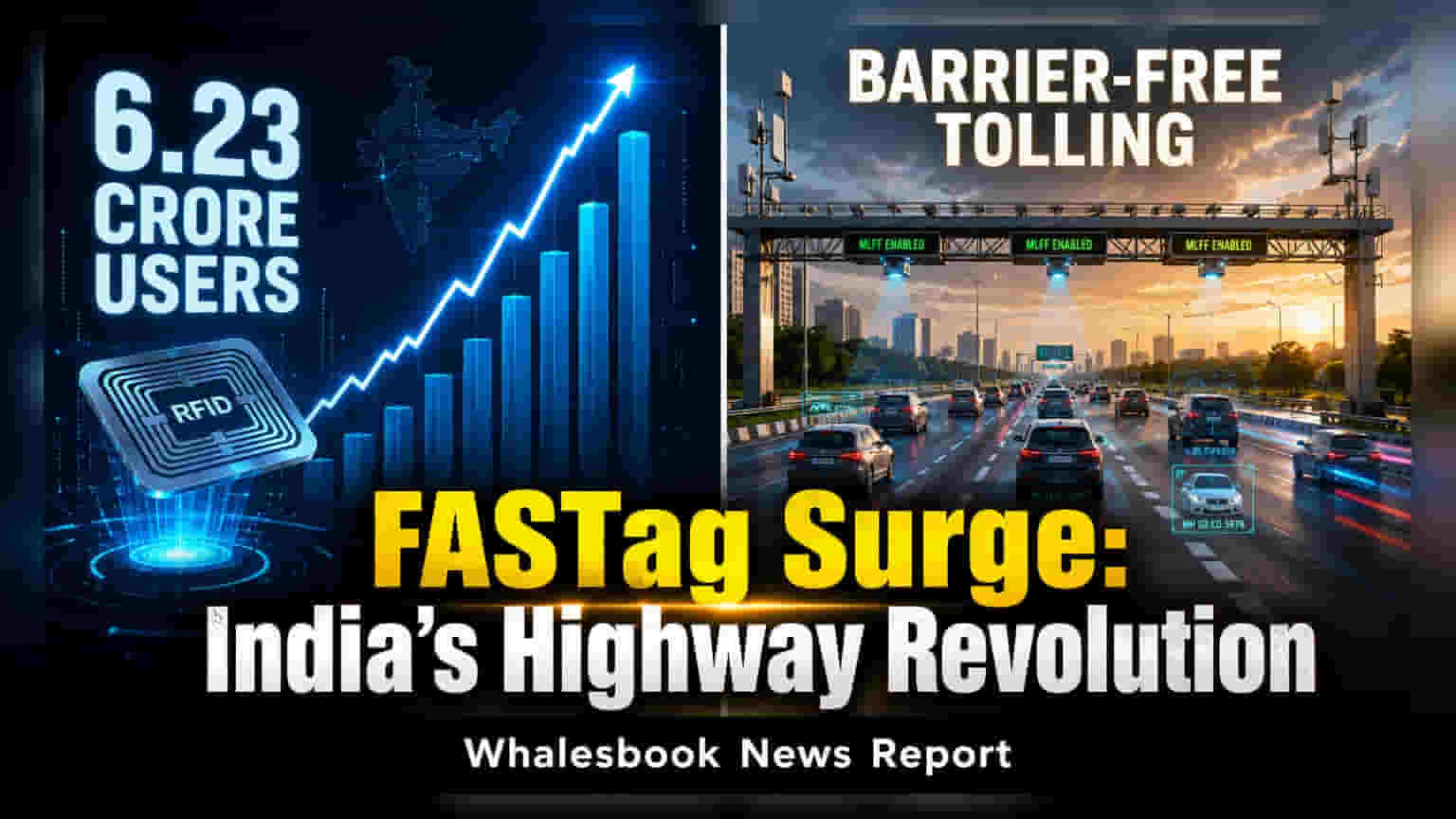
India’s electronic toll system reached 6.23 crore active users by June 2026, supported by the popular Rs 3,075 annual pass scheme. The government is now shifting toward Multi-Lane Free Flow technology at toll plazas to reduce highway congestion and stop-and-go delays for vehicles.
The adoption of electronic toll collection on Indian highways has reached a new scale, with active FASTag users climbing to 6.23 crore as of June 2026. This digital shift, managed by the Ministry of Road Transport and Highways, aims to minimize physical contact at toll plazas and improve traffic flow across the national highway network.
A significant factor in this growth is the Annual Pass scheme, which debuted in August 2025. Designed for private non-commercial vehicles, this pass is priced at Rs 3,075 and has already been adopted by over 77 lakh users. Data indicates that these passes now cover about one-third of all electronic toll transactions for cars and light vehicles, suggesting that frequent highway travelers are increasingly opting for the cost-effective upfront payment model over single-trip deductions.
To improve efficiency further, the government is moving away from traditional toll booth stops toward Multi-Lane Free Flow (MLFF) technology. This system uses a combination of FASTag sensors, Automatic Number Plate Recognition cameras, and artificial intelligence to process toll payments while vehicles maintain speed. Currently, five toll plazas have successfully integrated this technology, with plans to expand it to 12 additional locations in the immediate phase. A broader roadmap includes installing this infrastructure at 104 more toll plazas across the country.
While the government explores advanced technologies, it continues to enforce the National Highways Fee Rules of 2008. These rules mandate that toll plazas in the same direction should generally be separated by at least 60 kilometers, ensuring a balanced distribution of toll points. The focus on MLFF represents a shift toward reducing the operational challenges associated with traditional booths, such as queueing time and fuel wastage caused by vehicle idling.
For highway users and infrastructure-linked companies, the next key monitorable will be the pace at which the remaining 104 identified toll plazas transition to the MLFF system. Furthermore, the government’s pending decision regarding satellite-based tolling remains a crucial factor that could alter the long-term landscape of highway fee collection in India.