

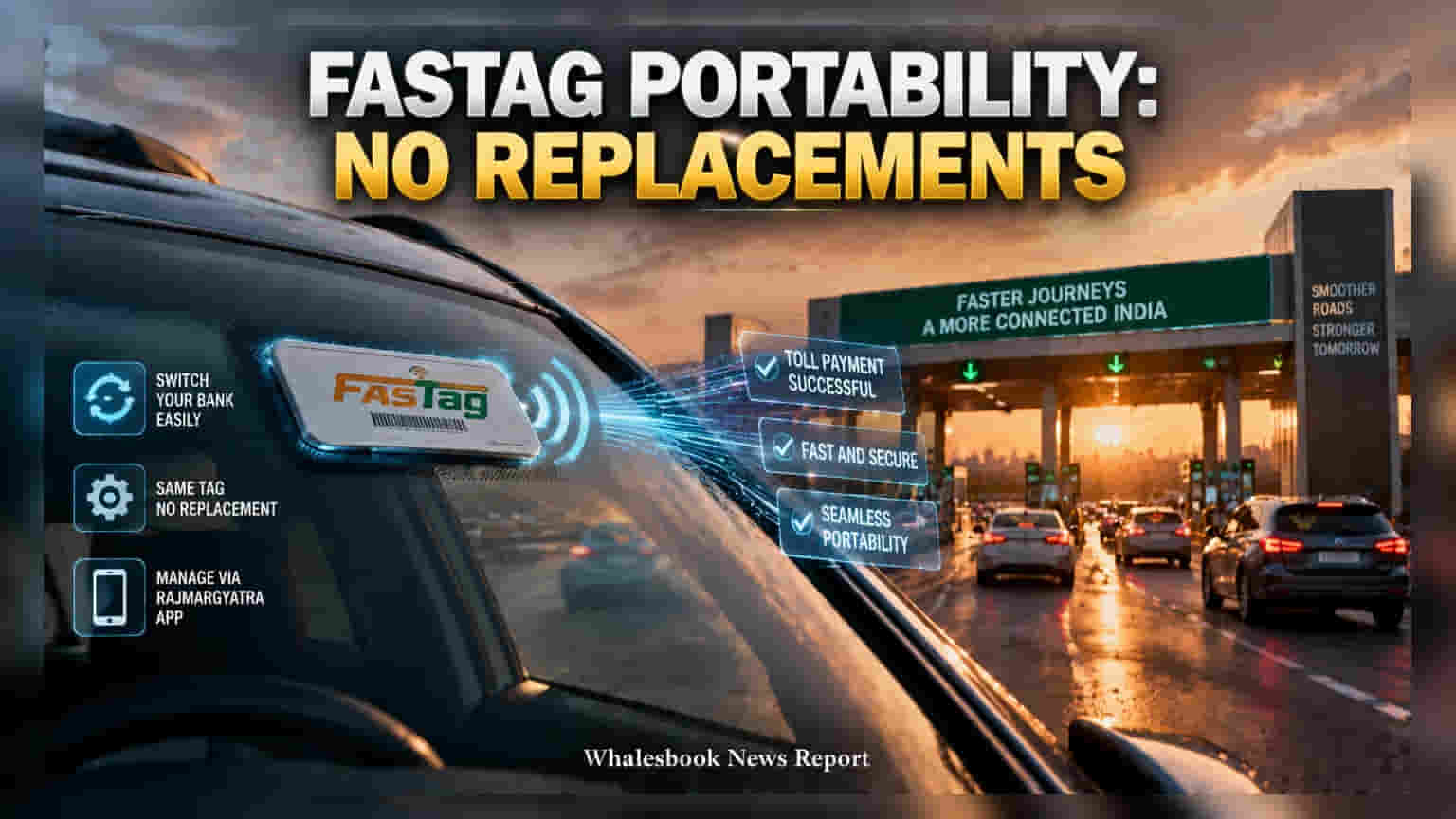
Union Minister Nitin Gadkari has launched 'OneTag', allowing users to change their FASTag service provider without replacing existing hardware. The system, accessible via the Rajmargyatra app, aims to improve customer choice by letting users switch banks while keeping the same tag. A mandatory fresh KYC and a six-month cooling-off period will apply to all transfers to ensure financial transparency and system stability.
Union Minister Nitin Gadkari officially launched 'OneTag' at the Global Fintech Fest 2026, a new system designed to make FASTag portability easier for Indian motorists. The initiative allows vehicle owners to change their FASTag service provider without the need to remove or replace the physical RFID tag on their windshields. This change is managed through the National Highways Authority of India’s (NHAI) 'Rajmargyatra' mobile application.
Simplifying the Transition Process
Under the previous system, switching from one bank to another was a difficult process that required removing the old tag and installing a new one. This acted as a major hurdle for customers who were dissatisfied with their current bank's app interface or customer service. With 'OneTag', the customer keeps the same hardware but updates the account mapping to a new bank. The process requires a fresh Know Your Customer (KYC) check with the new bank to ensure compliance with financial regulations. Once the request is initiated, the previous bank remains responsible for managing the existing wallet and processing any remaining balance refunds.
Impact on the Banking Sector
For investors, the launch of OneTag could change the competitive landscape of the digital toll collection market. Banks such as HDFC Bank, ICICI Bank, IDFC First Bank, and Axis Bank dominate the FASTag issuance space, deriving benefits from both transaction fees and the float of money held in customer wallets. Previously, the hassle of changing tags kept customers tied to their initial bank even if they were unhappy with the service. With easier switching, these banking institutions may face increased pressure to improve their customer support, app usability, and service reliability to retain their user base. As customers gain the freedom to move their business to better-performing service providers, service quality will become a significant factor in retaining these deposits and transaction volumes.
System Limitations and Risks
The government has introduced a six-month cooling-off period to prevent excessive churn and maintain stability within the National Electronic Toll Collection (NETC) ecosystem. This means users cannot change providers repeatedly in a short timeframe. Additionally, while the tag remains the same, the financial backend processes are distinct. Because the previous bank must handle balance refunds and the new bank must activate the new account, there is potential for initial transition delays or administrative confusion during the early stages of the rollout.
Investors should monitor how quickly banks adopt this system and whether it leads to a shift in market share for major issuers. The operational success of the Rajmargyatra app in handling these transfers without technical errors will be the key monitorable in the coming months.