

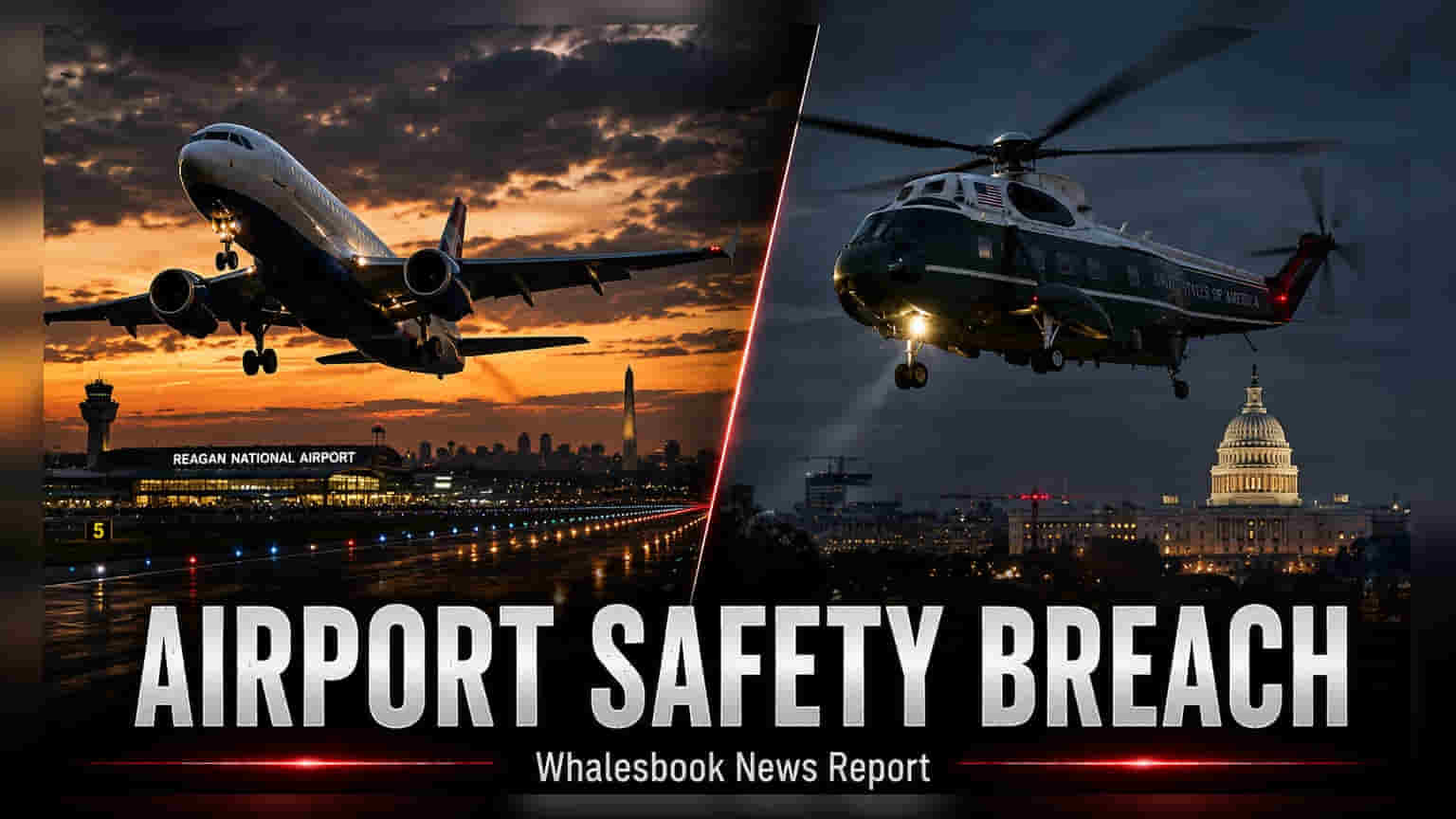
The FAA and NTSB are investigating a safety protocol failure at Washington’s Reagan National Airport where an Envoy Air jet departed as President Trump’s helicopter, Marine One, approached. This incident highlights potential gaps in air traffic communication, violating strict safety rules established after a fatal 2025 collision.
The Federal Aviation Administration (FAA) and the National Transportation Safety Board (NTSB) have launched an investigation into a significant aviation safety incident at Ronald Reagan Washington National Airport. On August 4, 2026, an Envoy Air passenger jet was cleared for take-off while Marine One, the helicopter carrying President Donald Trump, was approaching the airport. This event has raised serious questions regarding the efficacy of air traffic control procedures in one of the United States' most congested airspaces.
Breach of Established Safety Protocols
The incident centers on a potential violation of safety regulations introduced following a fatal mid-air collision in January 2025. Post-2025 guidelines mandate a complete halt to all take-offs and landings at Reagan National Airport whenever a helicopter operates on a flight path that conflicts with commercial traffic. This rule was designed to prevent proximity incidents near the capital. Preliminary reports confirm that a commercial airliner departed while the presidential helicopter was in the vicinity, indicating a failure to adhere to this established separation protocol.
Investigation and Official Stance
Authorities are currently analyzing the 'momentary loss of separation' that occurred between the two aircraft. While investigators are looking into the sequence of events and the air traffic control instructions given at the time, official responses have emphasized the safety of the President. Both the White House and the Marine Corps have stated that President Trump was never in danger and that the helicopter pilots were not instructed to alter their flight path. The investigation will now focus on the communication breakdown between ground control and the respective pilots to understand why the departure was authorized despite the incoming helicopter.
Implications for Aviation Standards
For the aviation and airport infrastructure sector, this event underscores the complexities of managing shared airspace. Safety incidents involving high-profile flights often lead to a rigorous review of communication technology, radar monitoring, and inter-agency coordination between civilian and military air traffic controllers.
Regulatory bodies often respond to such breaches by tightening compliance requirements, which can impact operational workflows for airlines and airport operators. While this is a singular event, the aviation industry will be monitoring the results of the FAA and NTSB probe, as any findings related to systemic communication gaps or hardware failures could trigger a broader overhaul of air traffic safety management in the region. The primary monitorable for the industry remains the final report from regulators, which will determine if existing safety infrastructure requires further upgrades to prevent future incidents.