 Whalesbook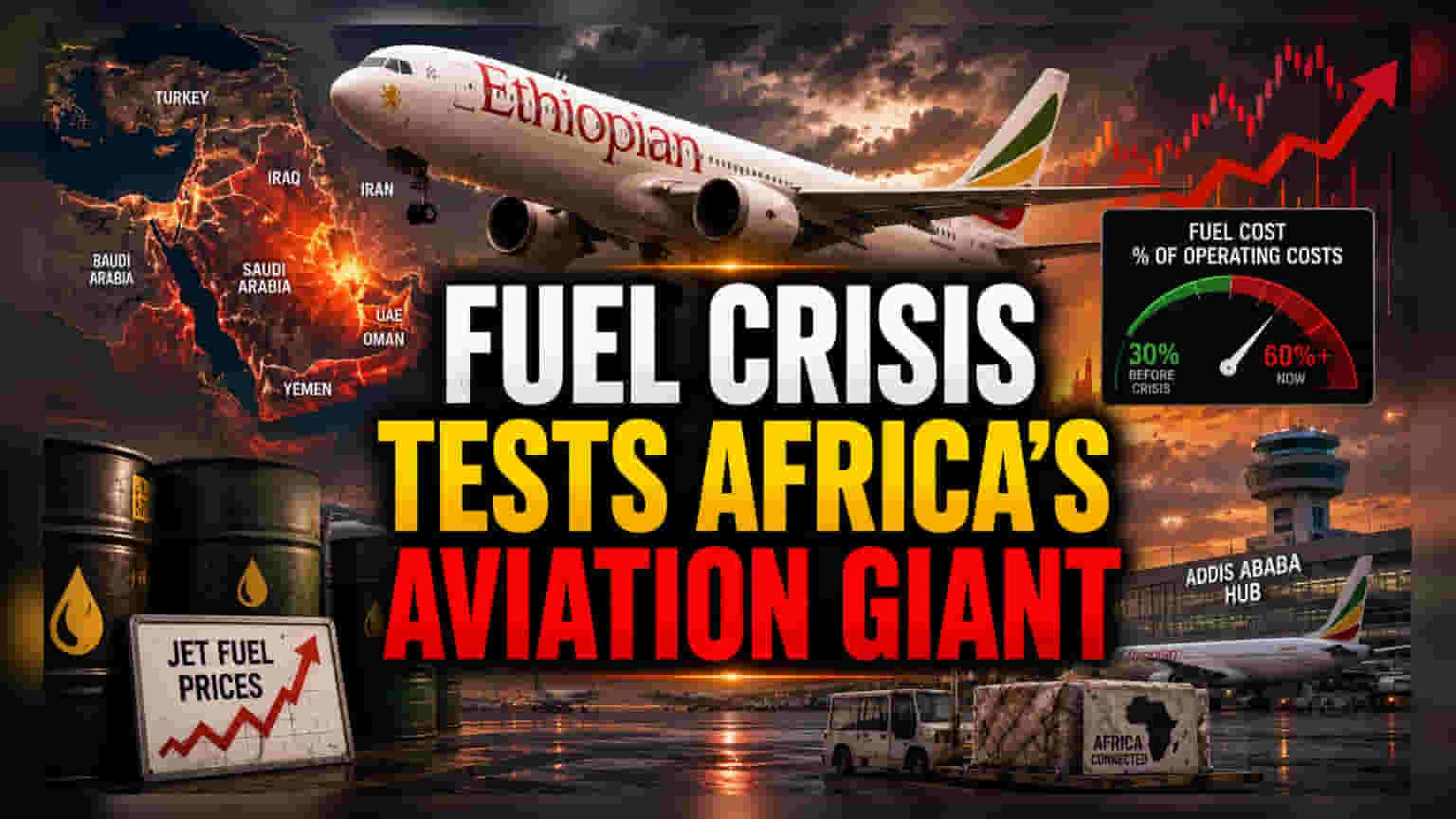


The Margin Squeeze
The ongoing conflict in West Asia has fundamentally altered the cost structure of Africa’s largest carrier. With jet fuel prices seeing sustained elevation, fuel expenditure has climbed to represent a majority share of the airline’s total operating costs. This shift contrasts sharply with pre-crisis levels and exerts direct pressure on the company’s bottom line, which management expects could see a reduction in profitability margins by as much as half. Unlike many global peers currently struggling with liquidity, Ethiopian Airlines remains fundamentally profitable, yet the heightened operational overhead is forcing a recalibration of its regional network, including reduced flight frequencies to key hubs like Dubai.
Analytical Context and Market Position
The broader aviation sector is currently grappling with a dual-threat environment: constrained supply chains and rising fuel prices. While IATA and global industry analysts have warned of potential consolidation and bankruptcies due to these same geopolitical pressures, Ethiopian Airlines has managed to serve as a resilient exception. The carrier’s status as a state-owned enterprise provides a different financial buffer compared to private budget carriers that have recently collapsed. Furthermore, while Indian and Middle Eastern carriers have seen significant declines in passenger traffic—some recording double-digit drops in specific corridors—Ethiopian Airlines has capitalized on its hub-and-spoke model at Addis Ababa, attracting transiting passengers diverted from disrupted routes elsewhere.
The Forensic Risk Assessment
Despite the management's optimistic public stance, the carrier faces significant structural risks. Its heavy reliance on maintenance hubs in the Middle East has exposed the airline to logistical bottlenecks during periods of regional instability, as spare parts and engine repairs have been delayed. Furthermore, the airline operates in an environment where currency volatility—specifically the depreciation of regional currencies against the U.S. dollar—increases the cost of dollar-denominated leases and maintenance contracts. While domestic operations remain largely shielded due to the lower fuel intensity of regional flights, any expansion of the international long-haul fleet faces the dual hurdle of high interest rates and the ongoing difficulty in securing wide-body capacity during a global supply shortage.
Strategic Outlook
Management remains committed to its Vision 2035 roadmap, which includes a major order for approximately 25 regional aircraft. The carrier continues to evaluate platforms from Airbus, Embraer, and Boeing to modernize its domestic and regional services. This modernization effort is intended to improve long-term fuel efficiency, which is essential for surviving the current high-energy-cost era. As it stands, the airline's ability to maintain its expansion schedule, including the massive Bishoftu airport project, will depend on its ability to navigate current fuel volatility while maintaining its status as a critical gateway for continental African trade.