 Whalesbook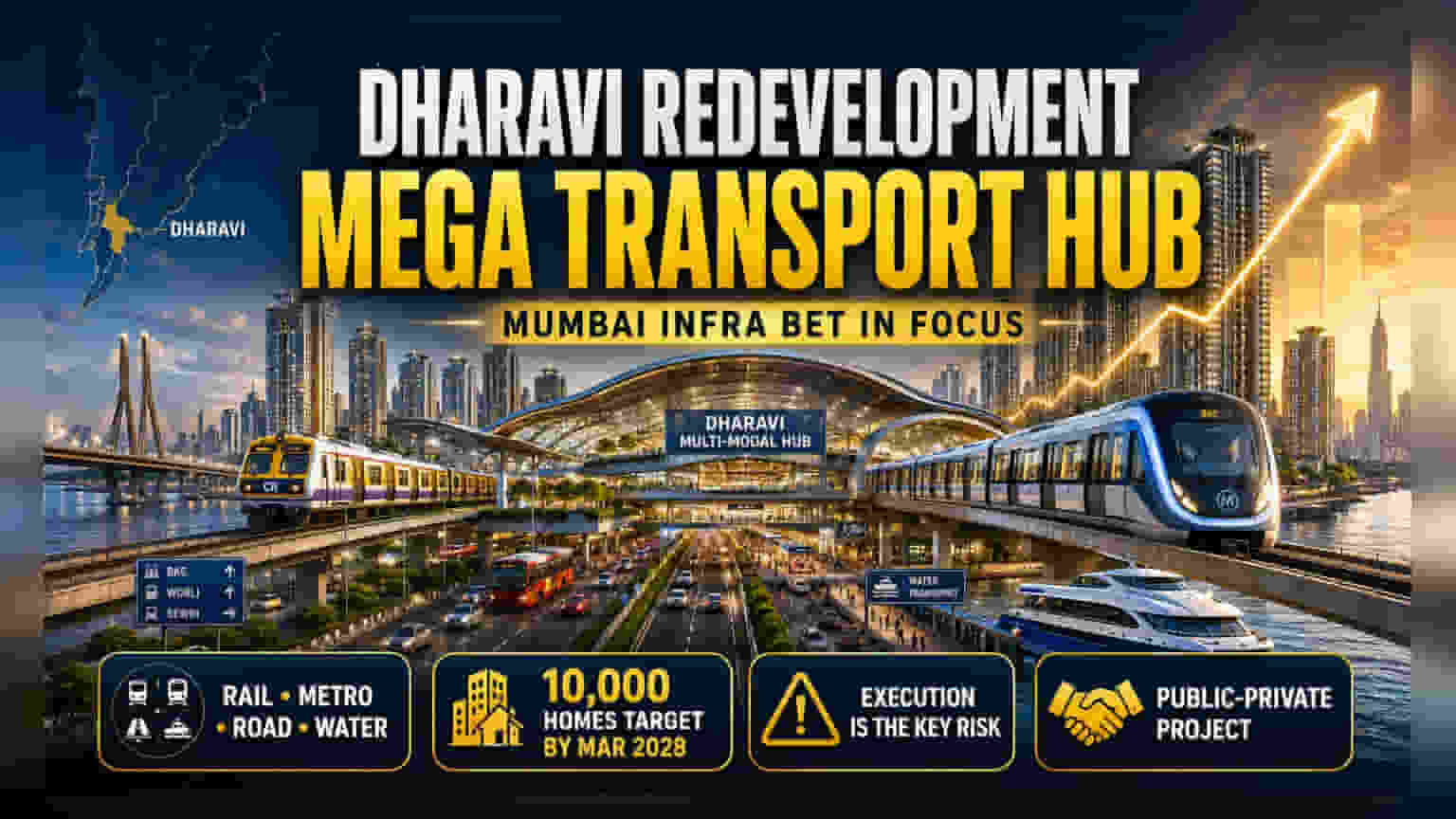


What Happened
The Dharavi redevelopment project in Mumbai has announced plans for a large multi-modal transport hub. This facility is designed to integrate different modes of transport, including rail, metro, road, and water. The project is part of a larger plan to modernize the area. It intends to connect the Western, Central, and Harbour railway lines with new metro corridors. The authorities have also mentioned the possibility of adding bullet train connectivity in future phases. The project is managed by a special purpose vehicle formed by the Maharashtra government and the Adani Group. The government has set a target to provide new housing for 10,000 eligible residents by March 2028.
Why This Matters For Investors
For investors, this project represents a significant shift in infrastructure development within a densely populated urban center. The project is not just about building homes; it is a major infrastructure play that aims to change how people move across the city. By consolidating various transport networks into a single location, the project aims to improve connectivity and potentially increase the commercial value of the surrounding land. The scale of the project, combined with the public-private partnership structure, makes it a notable development in the infrastructure sector. The ability to execute such a large-scale project on time will be a key indicator for investors looking at the long-term potential of the developers involved.
The Business Context
The project uses a single-window clearance mechanism to speed up approvals, which is an attempt to reduce the typical delays seen in large construction projects. The developer is also planning to integrate support systems for small businesses, such as those in leather and textile manufacturing, which are central to the local economy. The aim is to balance modern real estate development with the existing social and economic needs of the area. This approach is intended to make the rehabilitation process smoother and less disruptive for the local population.
What Could Go Wrong
Large urban redevelopment projects in India often face significant hurdles. The primary risk is the risk of delay or cost increase. These projects involve complex land acquisition, rehabilitation of thousands of residents, and multiple regulatory approvals. If the project faces delays in rehabilitation or land handover, it could push back the timeline and increase costs. Additionally, integrating multiple transport agencies, such as those responsible for rail, metro, and water, requires high levels of coordination. Any misalignment between these government bodies could cause the project to move slower than planned. Investors should also be aware that the social and cultural aspects of the redevelopment are sensitive, and any issues in these areas can lead to public opposition or legal challenges that may complicate progress.
How Investors May Read This
The market will likely watch the execution speed of this project. While the plan is ambitious, the final benefit will depend on how efficiently the partners can navigate the regulatory and operational challenges. Investors may look for updates on the 2028 delivery target and the pace of the initial phase of housing construction. Because the project is a long-term undertaking, financial performance will be closely tied to the ability to control costs and stick to the planned construction schedule. Any updates on the project's funding and the progress of the special purpose vehicle will also be important for tracking the project's health.
What Investors Should Track
The most important monitorables include the construction timeline and the actual progress of the rehabilitation phase. Investors should look for updates on major milestones, such as land clearance and the start of construction for the transport hub. Furthermore, any changes in government policy regarding urban renewal or any new regulatory requirements for the project will be essential to track. Finally, keeping an eye on the company’s management commentary regarding project execution and cash flow allocation will help in understanding the project's impact on the overall business.