

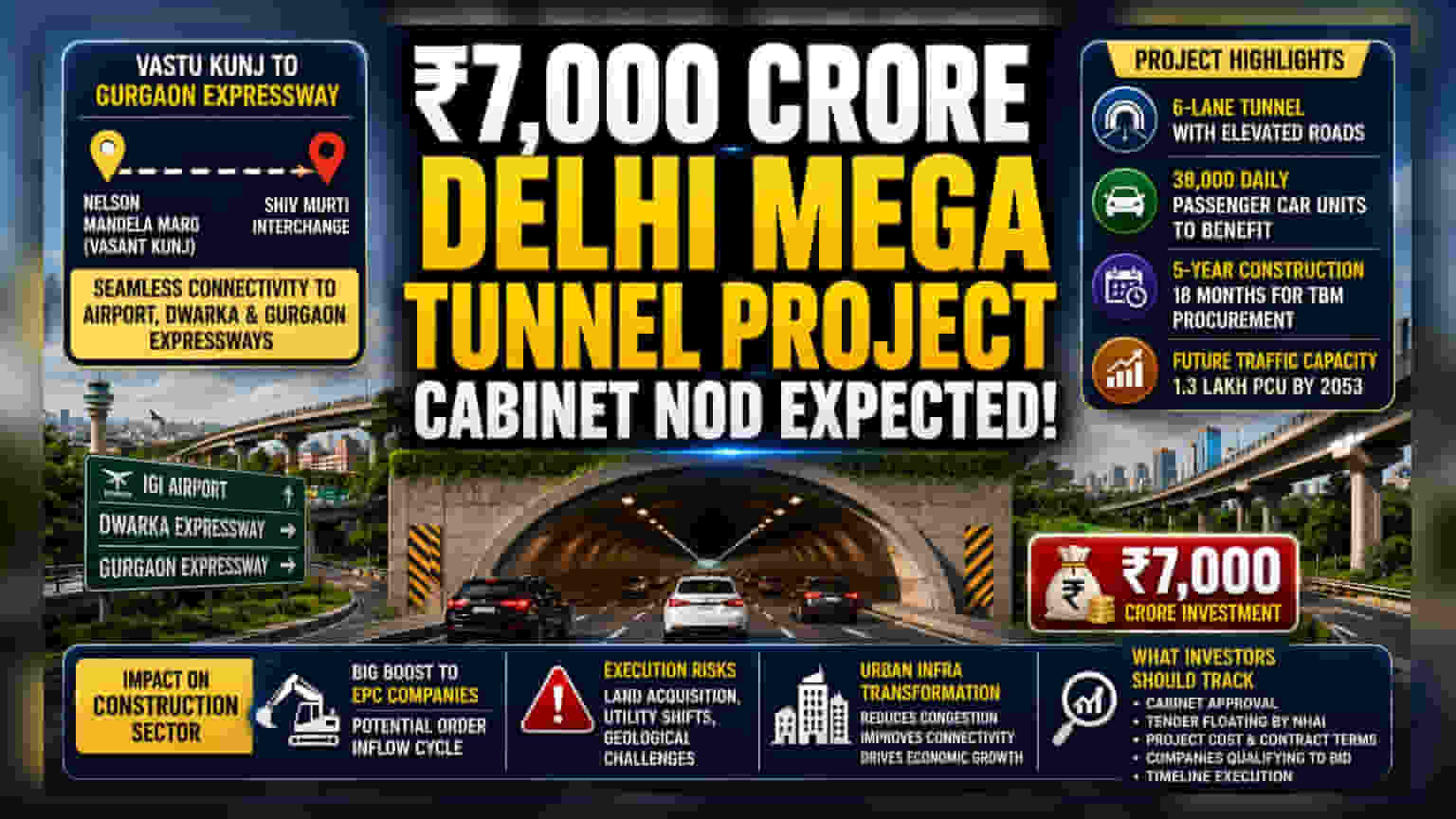
The Union Cabinet is set to consider a Rs 7,000 crore tunnel and elevated road project connecting Vasant Kunj to the Delhi-Gurgaon Expressway. This major NHAI initiative aims to ease heavy traffic congestion. For investors, this project signifies a potential new order opportunity for the domestic engineering and construction sector as it moves toward the tendering stage.
What Happened
The Union Cabinet is expected to approve a major infrastructure project worth Rs 7,000 crore, aimed at improving connectivity in South Delhi. The plan involves building a six-lane tunnel and connected elevated roads linking Nelson Mandela Marg in Vasant Kunj to the Shiv Murti interchange on the Delhi-Gurgaon Expressway. The National Highways Authority of India (NHAI) is overseeing the proposal, which has been in the planning stage for several years. The primary goal is to provide a seamless route to the Indira Gandhi International Airport and the Dwarka and Gurgaon Expressways, reducing travel times for commuters currently facing gridlock in areas like Mahipalpur.
Impact on the Construction Sector
For investors in the infrastructure space, this project represents the start of a potential order inflow cycle. Large-scale public projects of this nature are typically executed by established Engineering, Procurement, and Construction (EPC) companies. When the government approves such high-value projects, it signals future tender opportunities for major construction firms that specialize in complex tunneling and elevated corridor work. These projects usually contribute to the long-term order books of these companies, providing revenue visibility over the construction period.
The Reality of Urban Tunneling
While the project promises to reduce traffic for 38,000 daily passenger car units, executing such work in a dense urban environment comes with inherent challenges. The NHAI has outlined a five-year construction timeline, which includes a critical 18-month lead time just for the procurement and delivery of the Tunnel Boring Machine (TBM). Investors should be aware that tunneling projects in urban areas often face risks such as delays in land acquisition, unexpected utility shifts, and complex geological conditions. Historically, similar large-scale urban infrastructure projects have faced execution delays and cost overruns, which can impact the margins of the contractors involved.
Why The Project Scale Matters
The scale of this investment—Rs 7,000 crore—highlights the government's continued focus on addressing urban infrastructure bottlenecks. The project is designed to handle a projected surge in traffic volume to 1.3 lakh passenger car units by 2053, suggesting that the scope and design are intended for long-term capacity. Beyond the tunnel itself, plans are also being finalized for an elevated corridor connecting AIIMS to Nelson Mandela Road, which would create a broader network for East Delhi and the surrounding expressways. The simultaneous execution of these road networks will be essential to ensure the utility of the tunnel once completed.
What Investors Should Track
Investors monitoring the infrastructure sector should watch for the official Cabinet approval, followed by the floating of the formal tender by the NHAI. The key monitorables will be the final project cost, the terms of the contract (whether it is an EPC or Hybrid Annuity Model contract), and which major construction firms qualify for the bidding process. Additionally, the project's ability to stay within the planned five-year timeline will be a crucial indicator of operational efficiency for the eventual contractors selected.