

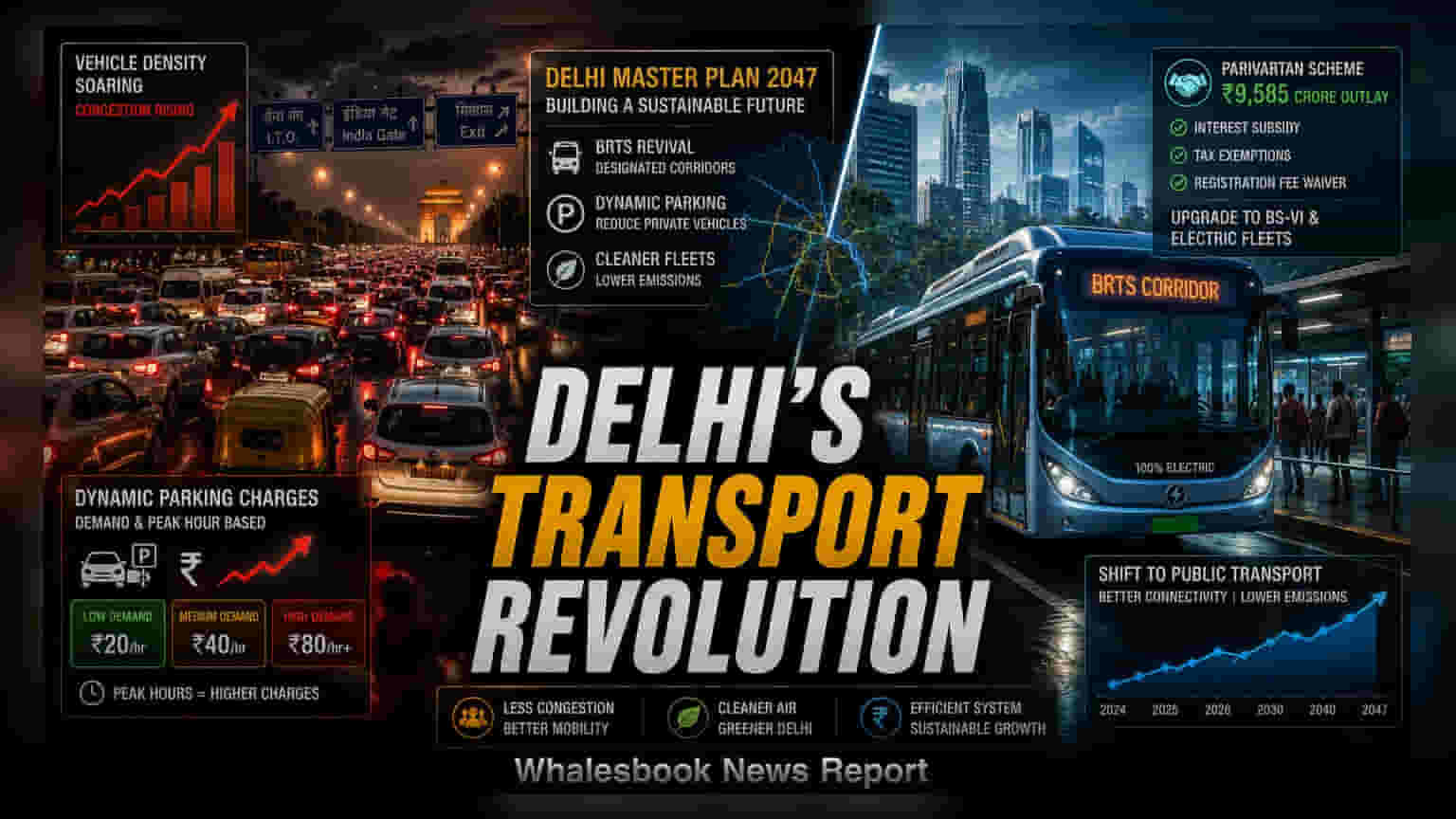
The Delhi Master Plan 2047, notified on August 20, 2026, targets lower private vehicle use via dynamic parking and revived bus corridors. Coupled with the recent ₹9,585 crore 'PARIVARTAN' scheme, these policies shift focus toward commercial fleet modernization and public transit. Investors are monitoring the implementation risks following past public pushback against similar transit projects.
The Delhi Master Plan 2047 (MPD-2047), officially notified in the Gazette of India on August 20, 2026, introduces a major shift in the capital's approach to urban mobility. The policy framework aims to curb the city’s rising vehicle density by implementing dynamic parking charges, which will vary based on demand and peak hours. This strategy seeks to discourage the use of private vehicles in congested zones by increasing the cost of on-street and public parking.
BRTS Revival and Infrastructure Impact
The plan also proposes the potential return of the Bus Rapid Transit System (BRTS) on designated routes. For investors in the infrastructure and construction sectors, this represents a shift away from simple road expansion toward integrated public transit projects. However, the execution remains a significant monitorable. A decade ago, a similar BRTS corridor in South Delhi was dismantled following intense public and political backlash, which critics blamed for worsening traffic congestion. Any move to reintroduce such systems will face scrutiny regarding its ability to balance public transit efficiency with existing road capacity.
Commercial Fleet Modernization
Complementing the infrastructure changes, the Delhi Cabinet approved the 'PARIVARTAN' scheme in July 2026, with a total financial outlay of ₹9,585 crore. This initiative focuses on modernizing commercial fleets by replacing older, high-polluting vehicles with BS-VI compliant and electric models. The scheme includes various financial incentives such as interest subsidies, tax exemptions, and registration fee waivers to encourage fleet owners to upgrade their vehicles.
For commercial vehicle manufacturers like Tata Motors and Ashok Leyland, this government-backed transition is a relevant factor. The success of the scheme depends on how quickly logistics and transport operators can replace their older fleets, given the associated capital expenditure. While the incentives are designed to lower the cost of transition, fleet owners must manage the operational impact of upgrading their assets.
Key Monitorables for Investors
Investors should track the implementation timeline of the PARIVARTAN scheme, as its success could influence demand for new commercial vehicles in the region. Additionally, the government's approach to administrative coordination—specifically through a Unified Metropolitan Transport Authority—will be critical to the effective rollout of dynamic pricing and new bus corridors. The final impact on the ground will depend on how the city manages the transition without causing significant disruption to traffic or imposing unsustainable costs on the local logistics sector. The next key update to watch for is the specific identification of BRTS routes and the pace of fleet replacement registrations.