 Whalesbook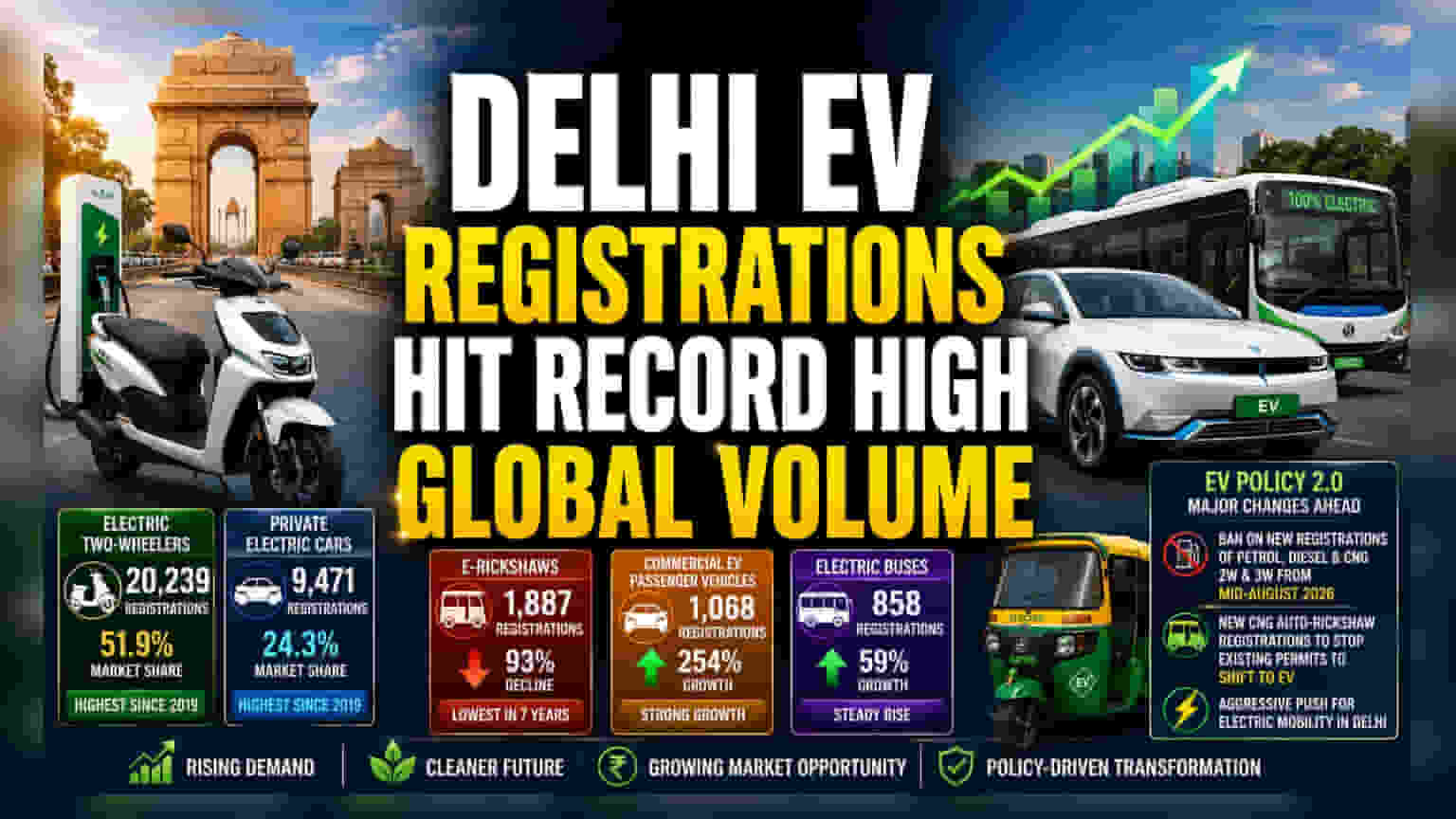


Electric two-wheeler and private car registrations in Delhi reached record highs between January and May 2026. As the city prepares for its EV Policy 2.0, which includes phasing out new petrol, diesel, and CNG two- and three-wheeler registrations by mid-August, the automotive sector is witnessing a shift. While private electric vehicle adoption is surging, e-rickshaw registrations have declined sharply, signaling a move toward more organized electric transport options in the capital.
What Happened
The Delhi electric vehicle market saw record-breaking registration numbers between January and May 2026, according to recent transport data. Electric two-wheelers and private electric cars both reached their highest registration levels since 2019. Electric two-wheelers now command 51.9% of the total electric vehicle market, with registrations hitting 20,239 units in this five-month period. Private electric four-wheelers also posted strong growth, recording 9,471 registrations and accounting for 24.3% of the total electric vehicle market share.
The Shift in Market Dynamics
The composition of the electric vehicle market in Delhi is changing. While personal electric vehicles are seeing high demand, the e-rickshaw segment has experienced a significant downturn. Registrations for e-rickshaws plummeted by 93%, falling to 1,887 units, the lowest figure in seven years. This indicates a potential transition away from the informal e-rickshaw segment toward more structured, registered electric auto-rickshaw alternatives. Meanwhile, commercial electric passenger vehicles, such as app-based cabs, grew by 254% to reach 1,068 units, and electric bus registrations rose by 59% to 858 units.
Impact of Upcoming Policy Changes
These trends are occurring as the Delhi government prepares to introduce its Electric Vehicle Policy 2.0. The draft policy aims to aggressively transition the city’s transport sector toward electric mobility. A major development to watch is the proposed ban on new registrations for petrol, diesel, and CNG-powered two-wheelers and three-wheelers starting in mid-August 2026. Additionally, the policy suggests halting new CNG auto-rickshaw registrations, with existing permits potentially transitioning to electric equivalents. This regulatory push is a critical factor influencing both consumer buying patterns and the product strategies of major automakers.
How Investors May Read This
The rapid rise in electric two-wheeler and private car adoption demonstrates that consumer preference is shifting, driven by both availability and impending regulatory deadlines. For major automotive manufacturers and component suppliers, the Delhi market is often a leading indicator for national trends. The forced phase-out of fossil-fuel-powered two- and three-wheelers in Delhi creates a guaranteed demand window for electric vehicle original equipment manufacturers. However, this also puts pressure on companies to ensure they have adequate supply chains and charging network partnerships to meet the anticipated demand before the mid-August regulatory cutoff.
What Investors Should Track
The most important monitorable is the official rollout and implementation of the Electric Vehicle Policy 2.0. Investors should track how the shift from traditional three-wheelers to electric auto-rickshaws impacts the formal organized market, as this could benefit larger automotive players capable of supplying compliant electric three-wheeler fleets. Furthermore, while demand is rising, investors should monitor whether the growth in EV sales remains sustainable without state subsidies or if it is purely policy-driven. The ability of companies to scale production to meet the sudden shift from internal combustion engines to electric powertrains before the August deadline will also be a key factor for the financial performance of major auto companies in the coming quarters.