

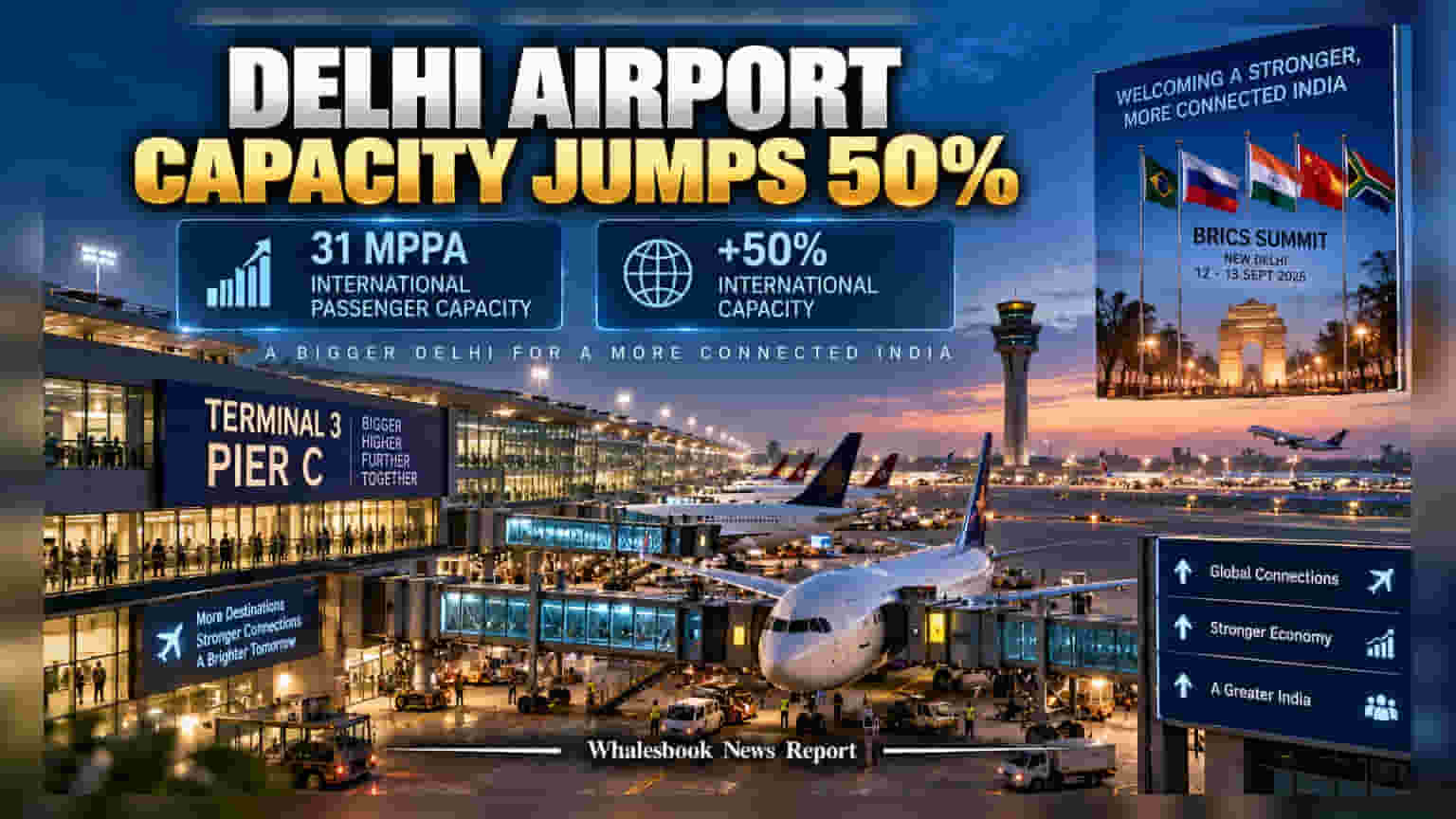
Delhi International Airport Limited (DIAL) has launched its new Pier C at Terminal 3, increasing international passenger handling capacity by 50% to 31 million annually. This expansion, timed ahead of the BRICS Leaders' Summit, improves long-term infrastructure, though investors will monitor the company's significant debt obligations due later this year.
Delhi International Airport Limited (DIAL), the GMR-led consortium, has begun using its new Pier C at Terminal 3 for international flights starting the night of September 9, 2026. This expansion increases the airport's annual international passenger handling capacity by 50%, bringing the total capacity for international travelers to 31 million passengers per year.
The timing is strategic, with the facility opening just days before the 18th BRICS Leaders' Summit in New Delhi on September 12–13, 2026. Beyond the immediate demand of the summit, the infrastructure serves a long-term goal of positioning Delhi as a larger global aviation hub, allowing for more aircraft parking and better traffic management.
For investors, the capacity expansion is a positive step toward handling rising air traffic, which supports future revenue potential from terminal services and retail. The financial health of the operator has also seen improvements recently. DIAL significantly reduced its leverage, with the net debt to operating profit ratio dropping to 4.82x in the financial year 2026, compared to 10.07x in the previous year.
However, the company faces specific financial and regulatory monitorables. There is a refinancing risk due to the airport operator's debt structure, which includes significant bullet repayments—a type of loan where the principal is paid in one lump sum—due in October 2026. Success in managing this upcoming repayment will be crucial for the company's financial flexibility. Additionally, revenue stability remains tied to regulatory tariff orders, specifically the implementation of the fourth control period (CP4). Any delays in these regulatory decisions could impact cash flow projections.
Moving forward, the key things to track include how effectively the airport handles the influx of passengers during the upcoming diplomatic summit, the progress on refinancing upcoming debt obligations, and any updates regarding regulatory tariff approvals that dictate airport fees.