

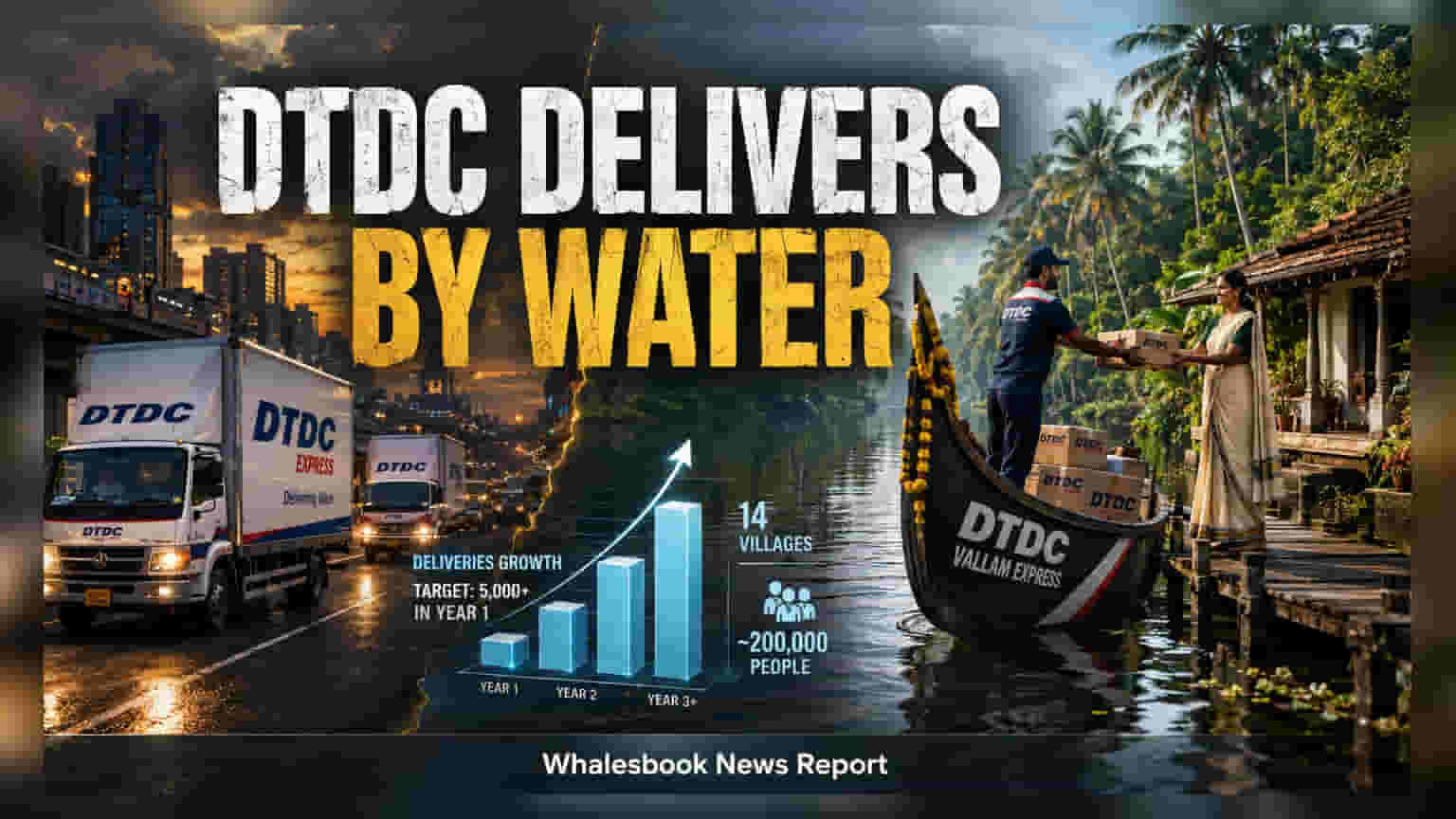
Logistics firm DTDC Express has introduced 'Vallam Express', a waterway delivery service for Kuttanad, Kerala. The initiative aims to serve 200,000 people across 14 remote villages by partnering with local oarsmen. While this move improves last-mile access, investors should note that DTDC Express Ltd. is a public unlisted company.
DTDC Express has rolled out a specialized delivery service called 'DTDC Vallam Express' in Kerala’s backwaters. Operations have officially commenced in the Kuttanad sub-district of Alappuzha. In this region, traditional road transport is often limited, making waterways the primary method for moving goods. The service aims to solve the last-mile delivery challenge by partnering with local oarsmen who possess the necessary knowledge to navigate complex water routes.
The initiative is designed to reach 14 villages, covering a population of approximately 200,000 people. The company has projected that the service will facilitate over 5,000 deliveries in its first year of operation. By utilizing traditional boats, DTDC is attempting to create a more efficient logistics network in areas that were previously difficult for standard courier teams to access.
For those tracking the Indian logistics space, it is important to note that DTDC Express Ltd. is a public unlisted company. This means it is not traded on public stock exchanges like the BSE or NSE, and its financial data is not as frequently updated or accessible as that of listed logistics majors. The company reported revenue exceeding ₹1,000 crore for the financial year ending March 31, 2025.
From a business perspective, the introduction of specialized delivery models is a common strategy in the highly competitive Indian logistics sector. Companies often use such niche services to differentiate themselves and capture market share in underserved or geographically challenging regions. While the volume target of 5,000 parcels annually is small relative to the total operations of a large logistics firm, successful execution could provide a blueprint for expansion into other similar water-heavy regions.
However, there are inherent risks to this model. Logistics in unique environments like backwaters face operational hurdles, including potential weather-related disruptions such as heavy rains or flooding, which can impact service reliability. Additionally, the company is relying on partnerships with local, unorganized operators. Maintaining service quality and cost control within this partnership structure will be necessary to ensure the project remains sustainable.
The broader logistics industry in India also continues to face significant pricing pressure, which can impact operating margins for all delivery firms. The key for interested observers will be to monitor whether this pilot program can be scaled effectively without adding excessive costs, and if the company chooses to replicate this model elsewhere.