

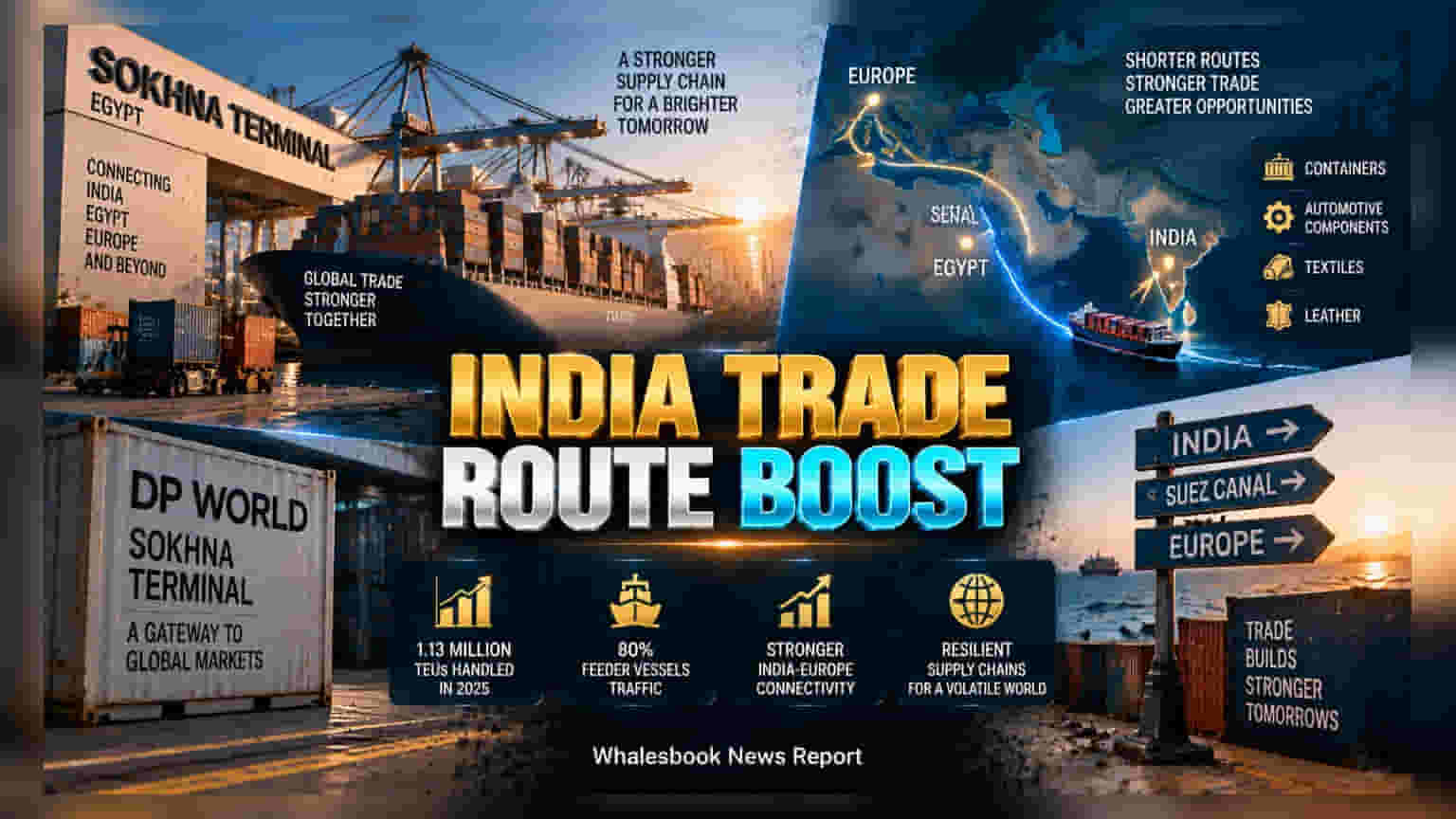
DP World’s Sokhna terminal in Egypt is handling rising cargo traffic between India and the Mediterranean as shipping lines adjust to Red Sea disruptions. While operations are growing, the company reported a 13.1% rise in H1 2026 revenue to $12.7 billion, even as profits dipped 39.1% due to regional instability.
DP World’s Sokhna terminal in Egypt has emerged as a critical gateway for cargo moving between India and the Mediterranean. As shipping companies navigate ongoing security concerns in the Red Sea, this facility is increasingly supporting trade flows for sectors like textiles, automotive components, and leather, which require efficient access to European markets.
The terminal, located near the Suez Canal, has seen a major shift in its traffic profile. Before the Red Sea shipping route disruptions, mainline vessels accounted for the majority of operations. Now, about 80% of the traffic consists of smaller feeder vessels, which transport goods between regional hubs and larger ports. In 2025, the facility handled 1.13 million TEUs (twenty-foot equivalent units), underscoring its role in maintaining supply chain continuity during a volatile period for global shipping.
Beyond basic port handling, DP World is integrating logistics services at Sokhna, including bonded facilities that allow goods to remain under customs control until duties are paid. This expansion complements the company's broader growth strategy, which includes a committed $5 billion investment in India over a five-year period to improve port-to-factory connectivity.
While the terminal’s operational volumes remain resilient, the company’s broader financial health reflects the complexities of the current global environment. In its H1 2026 financial report, DP World posted a revenue of $12.7 billion, representing a 13.1% increase compared to the previous year. However, profits for the first half of 2026 stood at $585 million, marking a decline of approximately 39.1%. This profit pressure is largely attributed to the high costs associated with navigating regional instability and the resulting changes in global shipping patterns.
The financial profile of the company also warrants investor attention. With a business model that relies heavily on large infrastructure projects, the company carries significant debt. Maintaining a disciplined approach to capital spending while managing these debt levels remains a key financial priority for the management. Furthermore, the company faces exposure to global trade protectionism and potential tariff changes, which could impact overall container volumes in the coming quarters.
For investors, the immediate future will depend on how shipping lines adapt to the evolving security situation in the Red Sea and whether trade volumes between India and Europe continue to grow at the expected pace. The next important milestones will be the company’s ability to manage its operating margins amid persistent regional costs and the successful execution of its large-scale expansion projects in India and other key markets.