

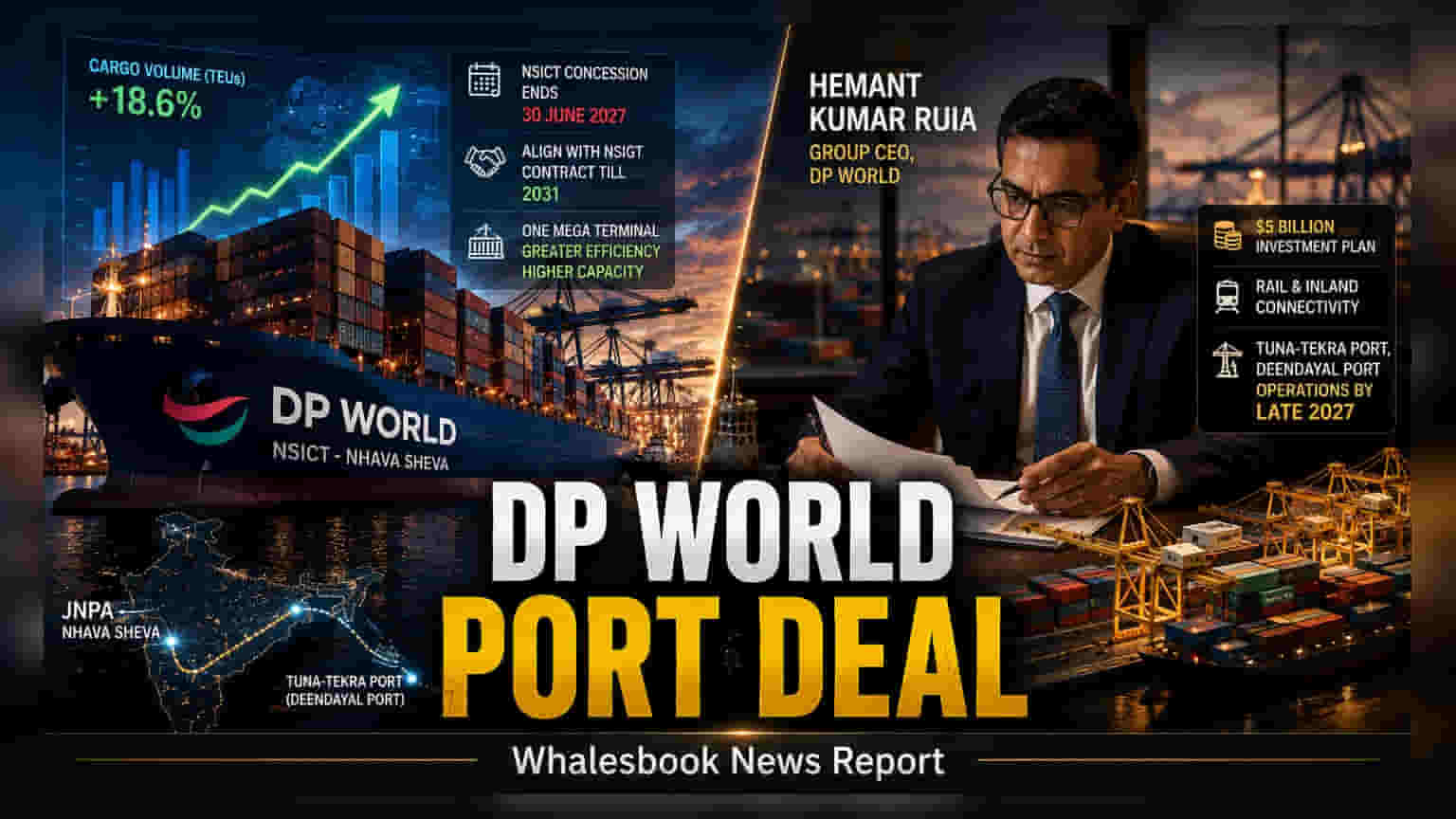
DP World is seeking an extension for its Nhava Sheva International Container Terminal concession, which is set to expire in 2027. The company wants to align this timeline with a nearby terminal to create a unified logistics hub. This move follows its ongoing $5 billion investment plan in India's supply chain infrastructure, even as it navigates regulatory complexities related to older port contracts.
DP World is currently in discussions with the Jawaharlal Nehru Port Authority (JNPA) to extend the operating license for its Nhava Sheva International Container Terminal (NSICT). The current concession for this terminal is scheduled to end on June 30, 2027. The company’s goal is to align the NSICT contract with its neighboring Nhava Sheva (India) Gateway Terminal, which operates under a different agreement that runs until 2031. By synchronizing these timelines, DP World aims to manage both facilities as a single, unified mega-terminal, which could improve operational efficiency and cargo handling capabilities.
This negotiation highlights the complexities often associated with legacy public-private partnership contracts in India’s port sector. NSICT was one of the first private container terminals in the country, established in the late 1990s. Unlike modern concession agreements, these older contracts often lack clear, automatic extension clauses. This creates a degree of regulatory uncertainty, as the renewal process requires fresh negotiations with port authorities. How these discussions proceed will be watched by industry observers as an indicator of how the government handles the renewal of older terminal licenses.
The competitive environment at JNPA has also changed significantly since NSICT first opened. New facilities, such as the Bharat Mumbai Container Terminals operated by PSA International, have added substantial capacity to the region. This increased competition is a factor that could influence the final terms and conditions of any extension granted by the port authority.
Beyond the specific terminal negotiations, DP World continues to expand its broader footprint in India. The company has reaffirmed its commitment to a $5 billion investment plan aimed at strengthening an integrated supply chain network, including rail connectivity and inland logistics. Furthermore, DP World is developing a large-scale container terminal at Tuna-Tekra near Gujarat’s Deendayal Port, which is currently on track to begin operations by late 2027.
Since DP World is a privately held company and is not traded on Indian stock exchanges, these developments do not result in direct stock price fluctuations. For logistics and infrastructure observers, the key monitorable remains the outcome of the license extension negotiations at JNPA and the progress of the Tuna-Tekra project, both of which are critical to the company's long-term capacity in the Indian market.