

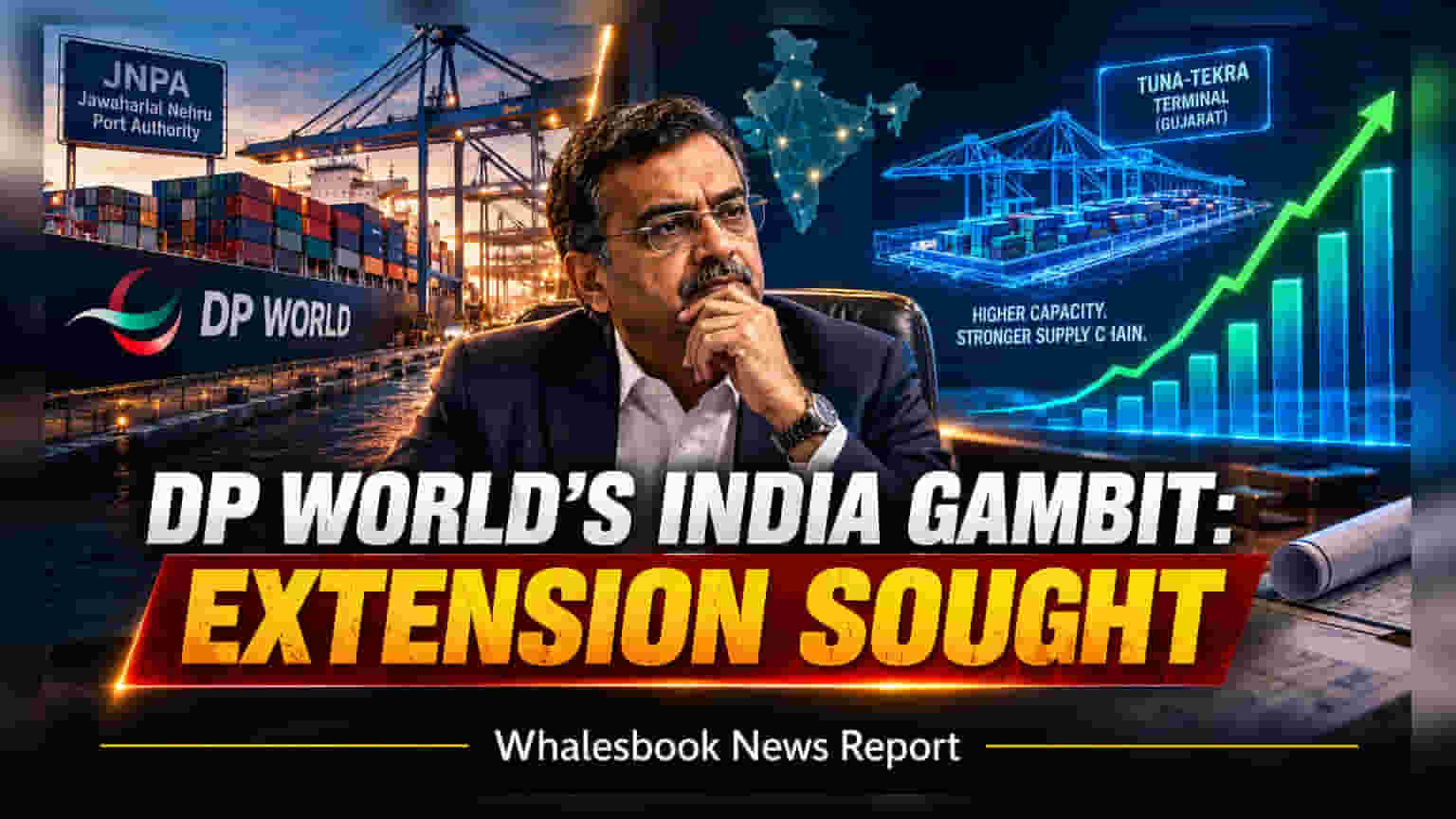
Global operator DP World has requested to extend its NSICT terminal concession at the Jawaharlal Nehru Port Authority beyond June 2027. The move aims to integrate adjacent terminals into a more efficient mega-facility. While DP World is no longer listed in India, its $5 billion investment plan is significantly shaping the domestic logistics and port sector.
Global port and logistics operator DP World is actively seeking to extend its concession for the Nhava Sheva International Container Terminal (NSICT) at the Jawaharlal Nehru Port Authority (JNPA). The current agreement for this terminal is scheduled to expire in June 2027. By securing an extension, the company aims to align the NSICT operations with its adjacent Nhava Sheva (India) Gateway Terminal (NSIGT), which has a concession running until 2031. This integration is designed to create a more efficient, single mega-terminal capable of handling larger vessel volumes and streamlining port traffic.
This move is a core part of the company's larger goal to strengthen its integrated supply chain network across India. DP World has committed to investing an additional $5 billion in the country over the next five years. Beyond the JNPA consolidation, the company is developing a new container terminal at Tuna-Tekra near Deendayal Port in Gujarat, which is expected to significantly boost handling capacity when operations begin. These projects are intended to help the company capture a larger share of India’s growing trade volumes.
For investors and market participants, it is important to note that DP World is currently a privately held entity, having delisted from Indian stock exchanges in 2020. However, its strategic moves provide vital clues about the health and direction of India's logistics sector. The company recently reported resilient financial results for the first half of 2026, showing revenue growth of 13.1% to reach $12.7 billion. Its adjusted EBITDA stood at $2.9 billion, maintaining a healthy margin of 22.5%. These figures suggest that, despite global trade headwinds, the company maintains the financial capacity to support its ambitious infrastructure projects.
However, the company’s expansion plans are not without risks. The primary challenge remains regulatory approval, as the concession extension is subject to government oversight and negotiation. Furthermore, the global logistics sector is currently navigating geopolitical instability, particularly in the Middle East, which continues to impact trade flows and traffic at key global hubs like Jebel Ali. While the company has mitigated these issues through alternative routes and network connectivity, the persistent need for stability underscores the complexity of managing global supply chains. Additionally, the increasing presence of large private operators in India means the company must manage pricing pressures and competition to protect its profit margins.
Looking ahead, the next key monitorables include the outcome of the JNPA concession extension negotiations and the construction progress of the Gujarat terminal. As companies globally shift from a just-in-time inventory strategy to a just-in-case model—aiming to build more buffer stock to avoid supply disruptions—the demand for reliable, large-scale port infrastructure remains a central theme for the broader shipping and logistics industry.