

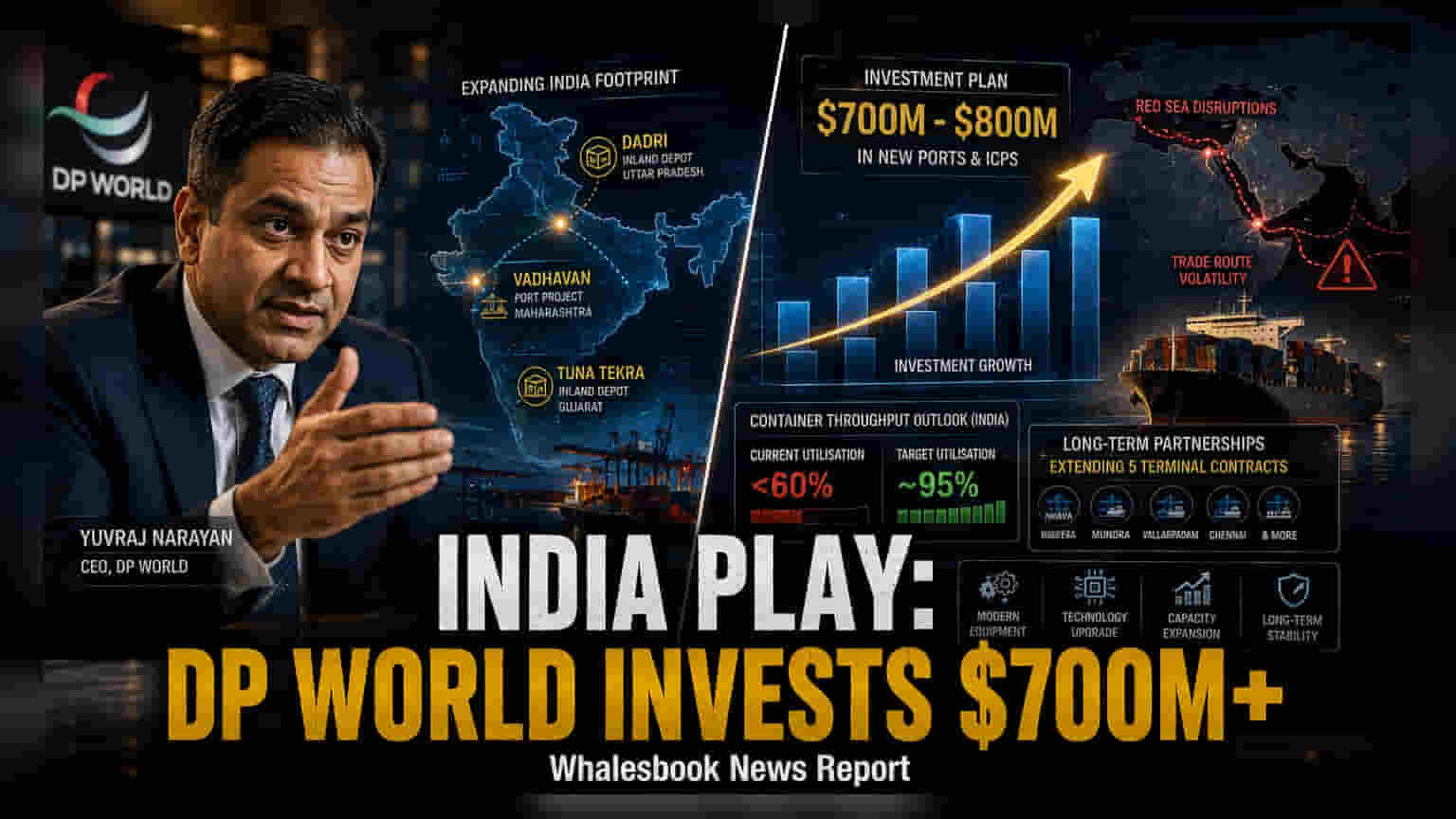
DP World is preparing a $700–800 million investment in Indian port and logistics projects while seeking longer-term agreements for its existing terminals. This expansion comes as the logistics giant navigates a 39% decline in global first-half 2026 profits, driven by geopolitical trade disruptions.
Dubai-based logistics major DP World is targeting an aggressive expansion in India, with plans to invest between $700 million and $800 million in the near term. The capital is earmarked for new port and inland container depot projects, including proposed developments at Vadhavan in Maharashtra and Dadri in Uttar Pradesh. This commitment highlights the company's long-term reliance on the Indian market as a key driver for its global logistics network.
Strategic Push for Long-Term Partnerships
Beyond new projects, the company is actively seeking to extend its presence in existing Indian assets. Group Chief Executive Officer Yuvraj Narayan has indicated an interest in establishing longer-term joint venture or ownership models for five of its terminal contracts, which are set to expire within the next five years. These terminals include key locations such as Nhava Sheva, Mundra, Vallarpadam, and Chennai. The company argues that transitioning from standard concessions to these models would provide the stability needed to justify further spending on modern equipment, technology, and capacity upgrades, preventing the uncertainty often associated with terminal handovers at the end of a contract period.
Operational and Financial Context
This expansion strategy is occurring against a challenging financial backdrop for the parent company. In its latest performance update for the first half of 2026, DP World reported a 13.1% rise in revenue, yet net profit fell by 39.1% to $585 million. The company has pointed to geopolitical instability and ongoing trade flow disruptions in the Middle East and Red Sea region as primary factors impacting profitability. While the company maintains a robust global capital expenditure plan, investors are closely monitoring how these external pressures influence the speed and efficiency of new infrastructure deployments.
Regulatory and Efficiency Challenges
Despite the planned investment, the company has emphasized the need for a more predictable regulatory and policy framework in India. A notable operational challenge highlighted by the management is the utilization rate of its Indian terminals, which currently hovers below 60%. This is significantly lower than the company’s global average of approximately 95%. Management suggests that the path to higher utilization involves improving hinterland connectivity—such as better road, rail, and coastal shipping links—rather than solely focusing on adding new terminal capacity.
Moving forward, the primary monitorables for investors and market analysts will be the outcome of discussions regarding the five existing terminal concessions, the successful procurement of the proposed port projects, and the company's ability to navigate margin pressure amidst global geopolitical volatility.