

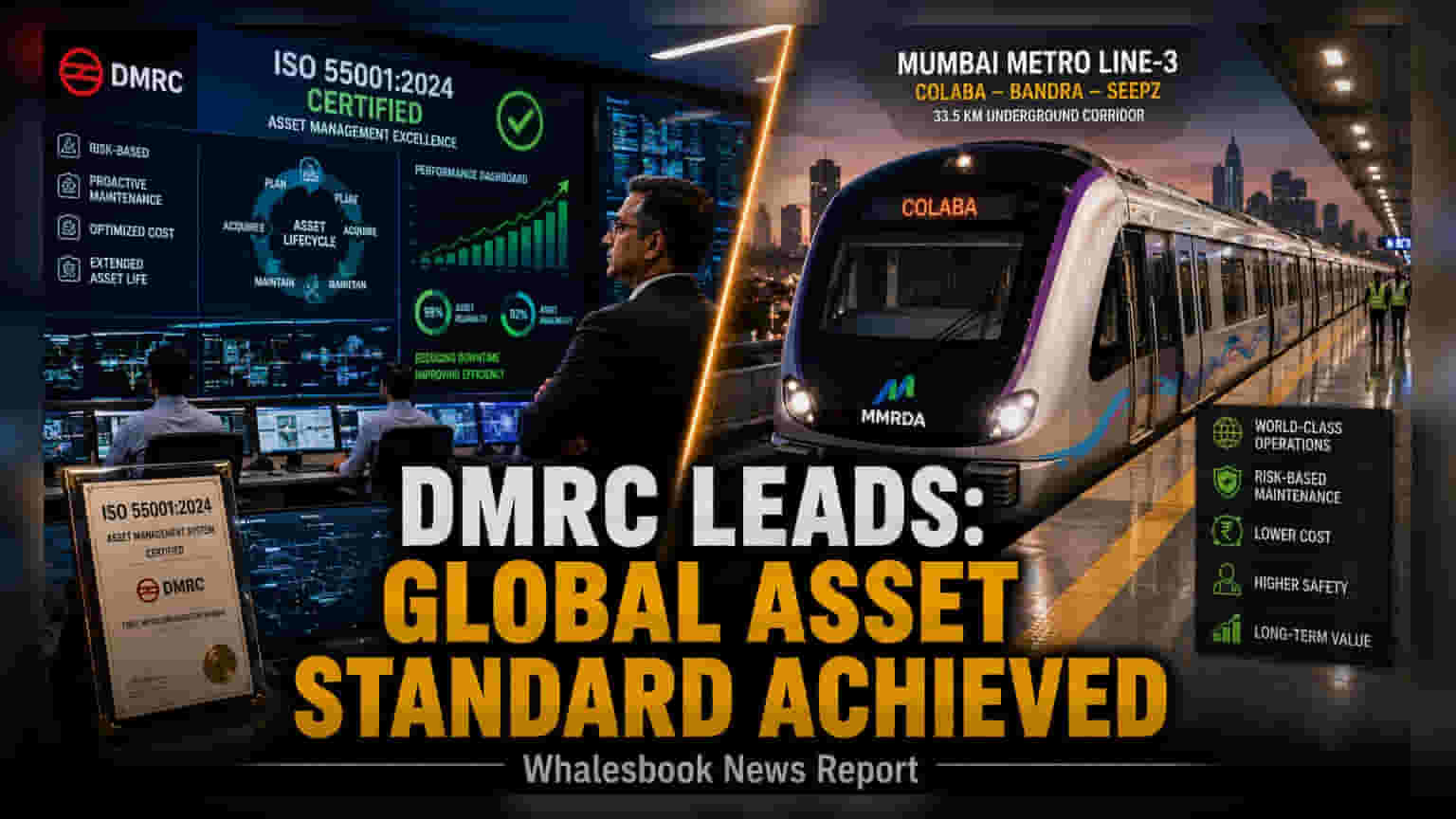
The Delhi Metro Rail Corporation (DMRC) has secured the ISO 55001:2024 certification for asset management at the Mumbai Metro Line-3. This global standard focuses on lifecycle-based maintenance and efficiency for the 33.5-km underground corridor. While this milestone marks an operational improvement, the project continues to navigate the structural challenges of high operational costs and reliance on government financial support common in India's metro sector.
The Delhi Metro Rail Corporation (DMRC) has become the first metro organization in India to receive the ISO 55001:2024 certification for its asset management system, specifically for the operations and maintenance of the Mumbai Metro Line-3. This international standard is a framework for organizations to manage the lifecycle of their physical assets, ranging from planning and acquisition to maintenance and eventual replacement.
The Mumbai Metro Line-3, a 33.5-kilometer underground corridor connecting Colaba, Bandra, and SEEPZ, involves complex infrastructure including signaling, telecommunications, stations, and rolling stock. By adopting this certification, DMRC aims to shift its operational focus from reactive maintenance—fixing equipment only when it fails—to a proactive, risk-based strategy. This method helps in optimizing costs and extending the useful life of expensive machinery and infrastructure components.
For the Indian urban rail sector, this certification serves as a benchmark for operational quality. Metro systems are highly capital-intensive projects that require constant upkeep. Because DMRC is a government-owned joint venture of the Government of India and the Government of Delhi, it is not a publicly listed entity. However, its operational practices hold significant value for the broader infrastructure industry, including contractors, technology vendors, and consultants who work within the metro space.
While the ISO certification reflects a commitment to operational efficiency, metro projects in India frequently face significant financial headwinds. Most large-scale urban rail networks, including those in Mumbai, struggle to cover high operational and maintenance costs through ticket revenue alone. These projects often depend on government subsidies to remain sustainable. Managing these high costs requires stringent financial discipline, and lifecycle asset management is a tool to control long-term expenses rather than a solution for the underlying revenue gap.
Investors and industry observers tracking the infrastructure sector often look for these efficiency benchmarks to understand how effectively public projects are managed. The primary challenge for the Mumbai Metro Line-3 remains the balance between maintaining world-class safety and service standards and ensuring financial viability in the face of ongoing operational expenses. Going forward, the effectiveness of this management system will be judged by its ability to reduce unscheduled maintenance and optimize long-term operational costs across the corridor.