

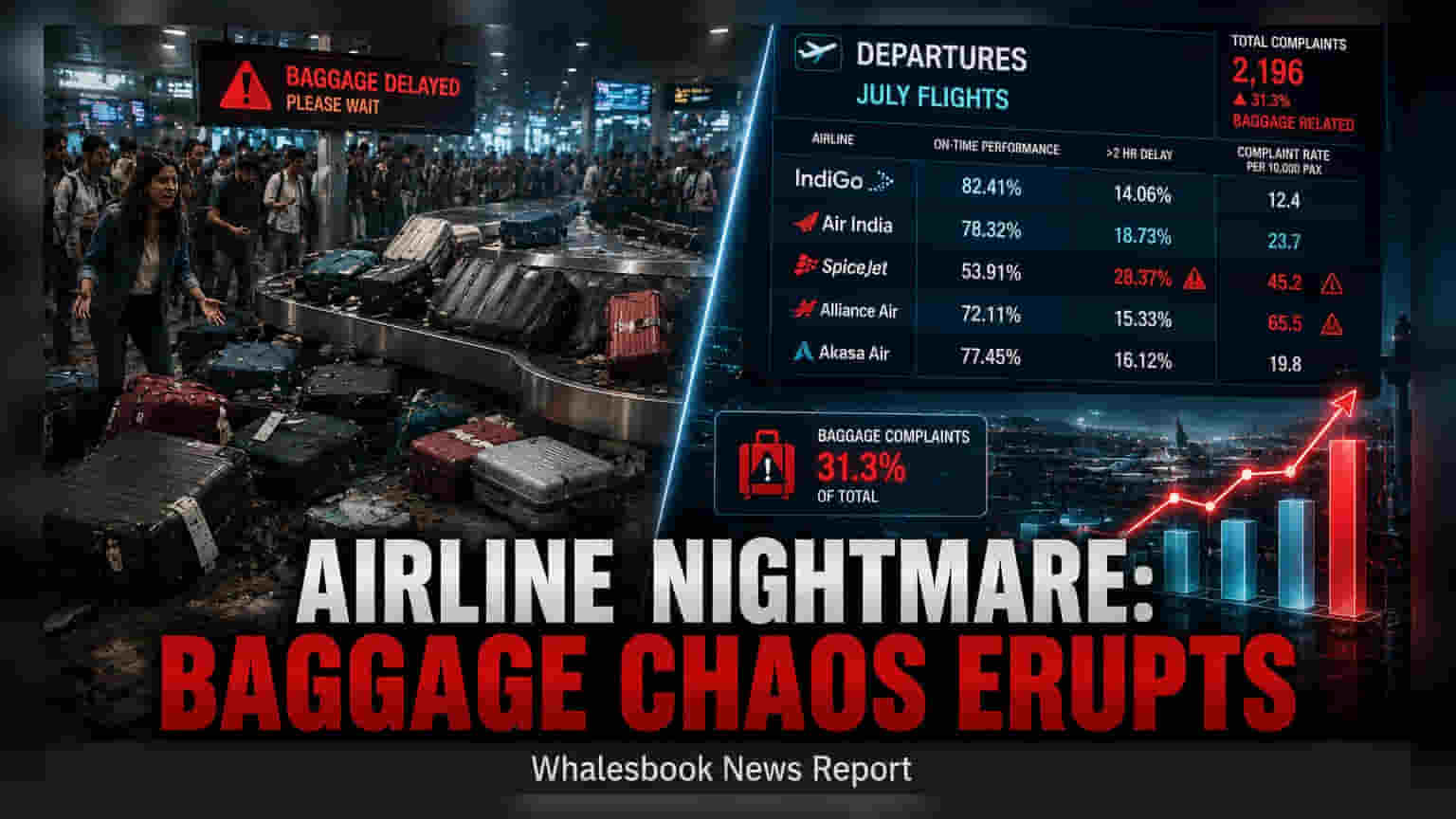
Baggage-related issues accounted for 31.3% of all airline passenger complaints in July 2026, according to the latest DGCA report. Amidst a 4.8% year-on-year decline in domestic air traffic, operational metrics are under pressure. While IndiGo maintains market dominance, higher complaint and delay rates at carriers like SpiceJet and Alliance Air highlight operational risks that can impact long-term brand reputation and regulatory standing.
The Directorate General of Civil Aviation (DGCA) released its performance report for July 2026, revealing that baggage-related grievances have become the primary cause of passenger dissatisfaction. Of the 2,196 total complaints filed during the month, approximately 687, or 31.3%, were related to delayed, lost, or mishandled luggage. While the overall resolution rate for these grievances remained high at 99.2%, the high volume of baggage incidents underscores a service challenge for the aviation sector.
Individual airline performance varied significantly during the month. Alliance Air recorded the highest complaint rate among domestic carriers, with 65.5 grievances per 10,000 passengers. Meanwhile, SpiceJet faced operational hurdles, recording the highest proportion of significant flight delays, with 28.37% of its flights delayed by more than two hours. Such high delay rates are critical for investors to note, as they often lead to increased operational costs, potential regulatory scrutiny, and a decline in passenger trust.
IndiGo continued to solidify its position as the market leader, commanding a 67.4% share of domestic passenger traffic in July. However, the broader aviation industry is navigating a tougher environment, with overall domestic air passenger traffic declining by 4.8% year-on-year. This combination of slowing demand and operational pressure, such as baggage handling issues and flight delays, creates a complex environment for airline margins.
From an investor perspective, operational consistency is a key driver of long-term profitability. While market share remains a vital metric, the ability to manage baggage and maintain flight schedules is directly linked to customer loyalty and operational efficiency. Airlines that struggle with high complaint rates or frequent delays may find it difficult to sustain pricing power, especially as the sector deals with a contraction in overall passenger numbers.
Investors should closely track future DGCA monthly reports to monitor whether these operational metrics, particularly baggage handling and on-time performance, show signs of stabilization. Continued regulatory attention, such as audits or enforcement notices, could be a risk factor for carriers showing consistent service lapses. The ability of airlines to streamline ground operations and improve flight schedule adherence will be essential for maintaining brand reputation in a competitive market.