

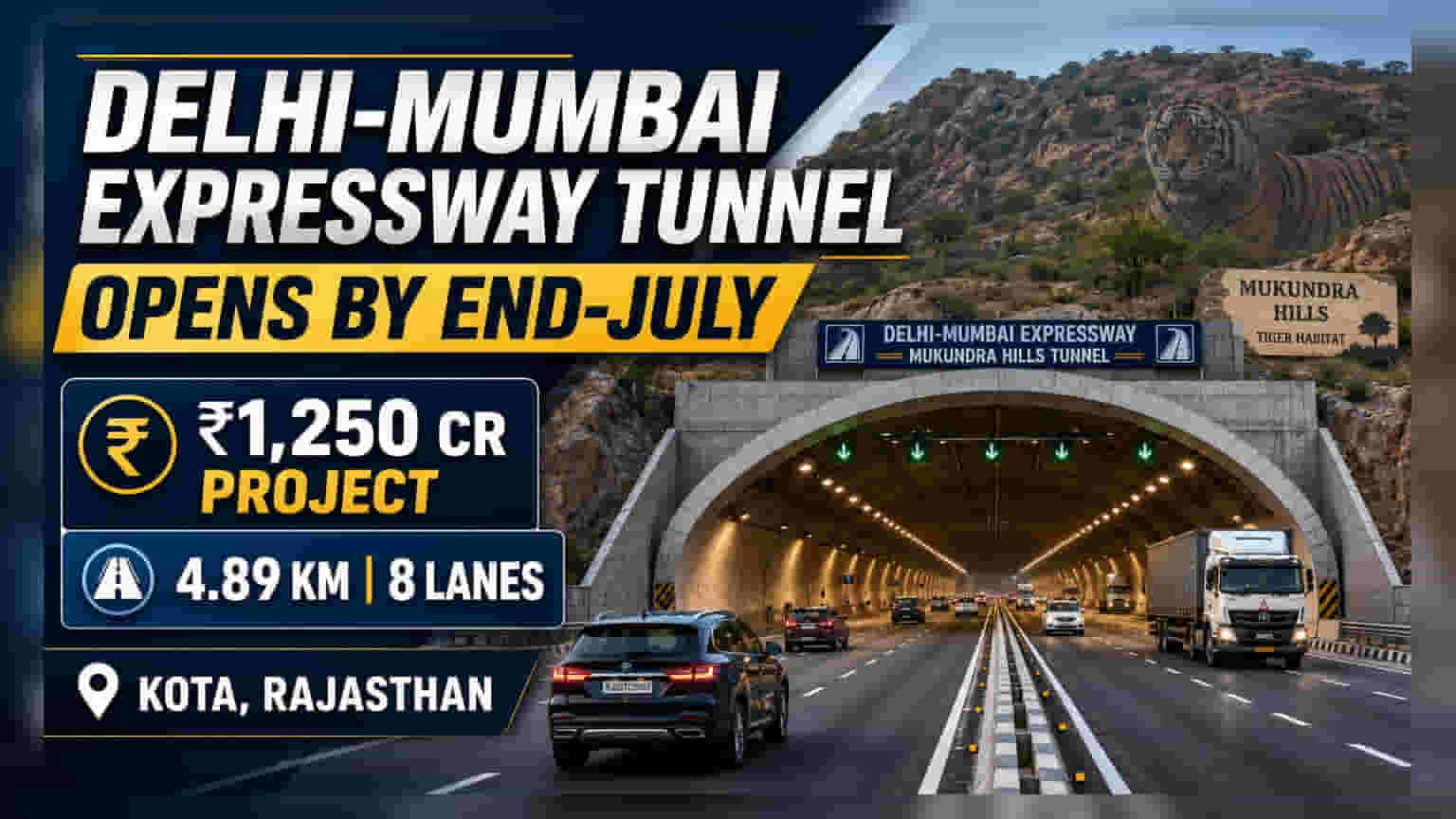
A critical 4.89-km tunnel on the Delhi-Mumbai Expressway in Rajasthan is scheduled to open by late July 2026. Built by a joint venture led by Dilip Buildcon, the project saw costs rise to ₹1,250 crore due to technical challenges and delays. Investors may monitor whether this completion helps accelerate milestone payments and improves project cash flow for the company.
What Happened
A 4.89-kilometer, eight-lane tunnel on the Delhi-Mumbai Expressway, located in Rajasthan’s Kota district, is set to open by the end of July 2026. Officials from the National Highways Authority of India (NHAI) confirmed the timeline for this key stretch. The tunnel is part of a larger 8.3-kilometer segment traversing the ecologically sensitive Mukundra Hills tiger habitat. This section is essential for the operational efficiency of the 1,386-kilometer expressway, which aims to significantly reduce travel time between Delhi and Mumbai.
Project Costs And Execution Delays
The construction of this tunnel was managed by a joint venture involving Dilip Buildcon Ltd and Altis-Holding Corporation. The project faced significant hurdles that delayed the original completion target of January 2024. Engineering challenges, specifically heavy water ingress and rainfall during excavation, required substantial design modifications to ensure the structure remained stable in varied rock formations. As a result of these complications and the time taken to implement design changes, the total project cost increased to ₹1,250 crore from the initially estimated ₹1,000 crore.
Why Investors Monitor These Delays
For infrastructure companies like Dilip Buildcon, projects involving difficult terrain or environmental clearances carry inherent execution risks. While delays can push back revenue recognition and milestone payments, the successful completion of such complex engineering tasks is vital for improving the company's reputation and financial performance. Cost overruns in public-private projects can sometimes lead to disputes or lower profit margins unless the contractor can claim compensation for valid change-of-scope or unforeseen site conditions. Investors typically watch whether the company can successfully close out these legacy projects to free up working capital and reduce debt pressure.
Wildlife And Design Constraints
The project required specific engineering solutions to protect local wildlife. The 8.3-kilometer stretch includes not just the main tunnel but also open ramps and 'cut-and-cover' sections. These designs were incorporated to ensure that wildlife, particularly tigers, could move through the habitat without disturbance from high-speed traffic. The main tunnel itself is among the widest in India, measuring 22 meters in width and 11 meters in height, highlighting the technical complexity of the work.
What Investors Should Track Next
The primary monitorable for investors will be the actual opening date and the smooth commencement of traffic in the Rajasthan and Madhya Pradesh sectors of the expressway. Beyond this, stakeholders may look for updates on the final settlement of project costs and whether the completion of this stretch leads to a release of pending payments from the NHAI. Furthermore, analysts often evaluate the company's ability to maintain profit margins on such projects despite the cost inflation caused by technical delays.