

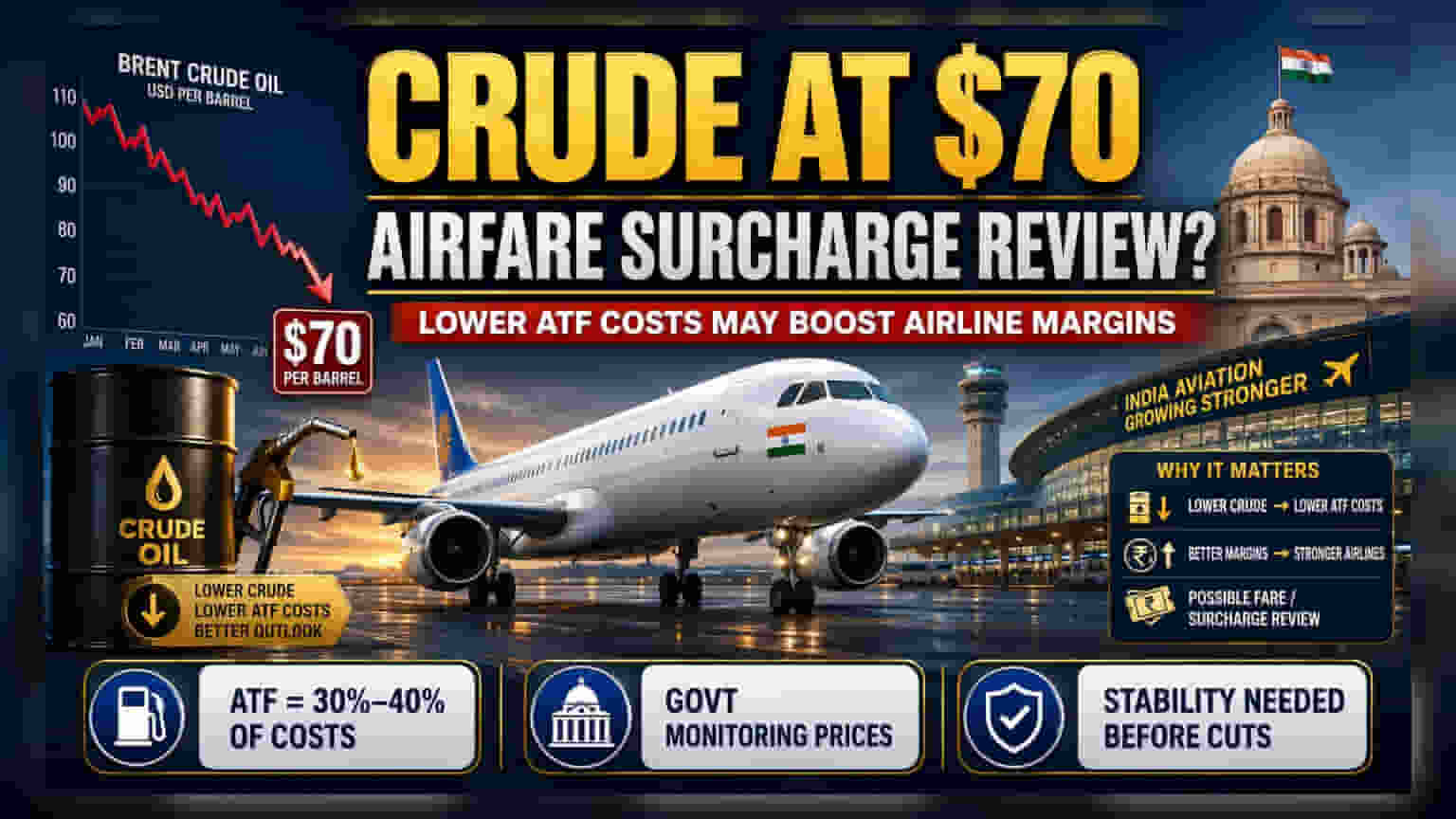
Global crude oil prices have dipped to $70 per barrel, potentially reducing costs for Indian airlines. Aviation Minister K Ram Mohan Naidu is monitoring whether this trend is sustainable before considering reductions in airline surcharges. Lower aviation turbine fuel prices typically improve operating margins for carriers like IndiGo.
What Happened
Global crude oil prices have retreated to approximately $70 per barrel, a significant shift that has caught the attention of the Indian government. Aviation Minister K Ram Mohan Naidu announced on Thursday that the government is closely monitoring these price movements. The ministry is currently in discussions with airlines to determine if this downward trend in fuel costs is likely to last. If prices remain stable, the government may consider a review of current airline surcharges and other fare components that had previously been increased to cope with higher fuel costs.
How ATF Costs Impact Airline Margins
For Indian airlines, aviation turbine fuel (ATF) is a major expense, often accounting for 30% to 40% of their total operating costs. When ATF prices rise, airlines typically increase fares or add surcharges to protect their profit margins. Conversely, when fuel prices fall, the pressure on the airline's operating expenses eases. A sustained decline in oil prices can lead to better profit margins for domestic carriers, provided they do not pass all these savings to consumers through price cuts. Investors in the sector often look at how changes in ATF prices affect the quarterly financial performance of companies like InterGlobe Aviation (IndiGo).
The Role of Price Stability
The government's approach remains cautious regarding immediate fare adjustments. Minister Naidu emphasized that any decision to reduce surcharges depends on whether the reduction in crude oil prices is a long-term shift rather than a short-term fluctuation. Since ATF prices are reviewed every fortnight based on global crude oil trends, the government is looking for consistent signals before asking airlines to lower their charges. The aviation sector has faced considerable volatility over the past few months, and officials are verifying if the current price levels are sustainable before proceeding with policy changes.
Government Support Measures
To assist the aviation sector in navigating fuel price volatility and other operational challenges, the government has established specific support mechanisms. This includes a price stabilization fund of Rs 10,000 crore, designed to provide a buffer for airlines. Other initiatives include efforts to cap ATF prices for domestic scheduled operators, measures to reduce airport charges, and the extension of emergency credit schemes. These policies are intended to keep the sector financially stable while managing the impact of global energy costs on the domestic economy.
What Investors Should Track Next
Investors watching the aviation sector should look for several key indicators in the coming weeks. First, the bi-weekly revision of ATF prices will be the primary data point to watch, as it directly impacts airline costs. Second, any official communication regarding the revision of airline surcharges will be significant, as it could signal a change in the competitive pricing environment. Finally, management commentary from airline operators regarding their cost structure and margin guidance in upcoming quarterly results will provide clarity on how much of the fuel price relief is actually flowing to the bottom line.