

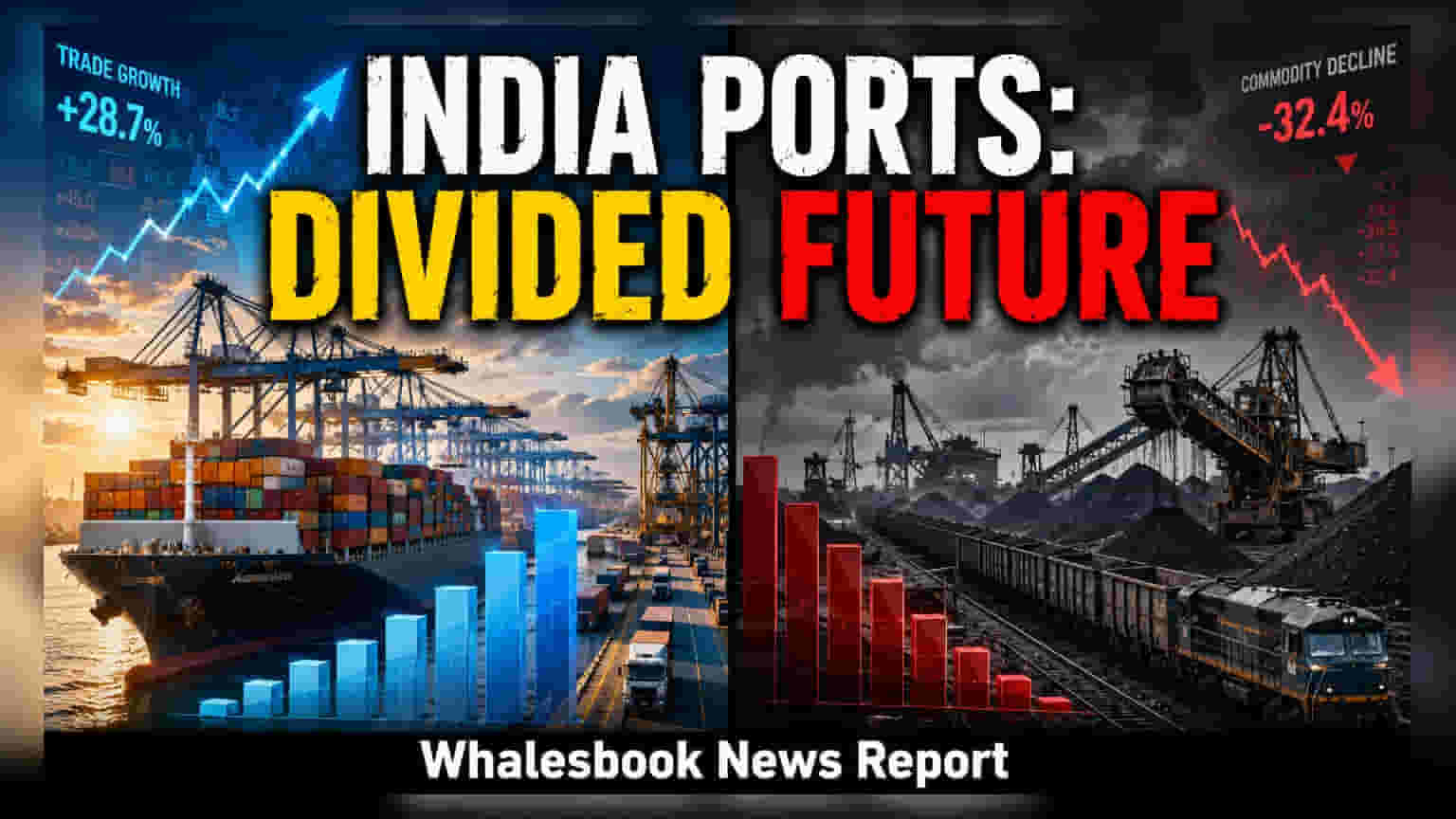
India’s port sector faces a changing mix as container volumes are projected to grow by 7-9% annually through FY28. While container and iron ore traffic rise, coal volumes are expected to decline. This trend is likely to benefit private operators like Adani Ports and JSW Infrastructure, though investors should monitor risks including global trade volatility and policy changes.
India’s maritime sector is shifting toward a container-led growth model, moving away from traditional bulk commodities. Recent industry projections suggest that container traffic will expand at a 7-9% annual rate between FY26 and FY28. This shift is primarily fueled by rising domestic consumption and the increasing practice of transporting goods in containers, which offers better handling efficiency for higher-value products.
Divergent Performance at Major and Non-Major Ports
The fiscal performance in FY26 highlighted a clear gap in how different ports are managing cargo. Major ports in India saw cargo volumes rise by approximately 7% year-on-year, reaching 915 million metric tonnes (MMT). This was largely supported by strong growth in petroleum, oil, and lubricants (POL) and crude oil. In contrast, non-major ports experienced slower momentum, with cargo volumes rising by only 1.4% to 753 MMT during the same period. This suggests that larger, more established ports may currently be better positioned to capture the rising demand for diverse cargo types.
Commodity Mix Changes and Long-Term Outlook
The composition of goods handled at ports is also undergoing a fundamental change. Coal traffic, which has historically been a significant revenue source for many ports, is now expected to see a decline of 2-4% annually. This drop is linked to increased domestic coal production and the growing share of renewable energy in India's power mix. Conversely, iron ore traffic is anticipated to recover with a 5-7% annual growth rate, supported by higher coastal movement between domestic production hubs and steel plants.
Growth Prospects for Private Operators
Private port operators are expected to capture a larger share of this evolving market. Companies such as Adani Ports and Special Economic Zone (APSEZ) and JSW Infrastructure are focusing on expanding their integrated logistics solutions, which helps them offer services beyond just basic port handling. Market projections indicate that these players could see volume and revenue growth significantly higher than the overall industry average of 4-5%. This is largely attributed to their ability to execute large expansion projects and their active search for new business acquisitions.
Government Policy and Strategic Risks
Policy initiatives remain a key factor for the sector's future. The government’s NMP 2.0 framework has identified 44 brownfield projects for development through public-private partnerships, with a target to unlock ₹1.2 trillion in value by FY30. Furthermore, the Maritime Amrit Kaal Vision 2047 aims to significantly expand India's total handling capacity, signaling long-term government intent to boost maritime infrastructure.
However, the sector is not without challenges. Investors should monitor risks such as geopolitical tensions that could disrupt global trade routes and the rising competitive intensity as smaller regional ports seek to upgrade their facilities. Additionally, any uncertainty in regulatory frameworks or sudden shifts in international trade policy can directly impact port operators' revenue and operating margins. Future updates on project commissioning dates and the actual pace of containerization adoption will be critical for tracking the real-world performance of these companies.