

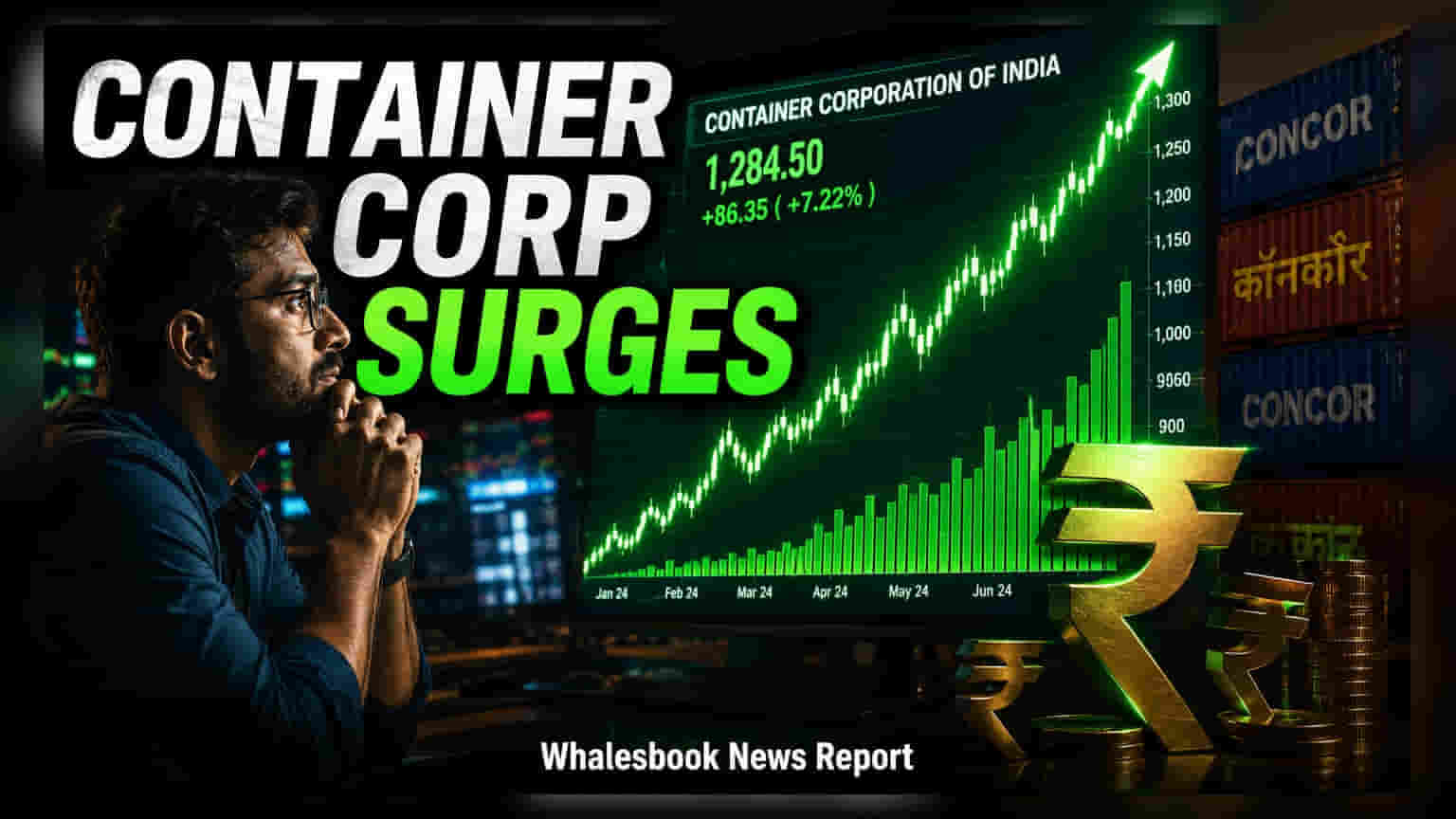
Shares of Container Corporation of India are facing downward pressure, trading around Rs 515-518 as of August 5, 2026. While the company maintains a debt-free balance sheet and regular dividend payouts, investors are weighing these strengths against recent margin compression and increasing competition in the logistics sector.
Shares of Container Corporation of India (CONCOR) are experiencing a volatile trading session on August 5, 2026, with the stock moving around Rs 515-518. This price movement reflects a shift in investor sentiment, as the stock deals with broader market fluctuations and specific operational challenges. While some early reports indicated optimism, the current market reality shows investors are adopting a more cautious stance regarding the company’s near-term performance.
Balance Sheet and Financial Stability
At the core of the company’s value proposition is its financial strength. Container Corporation of India remains effectively debt-free, a factor that provides the business with significant stability. The company has maintained a strong balance sheet with substantial cash reserves, allowing it to navigate periods of lower demand or operational stress without the burden of interest payments. Additionally, the company continues to reward shareholders, having declared a final dividend of Rs 1.00 per share for FY 2025-26, bringing the total dividend payout for the year to Rs 8.60 per share.
Operational Challenges and Competition
Despite its strong financial position, the company faces clear headwinds. The logistics sector is currently witnessing intense competition, with private container train operators and the road freight industry challenging the company’s market share. This competition, combined with rising operational costs, has placed pressure on the company’s profit margins. In recent quarters, investors have noted EBITDA margin compression, a signal that operational efficiency and pricing power are being tested. Furthermore, while the June 2026 quarter (Q1 FY27) showed a rise in net profit, it follows a fiscal year (FY26) where revenue growth missed management's long-term targets, highlighting the difficulty in maintaining steady growth momentum.
Investor Monitorables
The company’s performance in the coming quarters will likely hinge on its ability to manage these operational pressures. Investors are closely tracking whether the company can defend its market share against road and private rail competitors while improving its margins. The primary monitorables for shareholders include capacity utilization rates, any updates on volume growth in the EXIM (Export-Import) segment, and whether the company can align its actual revenue growth more closely with its long-term strategic targets. The ability to maintain cash reserves while investing in necessary infrastructure to stay competitive will be key to long-term valuation.