

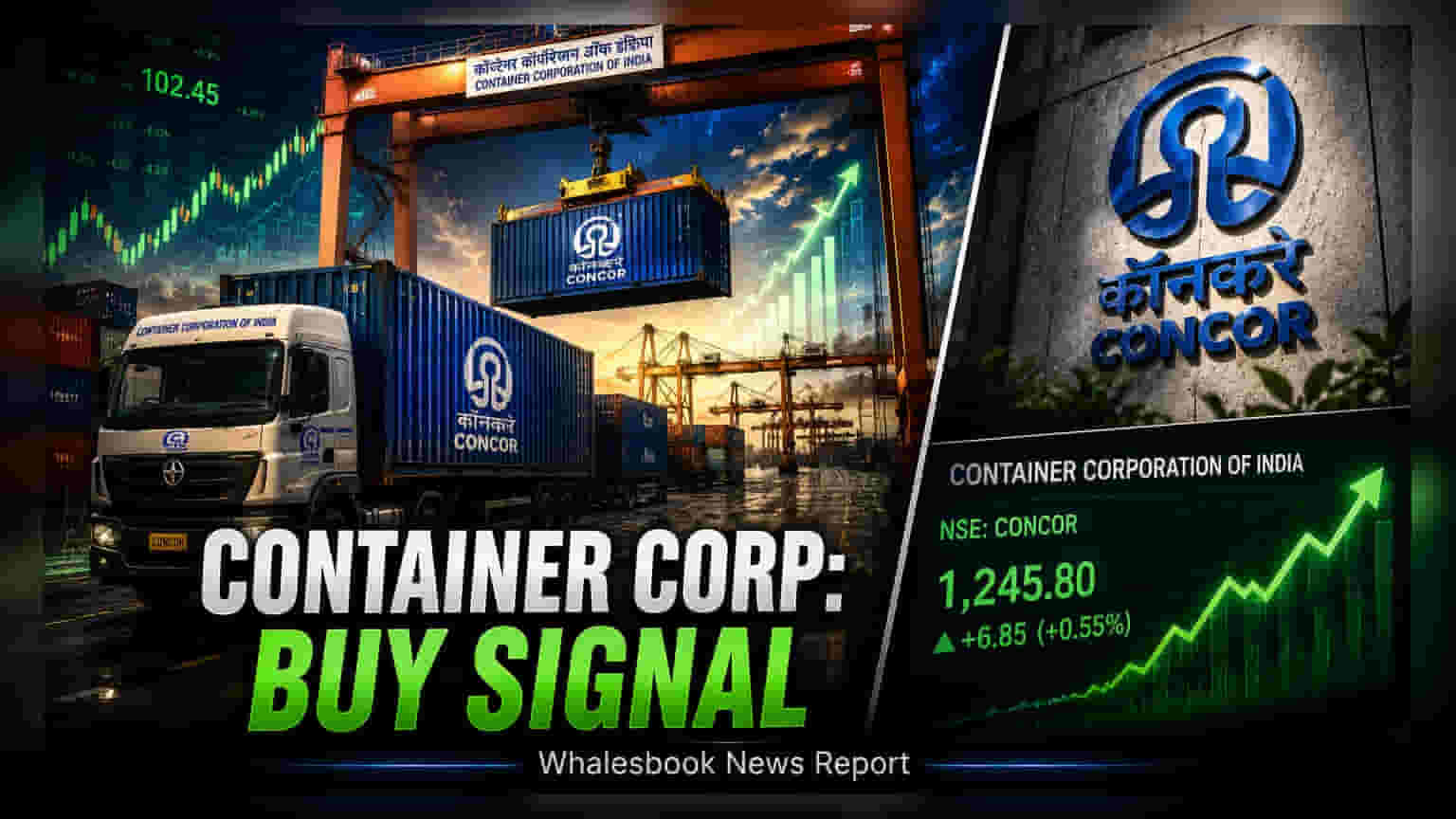
Container Corporation of India reported flat revenue of ₹2,150 crore for the first quarter of FY27, even as total volumes grew by 9% year-on-year to 1.4 million TEUs. The financial performance reflects a challenge in per-unit profitability, with realization per TEU declining by 8%. Investors are tracking how the company manages competitive pricing pressure against its volume expansion strategy.
Detailed Coverage
Container Corporation of India (CONCOR) saw its revenue remain stagnant at ₹2,150 crore during the first quarter of fiscal year 2027. While the company successfully increased its total handling volume by 9% compared to the same period last year, reaching 1.4 million Twenty-foot Equivalent Units (TEUs), this growth did not translate into higher revenue. The disconnect between volume growth and revenue stability highlights a shift in the company's realization metrics.
Impact of Lower Realization per TEU
A key factor for investors to observe is the decline in blended realization per TEU, which fell by approximately 8% year-on-year to ₹15,333. This reduction in the amount earned per container suggests that the company is facing increased pricing pressure, possibly due to higher competition within the logistics sector or changes in the mix of services being offered. Specifically, Export-Import (EXIM) realization dropped by 7% to ₹13,409 per TEU, while domestic realization saw a steeper decline of 9% to ₹21,460 per TEU. Understanding whether this trend is temporary or part of a long-term shift in market pricing will be essential for assessing future profit margins.
Operational Context and Market Position
Despite the pressure on per-unit earnings, the company continues to see demand in its core segments. EXIM volumes grew by 10% to 0.107 million TEUs, while domestic volumes saw a 6% increase to 0.33 million TEUs. CONCOR operates a significant network of inland container depots across India and remains a key player in rail-based logistics. However, its financial performance is closely tied to external factors such as EXIM trade patterns, rail freight charges set by the Indian Railways, and the efficiency of terminal operations. Investors often monitor the company's capital spending on infrastructure and terminal development, as these projects are critical for maintaining a competitive edge in a capital-intensive industry.
Future Performance Monitorables
Looking ahead, the market will focus on whether the company can improve its profitability as it scales its operations. Brokerage projections for the next two years suggest a potential annual growth rate in revenue and EBITDA of 8% to 9% through FY28. However, actual outcomes will depend on the company's ability to navigate competitive pricing and maintain operational efficiency. Future updates on volume trends, any changes in rail freight policy, and the progress of ongoing infrastructure projects will be important indicators for shareholders to track.