

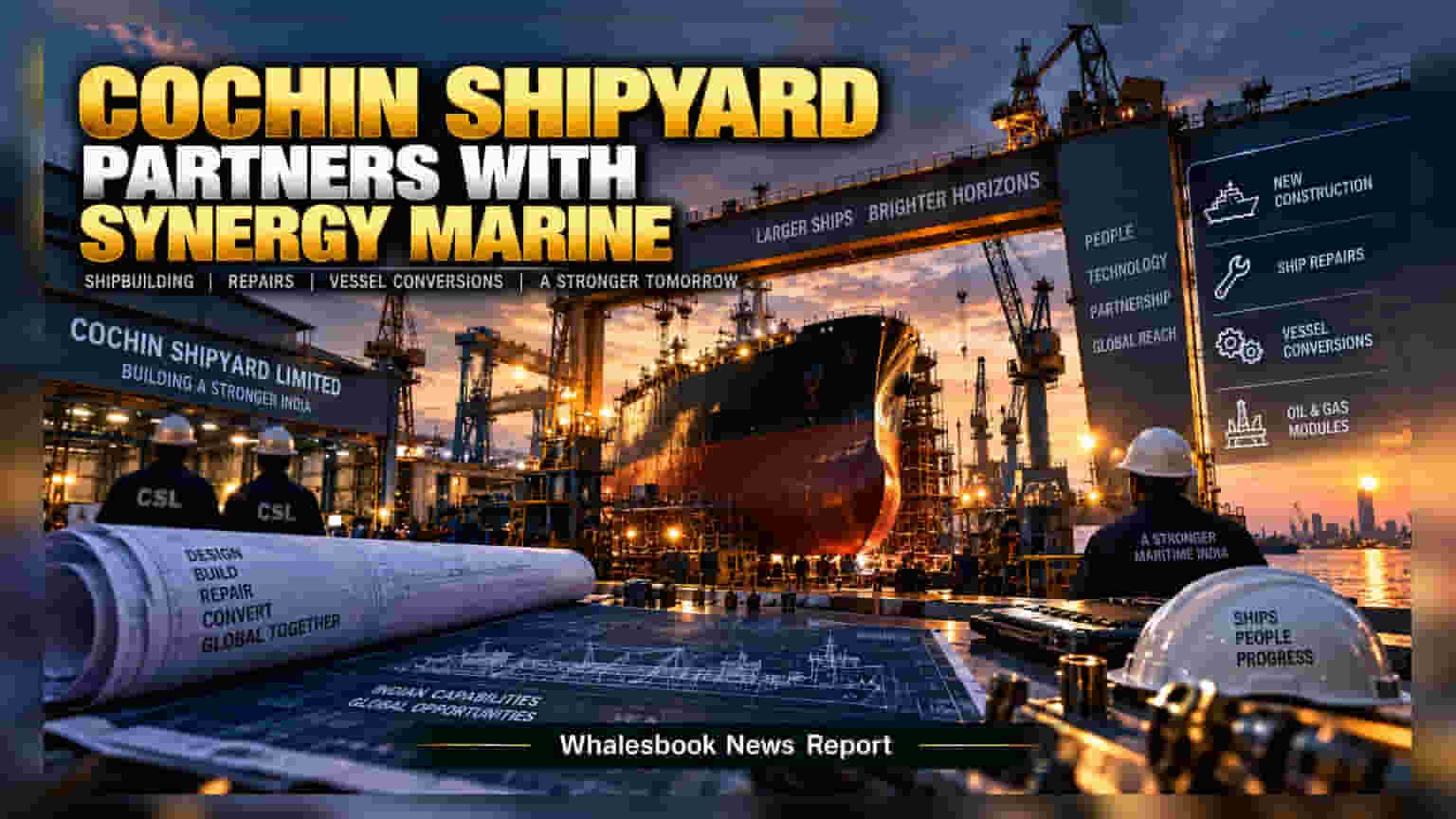
Cochin Shipyard has signed an agreement with Singapore-based Synergy Marine Group to enhance its shipbuilding and repair capabilities. The partnership aims to combine local manufacturing infrastructure with global project management expertise to secure more international contracts. Investors may track whether this move helps the company improve project delivery timelines and profit margins.
Cochin Shipyard Limited (CSL) has signed a Memorandum of Understanding (MoU) with Synergy Marine Group to collaborate on complex shipbuilding, ship repairs, and vessel conversion projects. This agreement is designed to combine CSL’s domestic industrial infrastructure with the global project management and engineering expertise of Synergy Marine. The scope of the partnership includes new construction, ship repairs, and the fabrication of specialized modules for the oil and gas sector.
For Cochin Shipyard, this collaboration is a strategic move to improve operational efficiency. While the company has a strong foundation in building vessels for the domestic market, particularly for defense and commercial clients, competing globally requires high-end engineering and faster project execution. By leveraging Synergy Marine’s track record, which includes the management of over 250 newbuilding projects, CSL intends to bridge the gap between its current capabilities and the technical demands of international shipowners. This integration is expected to help the company bid for more complex and technically demanding global contracts.
This partnership aligns with broader national goals, such as the Maritime Amrit Kaal Vision 2047, which seeks to establish India as a more significant hub for global shipbuilding. However, the shipbuilding industry faces several persistent challenges. These include fluctuations in the cost of raw materials, such as steel, and the inherent risks of project delays. Shipbuilding is highly capital-intensive, and any delay in project execution can lead to increased costs and reduced profitability. Furthermore, the industry is cyclical and dependent on global trade volumes, which can impact demand for new vessels.
Investors often monitor how companies like Cochin Shipyard balance their dependence on large government defense orders with commercial projects. While defense orders provide stable long-term revenue, commercial shipbuilding is more exposed to global economic trends. The success of this alliance will depend on whether it leads to measurable improvements in execution speed and the ability to win higher-value international orders. Shareholders may want to monitor future exchange filings for specific project announcements, timelines, and updates on how this partnership affects the company’s operational performance in the coming quarters.