

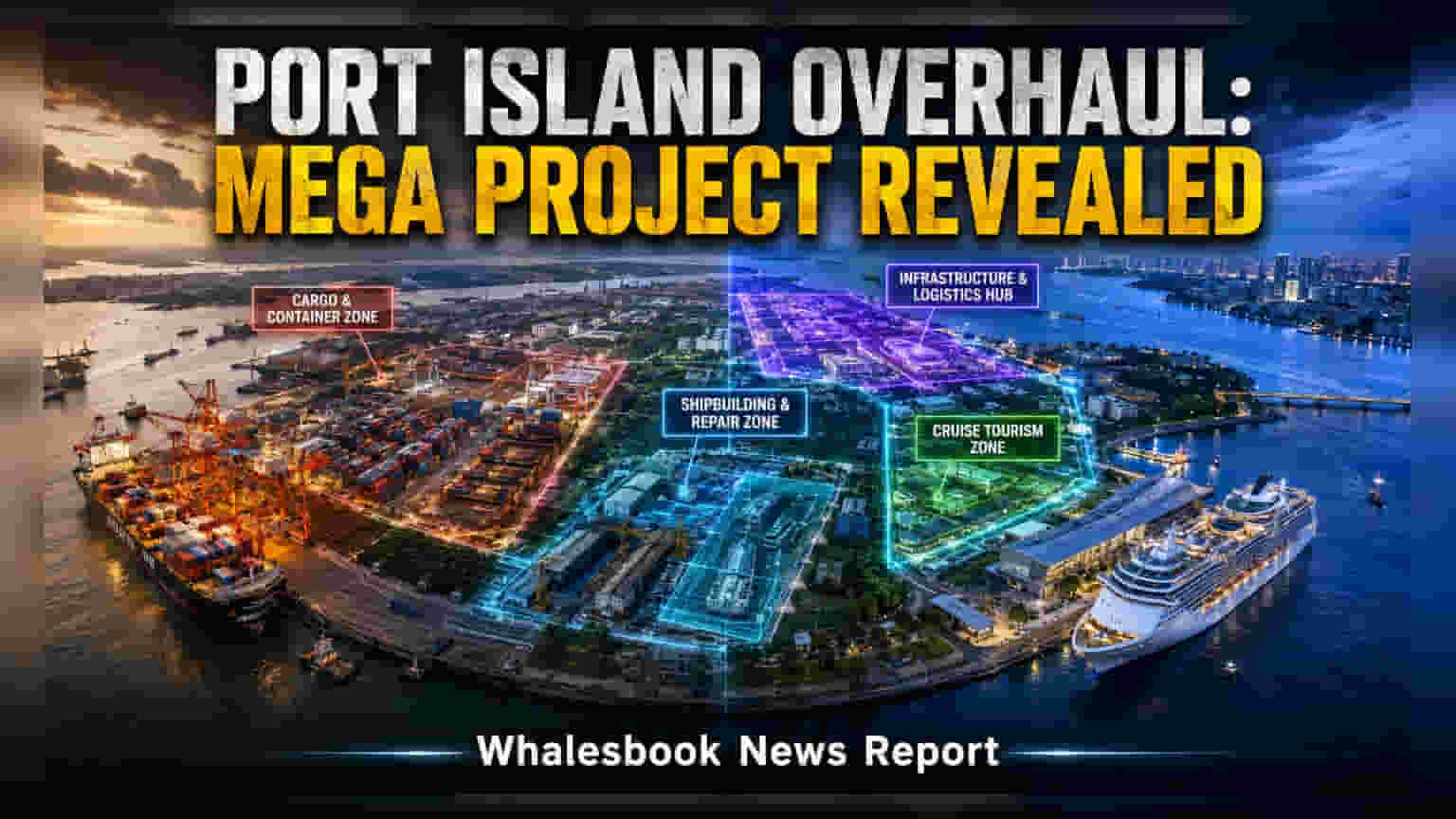
The Cochin Port Authority has unveiled a five-part plan to transform Willingdon Island into a hub for cargo, tourism, and shipbuilding. While the port authority is a government entity, the project aims to improve regional connectivity and infrastructure, which is relevant for businesses like Cochin Shipyard Limited that operate facilities on the island.
The Cochin Port Authority (CoPA) has announced a comprehensive redevelopment plan for Willingdon Island in Kochi. The strategy aims to revitalize the island by focusing on five distinct areas: cargo operations, cruise tourism, shipbuilding and repair, water transport, and general tourism development. This initiative is part of a master plan submitted to the Union Ministry of Ports, Shipping, and Waterways to reclaim the island's position as a key economic center.
The project proposes a "Clean Cargo Hub" that includes modernizing berths Q3, NCB, and Q4 to handle liquid cargo like petroleum and petrochemicals more efficiently. Additionally, the port intends to convert the South Coal Berth into a dedicated bunker barge terminal. These efforts are designed to reverse the decline in the island's role as a logistics hub, which has diminished as shipping operations shifted to the newer facilities at Vallarpadam and Puthuvypeen.
While the Cochin Port Authority is a government establishment and not a publicly traded company, the infrastructure development has implications for listed businesses operating within the port's ecosystem. Cochin Shipyard Limited (CSL), for instance, manages its International Ship Repair Facility (ISRF) on land leased from the port authority on Willingdon Island. Improvements to the port's infrastructure and connectivity could potentially support the operational efficiency of such tenants.
Investors monitoring companies tied to this region should be aware of the inherent risks associated with large-scale infrastructure projects. Common challenges include potential delays in execution, regulatory hurdles, and funding constraints that often affect government-led developments. Furthermore, private entities operating on the island remain dependent on long-term lease agreements with the state-owned port authority, which can influence their expansion plans and capital spending.
The next steps for this project involve securing necessary government approvals and issuing tenders for the various developmental themes. Stakeholders will be watching for updates regarding project timelines, capital allocation, and the pace of construction. Understanding the progress of this master plan will be essential to gauging its long-term impact on the operational environment for businesses in the region.