

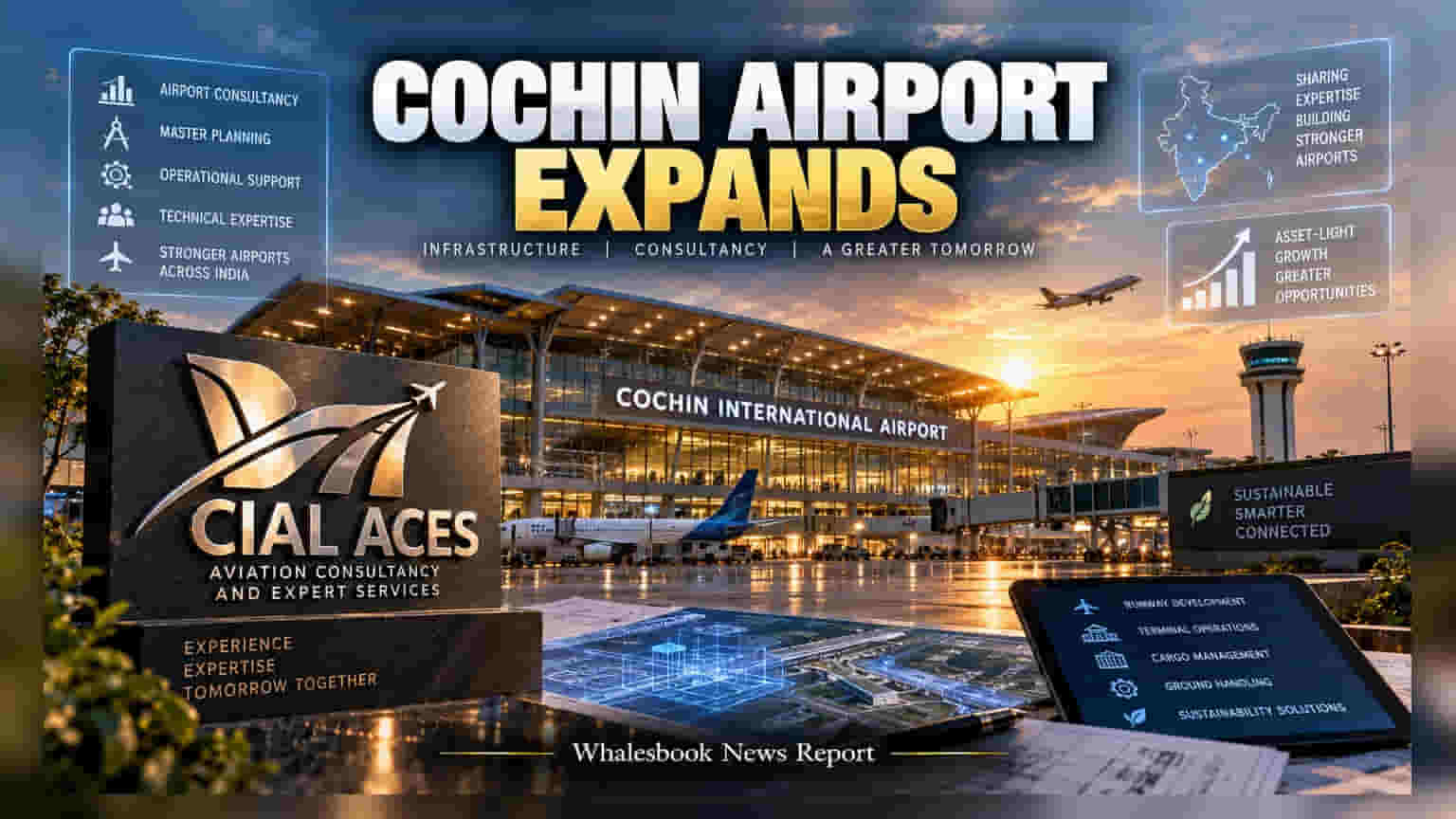
Cochin International Airport Limited (CIAL) has launched a new consultancy division, CIAL ACES, to monetize its operational expertise. With a fiscal 2026 profit of ₹502 crore, the company is diversifying into service-led growth. Investors will track whether this asset-light model effectively scales and contributes to future revenue.
Cochin International Airport Limited (CIAL) has officially launched a new business unit, Aviation Consultancy and Expert Services, branded as CIAL ACES. This move represents a strategic pivot for the airport operator, aiming to monetize its technical experience by providing advisory and management services to other domestic airport projects. The company’s first engagement under this new arm is at Durgapur Airport in West Bengal, where it is implementing passenger verification systems.
Diversifying the Business Model
For investors, the launch of CIAL ACES signals a shift toward an asset-light business model. Managing airports is capital-intensive, requiring massive spending on runways, terminals, and maintenance. By contrast, a consultancy arm allows the company to earn revenue by selling its operational know-how without needing to invest directly in new physical infrastructure. The division will offer services ranging from airport master planning and runway development to cargo management and ground handling. The success of this model will depend on the company's ability to secure and execute similar contracts at other airports, as well as its ability to maintain profit margins in a competitive consulting space.
Financial and Operational Context
This expansion follows a strong financial year for CIAL. In the 2025-26 fiscal year, the company reported total revenue of ₹1,220 crore and a net profit of ₹502 crore. The board’s decision to approve a 55 per cent dividend payout reflects the company's current cash surplus. Operationally, the airport remains a significant facility, handling 1.14 crore passengers and 73,134 aircraft movements during the same period. This high volume of traffic provides the real-world experience necessary to build credibility as a consultant for smaller, growing regional airports.
Sustainability Initiatives
Alongside the consultancy launch, CIAL has introduced a service providing Bridge Mounted Equipment (BME) to airlines. This system supplies electricity directly to docked aircraft, allowing them to turn off their engines while stationary. By offering this utility free of charge, the company aims to reduce ground-based emissions and help carriers lower their operational costs. While this initiative is likely to increase initial operational expenses for CIAL, it serves as a differentiator in the aviation sector and aligns with broader industry goals to reduce the carbon footprint of airports.
Monitoring Future Execution
The aviation sector is subject to various risks, including shifts in air traffic demand, regulatory changes, and intense competition. For CIAL, the next phase of growth will depend on how effectively it can scale the CIAL ACES division beyond the pilot project in Durgapur. Investors should monitor the progress of upcoming infrastructure projects, such as the planned multimodal logistics hub and the global convention center, alongside the consultancy arm's ability to win new external contracts. The ability to manage these diverse projects without straining the balance sheet or distracting from core airport operations will be key to long-term performance.