

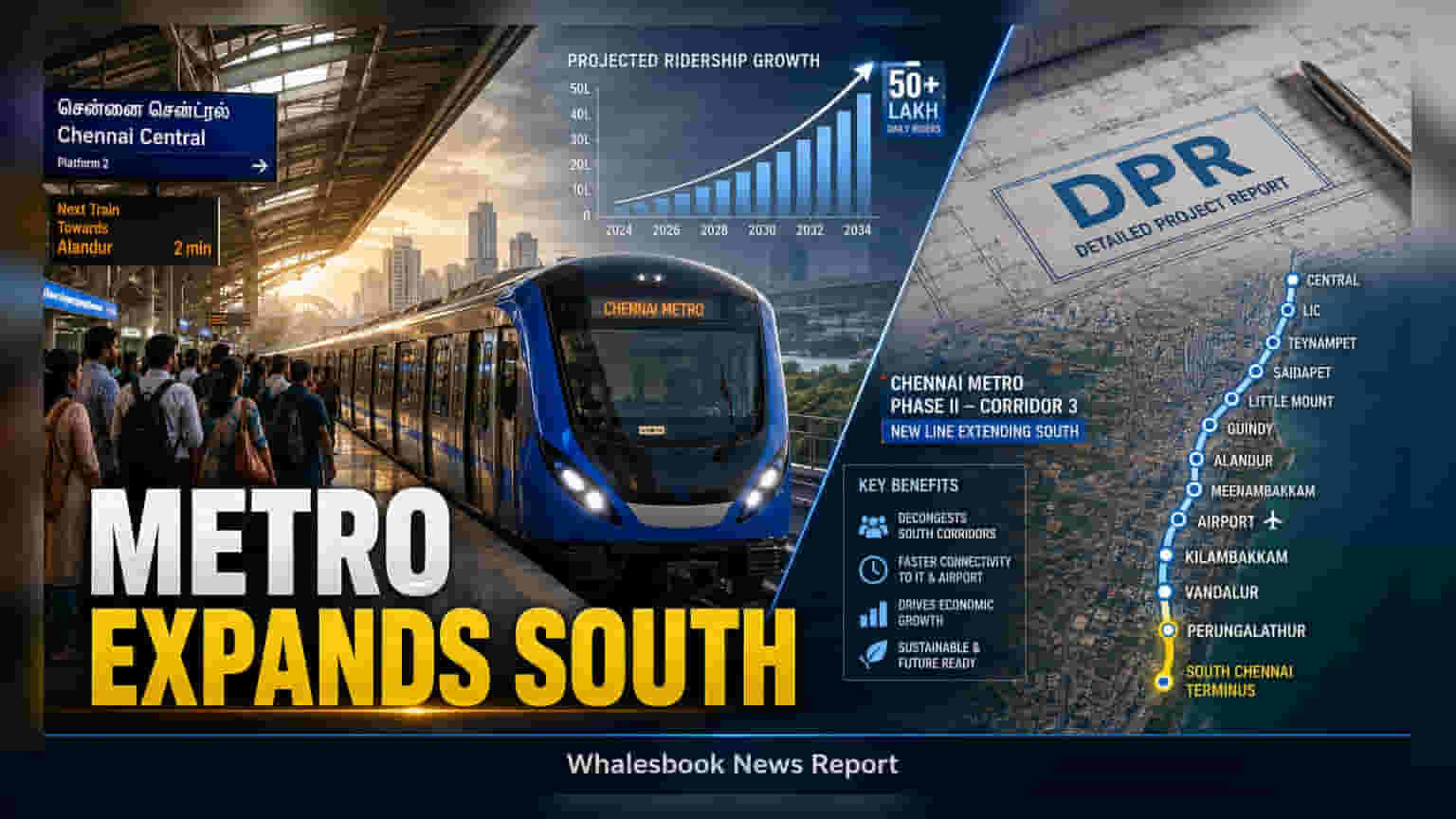
Chennai Metro Rail Ltd has started the process for a new 25-kilometer metro corridor connecting Kilambakkam to Chengalpattu. This project aims to improve transit for southern Chennai suburbs and reduce road traffic. The company is currently seeking a detailed project report to assess the feasibility and cost of this expansion.
Detailed Coverage
Chennai Metro Rail Ltd (CMRL) has taken a formal step toward expanding its transit network into the southern outskirts of the city. The state-run agency has invited tenders to prepare a Detailed Project Report (DPR) for a new 25-kilometer line that would connect the upcoming Kilambakkam Metro Station to Chengalpattu. This move is part of a broader effort to provide reliable public transport to the rapidly growing suburban areas south of Chennai.
Building on Southern Connectivity
This proposed extension follows the ongoing development of the Chennai Airport-Kilambakkam corridor. That existing project, which aims to bridge the 15.46-kilometer gap between the airport and the Kilambakkam bus terminus, is estimated to cost ₹9,335 crore. The earlier project includes both an elevated metro line and an elevated road structure, reflecting the agency's strategy to combine rapid transit with road infrastructure to help manage heavy traffic on the Grand Southern Trunk Road. The new 25-kilometer stretch to Chengalpattu is being considered as a logical next step to integrate these outer suburbs into the city’s rapid transit grid.
Planning and Execution Risks
For investors and stakeholders, the core focus remains on the financial and execution timeline of these large-scale infrastructure projects. Large metro extensions often face risks related to land acquisition, potential cost increases due to rising raw material prices, and the challenge of maintaining financial discipline while balancing multiple capital-intensive projects simultaneously. Because CMRL is a government-backed entity, the speed of project execution often depends on timely state and central government approvals and funding allocations. The feasibility study, once completed, will provide more clarity on the estimated capital spending required, the number of planned stations, and the projected timeline for construction.
The key monitorable for the public and stakeholders will be the timeline for finalizing the DPR and subsequent government approvals. Once the report is submitted, authorities will evaluate the economic viability, passenger traffic projections, and funding sources before moving toward the bidding process for construction. Investors often watch such developments to gauge the pace of infrastructure spending in the region and the resulting impact on local connectivity and real estate development.